
US Navy ramps up pressure on Iran with Hormuz blockade as global economic risks deepen

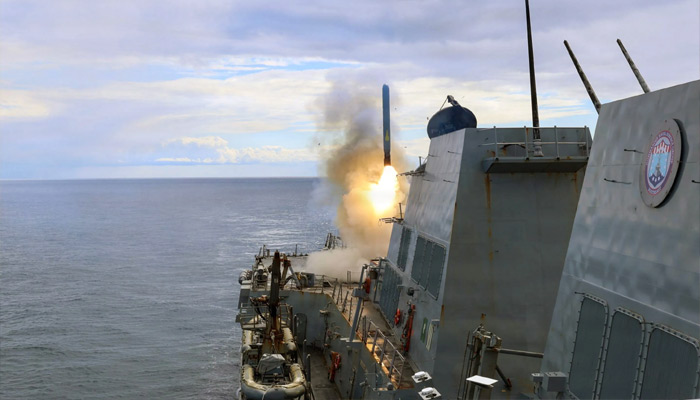
The United States has sharply escalated pressure on Iran by enforcing a naval blockade targeting vessels linked to its ports, turning the Strait of Hormuz into the focal point of an intensifying economic and strategic standoff.
The move follows inconclusive negotiations in Pakistan, with both sides now navigating uncertainty ahead of a fragile ceasefire deadline on April 22. At its core, the blockade aims to choke Iran’s oil exports—a lifeline for its wartime economy.
While Donald Trump initially signalled a sweeping embargo on all shipping through Hormuz, US Central Command has clarified that enforcement is more targeted, focusing on vessels connected to Iranian ports rather than neutral maritime traffic.
Hormuz turns into an economic flashpoint
The Strait of Hormuz, one of the world’s most critical oil transit routes, has once again become a geopolitical pressure point. A significant share of global crude flows through this narrow corridor, making any disruption immediately felt in global markets.
Following the blockade announcement, oil prices surged past $100 per barrel, reflecting fears of tightening supply. Reports indicate that millions of barrels of crude and refined products are already backed up in the Gulf, heightening concerns about volatility.
The impact stretches beyond energy. The strait also serves as a vital passage for commodities such as aluminium, fertilisers and helium, meaning the economic fallout could ripple across multiple industries worldwide.
By targeting oil exports, Washington is effectively aiming at Tehran’s financial backbone—seeking to limit the resources that sustain its broader strategic posture.
Military risks in a constrained corridor
Despite its strategic appeal, the blockade carries serious operational risks.
The narrow geography of the Strait of Hormuz limits manoeuvrability for naval forces, placing US assets within range of potential Iranian retaliation, including sea mines, coastal missile systems and drone strikes. This proximity increases the chances of escalation or miscalculation.
Iran has already issued stark warnings, signalling that if its ports are threatened, regional shipping infrastructure could also come under risk—raising the stakes beyond a contained maritime operation.
Strategy to squeeze oil revenues
The broader objective remains clear: weaken Iran economically without direct large-scale military confrontation.
Analysts suggest that restricting exports through a maritime blockade may be more effective than targeting fixed infrastructure such as Kharg Island, a key Iranian oil terminal. Limiting export capacity directly constrains revenue flow, increasing pressure on both Tehran and countries reliant on its oil.
However, this approach comes with global trade-offs. Reduced supply is likely to keep oil prices elevated, adding inflationary pressure and increasing costs for energy-importing nations.
Diplomacy persists, but key hurdles remain
Even as tensions rise, diplomatic channels have not fully collapsed. Experts believe the situation could evolve into prolonged strategic signalling rather than immediate escalation.
The central sticking point continues to be Iran’s nuclear programme. Tehran maintains it is civilian in nature, while the United States and its allies argue it carries the potential for weapons development.
Trump himself acknowledged the impasse, noting that while progress was made in talks, the nuclear issue remains unresolved.
A high-stakes economic gamble
The Hormuz blockade underscores a shift toward economic warfare as a primary tool of US strategy.
By leveraging control over a critical maritime chokepoint, Washington is attempting to force concessions without entering a full-scale conflict. Yet the risks are substantial—ranging from rising global energy costs to the possibility of broader regional escalation.
As the ceasefire deadline approaches, the blockade stands as a decisive test: whether sustained financial pressure can achieve what diplomacy has not—or whether it may trigger a deeper geopolitical crisis with worldwide consequences.
Comments are closed.