
You Don’t Need Heavy Weights to Build Muscle — But It’s Not That Simple

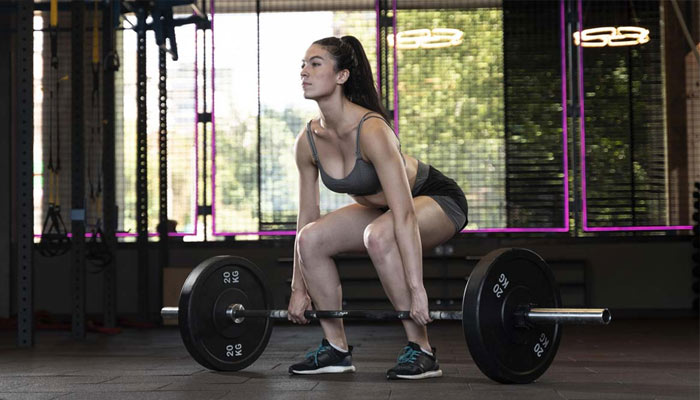
For many beginners, the hardest part of going to the gym isn’t showing up — it’s walking past the heavy dumbbells.
The clanking plates and gruelling reps can make strength training feel intimidating. But emerging research suggests you don’t need to lift the heaviest weights in the rack to build muscle.
A recent Canadian study followed 20 healthy young men with no prior weight-training experience over 10 weeks. Under supervision, they performed three sets each of bicep curls and knee extensions during every session. The twist? Each participant trained one arm and one leg with heavier weights, while the opposite limbs used lighter loads.
The “heavy” weights were challenging enough that participants could complete no more than 12 repetitions before fatigue. The lighter weights allowed up to 25 repetitions. Whenever someone exceeded the target rep range, the load was gradually increased — ensuring progressive overload.
That last part is crucial. You can’t keep curling the same 3 kg dumbbell forever and expect progress. Muscles adapt, and without increasing either weight or effort, gains plateau.
So what did researchers find?
After 10 weeks, participants saw similar increases in muscle size and strength in both limbs — regardless of whether they trained heavy or light. The arm lifting lighter weights grew just as much as the arm lifting heavier ones. The same pattern held true for the legs.
The takeaway? Muscle growth appears to depend less on how heavy the weight is and more on how close you push your muscles to fatigue. High repetitions with lighter weights can stimulate growth just as effectively as fewer reps with heavier loads — as long as the effort is high.
A broader 2023 review analysing hundreds of studies reached a similar conclusion: resistance training builds strength and muscle across a wide range of loads. Heavy lifting isn’t the only path to progress.
Why this matters
This finding could be a game-changer for people who feel overwhelmed by traditional “go heavy or go home” gym culture. Training with lighter weights may reduce injury risk, lower intimidation, and improve consistency — especially for beginners or older adults.
It also challenges a long-held belief among some gym-goers and trainers that maximal loads are essential for muscle growth. While heavy lifting remains valuable, it’s not mandatory for results.
Beyond muscle size
More importantly, resistance training offers benefits that extend far beyond aesthetics. Regular strength work helps preserve muscle mass as you age, strengthens bones, supports joint stability, and improves posture and balance. It also boosts metabolism, enhances insulin sensitivity, and aids fat loss by increasing lean mass.
In short, the real “catch” isn’t about heavy versus light — it’s about effort and progression. You don’t need to lift the heaviest weights in the room. But you do need to challenge your muscles consistently.
Comments are closed.