
‘You Said Let’s Do It’: Donald Trump Shifts Iran War Blame to Pete Hegseth

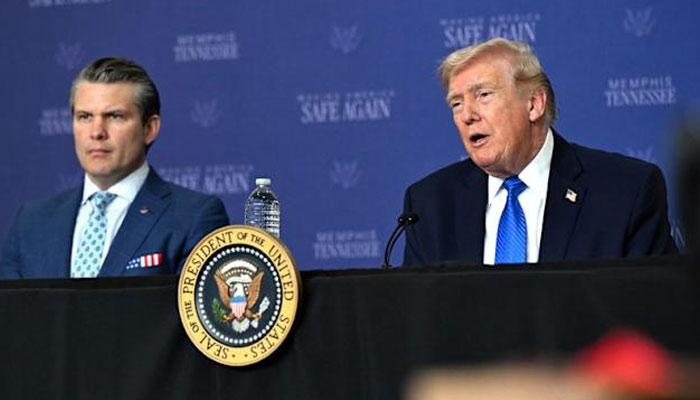
Trump Points to Hegseth as Iran War Questions Mount
With the Iran war entering its fourth week and scrutiny intensifying over Washington’s decision to launch military action, US President Donald Trump has offered a fresh version of how the conflict began—this time pointing to Defence Secretary Pete Hegseth as an early advocate.
Speaking at a roundtable in Tennessee, Trump said Hegseth was among the first to push for action. “You said, ‘Let’s do it… because you can’t let them have a nuclear weapon,’” Trump remarked, with Hegseth seated beside him.
Conflicting Narratives Within the Administration
The latest remarks add to a growing list of explanations from within the administration about why the US entered the war with Iran.
Some officials have argued that Israeli military action was imminent, making US involvement unavoidable. Others have maintained that Iran was close to developing a nuclear weapon. Trump himself described a series of calls with top aides, framing the decision as a choice between inaction and eliminating a “big problem” in the Middle East.
The shifting accounts have raised questions about whether there was a clear, unified rationale behind the intervention.
Surprise or Missed Warning?
Trump also claimed that Iran’s retaliatory strikes across the Gulf caught the US off guard, saying “nobody was even thinking about it.”
However, that assertion appears to conflict with prior intelligence warnings reported by Reuters, which suggested that potential Iranian retaliation had been anticipated but not acted upon.
Hegseth at the Forefront
Despite the confusion over how the war began, Hegseth has emerged as the most visible face of the US military campaign. From the Pentagon, he has outlined objectives including dismantling Iran’s missile systems, drone capabilities and naval strength.
He has also pushed back against media coverage, calling for more favourable reporting on an operation that has already claimed the lives of 13 American service members and escalated into a wider regional crisis.
When asked about a timeline, Hegseth declined to offer specifics, saying only that the mission remains “on track.”
Divisions Behind the Scenes
Trump acknowledged that Vice President JD Vance had been less supportive of military action, though Vance has not voiced public criticism.
Reports indicate a broader divide within Trump’s circle. Israeli Prime Minister Benjamin Netanyahu and media mogul Rupert Murdoch were said to favour a tougher stance, while others urged restraint.
The internal tensions have already led to fallout, with former National Counterterrorism Center chief Joe Kent stepping down last week over the conflict.
Uncertain Diplomacy
Even as fighting continues, Trump has floated the possibility of negotiations with Iran, including reopening the strategically vital Strait of Hormuz.
“We’d like to make a deal,” he said, while also warning that strikes would continue if talks fail.
Trump claimed backchannel discussions involved Jared Kushner and envoy Steve Witkoff. Tehran, however, has denied that any such talks are underway.
Deadline Extended, Questions Persist
Trump had set a deadline for Iran to comply with US demands or face intensified strikes, but that timeline has now been extended by five days.
With conflicting explanations, disputed intelligence claims and unclear diplomatic efforts, the narrative around the war continues to evolve. What remains constant is the uncertainty—over how the conflict began, how it will end, and who ultimately bears responsibility for the decision to go to war.
Comments are closed.