

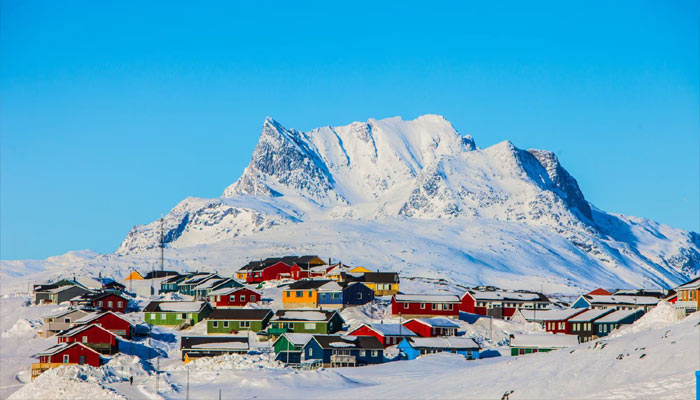
The Greenland Ice Sheet is considered one of the most dangerous places on Earth, covering nearly 80 per cent of the island’s surface.
Beneath its vast white expanse lie hidden crevasses, jagged mountains and unstable meltwater systems. The ice is in constant motion, cracking open fissures known as crevasses that can plunge hundreds of feet deep. Many are concealed by fragile “snow bridges,” making them nearly invisible to trekkers, who can fall into the blue abyss without warning.
Greenland also experiences piteraqs — violent katabatic winds that surge downhill from the ice sheet’s summit. These gravity-driven storms can reach speeds of up to 300 kilometres per hour, powerful enough to rip apart buildings and fling heavy equipment as if it were weightless.
During summer, surface meltwater bores vertical shafts called moulins, which spiral hundreds of metres down to the bedrock. Falling into one is fatal, as they funnel millions of gallons of water — and anything caught within — deep beneath the ice.
Vast meltwater lakes also form atop the ice sheet, only to vanish suddenly. When fractures open below, entire lakes can drain within hours, releasing immense energy that fractures the ice across miles, with destructive force comparable to that of an atomic explosion.
Storms frequently produce “whiteout” conditions, where the horizon disappears and sky and ground merge into a single blur. In this disorienting environment, explorers can lose all sense of direction, often walking in circles or unknowingly stepping into concealed hazards.
While polar bears primarily hunt on sea ice, they increasingly roam the fringes of the ice sheet. As climate change reduces their coastal habitat, these starving predators — weighing up to 500 kilograms — are venturing farther inland, posing a serious threat to humans.
Stretching roughly 2,400 kilometres and devoid of infrastructure, the Greenland Ice Sheet is extremely isolated. In its remote interior, rescue helicopters may take hours or even days to arrive, meaning minor injuries or equipment failures can quickly turn fatal.
Comments are closed.