
Iran’s Supreme Leader Khamenei Makes First Public Appearance Since Israel Conflict Began

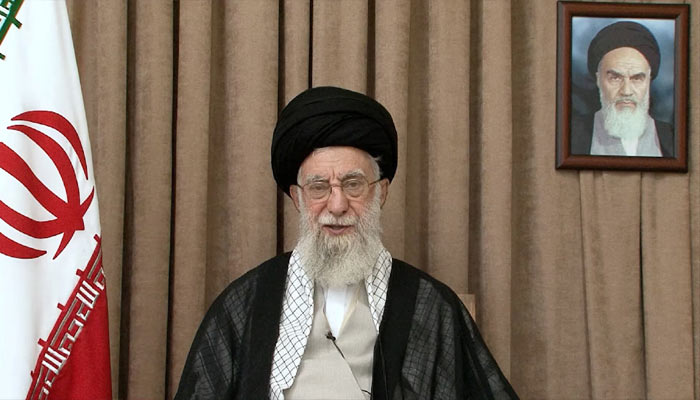
Khamenei Makes First Public Appearance Since Israel Conflict Amid Ashura Observance.
Iran’s Supreme Leader, Ayatollah Ali Khamenei, appeared in public on Saturday for the first time since the start of the ongoing conflict with Israel, amid growing speculation about his absence during recent military escalations.
Khamenei took part in a religious ceremony commemorating Ashura, one of the most significant days in the Shi’ite Islamic calendar, in Tehran. The event, broadcast on state television, showed the 85-year-old leader walking into a crowded ceremonial hall dressed in his traditional black robes, as attendees chanted religious slogans.
Appearance Follows Prolonged Absence
This marks Khamenei’s first public appearance since June 13, when Israel and Iran were drawn into a 12-day aerial conflict that resulted in the deaths of several senior Iranian figures, including military commanders and nuclear scientists.
During the early days of the conflict, Khamenei remained out of public view, issuing only pre-recorded messages, including his annual religious addresses. His absence triggered widespread speculation, with some reports suggesting he had been relocated to a secure facility for safety.
Iranian officials later attributed his non-appearance to heightened security measures, citing concerns over potential threats during a volatile period marked by regional tension and targeted strikes.
Symbolic Timing
Khamenei’s decision to return to the public eye during Ashura is being viewed as a symbolic demonstration of resilience by the Iranian leadership. Ashura commemorates the martyrdom of Imam Hussein, a central figure in Shi’ite Islam, and often serves as a platform for religious and political messaging in Iran.
Conflict Raises Regional Alarm
The recent military exchanges between Iran and Israel — including cross-border airstrikes and covert operations — have raised fears of a wider regional escalation. Despite retaliatory rhetoric from both sides, full-scale war has so far been avoided.
Khamenei’s reappearance is likely aimed at quelling domestic speculation and projecting internal stability as Iran continues to face mounting international pressure over its role in the conflict and its broader regional posture.
Comments are closed.