
US Sends Strong Message to China in Dalai Lama’s Birthday Wishes: ‘Let Him Live Without Interference’

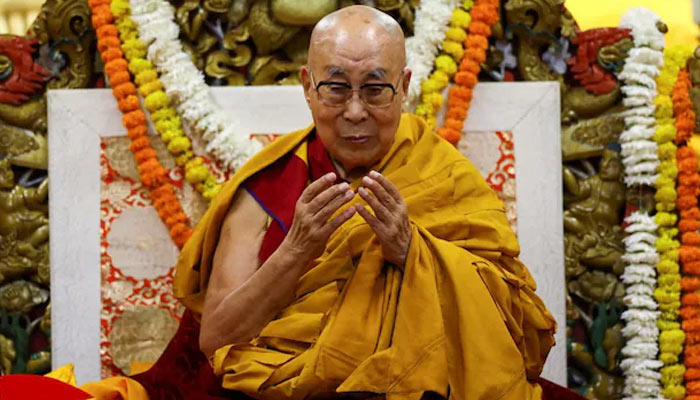
US Affirms Support for Dalai Lama and Tibetans’ Religious Freedom in Subtle Message to China.
The United States on Saturday extended heartfelt birthday wishes to the Dalai Lama on his 90th birthday and reiterated its firm support for the Tibetan people’s right to religious freedom — including the right to choose their spiritual leaders without outside interference — in what is widely seen as a pointed message to China.
In an official statement, US Secretary of State Marco Rubio praised the Dalai Lama’s enduring legacy, describing him as “a beacon of unity, peace, and compassion.” While Rubio refrained from directly naming China, his message clearly challenged Beijing’s longstanding claims over religious authority in Tibet.
“The United States remains firmly committed to promoting respect for the human rights and fundamental freedoms of Tibetans,” said Rubio. “We support efforts to preserve Tibetans’ distinct linguistic, cultural, and religious heritage — including their ability to freely choose and venerate religious leaders without interference.”
This assertion clashes with China’s rigid stance on Tibetan affairs. Beijing claims historic authority over Tibet and maintains that it alone has the right to determine the Dalai Lama’s successor, citing traditions from the imperial era. China also tightly controls religious institutions in the region, suppressing any moves it deems separatist.
China responded to recent remarks made by Indian leaders with a strong rebuke, warning New Delhi to tread carefully on Tibet-related matters. After Union Minister Kiren Rijiju and Arunachal Pradesh Chief Minister Pema Khandu participated in the Dalai Lama’s birthday celebrations in Dharamshala, Beijing’s foreign ministry stated, “India should be clear about the anti-China separatist nature of the 14th Dalai Lama.”
Earlier, Rijiju had publicly stated that only the Dalai Lama or his religious organisation could decide his successor. “No one has the right to interfere or decide who the successor of His Holiness the Dalai Lama will be. Only he or his institution has that authority,” Rijiju had said.
In response to the escalating rhetoric, India’s Ministry of External Affairs maintained a neutral stance, stating that the Indian government “does not take any position or speak on matters concerning beliefs and practices of faith and religion.”
As geopolitical tensions rise over the spiritual and political legacy of the Tibetan leader, the US message — though diplomatically phrased — adds to the growing international pressure on Beijing regarding its control over Tibet and its religious affairs.
Comments are closed.