

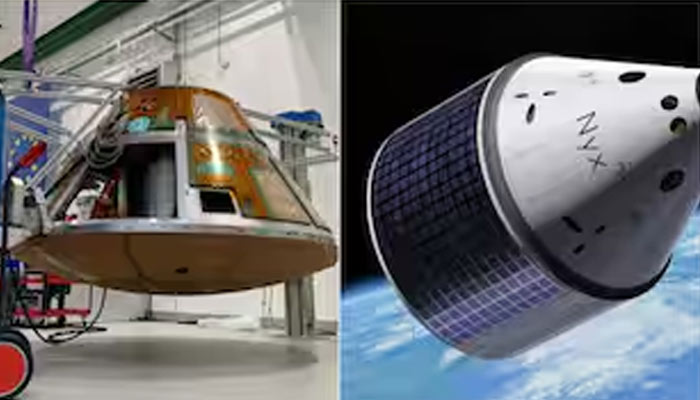
Space Capsule Carrying Ashes of 166 and Cannabis Seeds Crashes Into Pacific After Orbital Mission Fails.
A space capsule carrying the ashes of 166 people and marijuana seeds as part of a symbolic space burial mission has crashed into the Pacific Ocean after a critical failure during re-entry, according to German aerospace startup The Exploration Company (TEC).
The mission, dubbed Mission Possible, was launched on June 23 with the goal of completing two orbits around Earth before returning safely. The capsule, Nyx, successfully reached low Earth orbit and all onboard systems performed normally during flight. However, contact was lost just minutes before scheduled re-entry, and the capsule never made a controlled descent.
Mission Carried Deep Symbolism — and Science
The mission was a collaboration between TEC and Texas-based space memorial firm Celestis, which designed it to be the world’s first round-trip space burial. The idea was to launch the cremated remains of loved ones into space, allow them to orbit Earth, and then return them home — a symbolic journey of exploration and remembrance.
Alongside the human ashes, the capsule also contained hemp seeds from the Martian Grow Project — a citizen science initiative to study the feasibility of growing cannabis in extraterrestrial conditions, such as on Mars.
Unfortunately, nothing from the capsule could be recovered. The payload — both the remains and the seeds — now lies unretrievable at the bottom of the ocean.
Grief and Gratitude
Celestis co-founder Charles M. Chafer expressed sorrow over the outcome, offering condolences to the families who participated.
“We understand how painful this is. But the fact that their loved ones orbited Earth — even briefly — is still meaningful. We honour their courage and their place in space history,” Chafer said, promising that the company would remain transparent and compassionate in addressing the setback.
Families have been personally contacted and future options are being discussed, he confirmed.
What Went Wrong — and What’s Next
TEC acknowledged the mission’s failure and said the cause is under investigation. While no precise technical details were immediately disclosed, the company emphasized that the attempt had yielded critical data and valuable lessons.
“We are committed to learning from this experience and returning stronger. Safe, returnable space burials remain part of our long-term vision,” TEC said in a statement. Despite the failure to complete re-entry, the mission is being hailed as a partial milestone — marking the first time that cremated remains orbited Earth with the intent to return.
Celestis and TEC plan to continue developing return-capable space memorial flights in the near future.
Comments are closed.