
Nepal Pilots Artificial Intelligence System for Landslide Alerts

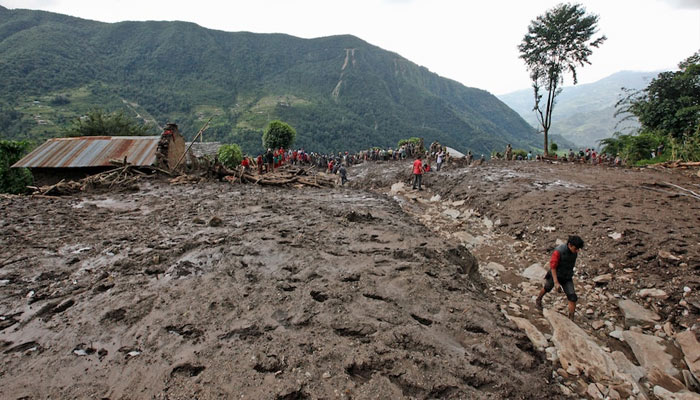
Nepal Pilots AI-Powered Landslide Forecasting to Tackle Monsoon Disasters.
Every morning in the hilly village of Kimtang, Nepali schoolteacher Bina Tamang checks a rain gauge and shares water level photos with experts in Kathmandu. Her simple routine feeds into a cutting-edge AI-powered landslide warning system, aiming to save lives in one of the world’s most disaster-prone regions.
Developed by researchers at the University of Melbourne and partners from Nepal, the UK, and Italy, the system — named SAFE-RISCCS (Spatiotemporal Analytics, Forecasting and Estimation of Risks from Climate Change Systems) — combines rainfall data, satellite imagery, ground movement, and local observations to predict landslides weeks in advance.
Nepal is particularly vulnerable during the monsoon season, when floods and landslides claim hundreds of lives across South Asia. In 2023 alone, landslides accounted for 70% of monsoon-related deaths in Nepal.
Tamang, 29, understands the risk personally. Her family had to relocate due to soil erosion when she was five, and the 2015 earthquake further destabilized their new settlement. “The villagers have lived in fear,” she said. “But I am hopeful this early warning system can help save lives.”
The project is currently being piloted in Kimtang (Nuwakot district) and Jyotinagar (Dhading district). It relies heavily on community participation and local knowledge, making it both low-cost and scalable.
“We are still in the early stages, but the AI will eventually generate real-time alerts and visual risk maps based on collected data,” said Sanjaya Devkota, one of the system’s technical advisors. “The goal is to provide timely warnings so communities can take action.”
Nepal has made strides in flood preparedness — including over 200 river sirens — but lags behind in landslide forecasting due to the complexity of mountainous terrain. According to disaster expert Rajendra Sharma, climate change is worsening the threat through shifting rain patterns, declining snowfall, and increasing wildfires.
Professor Basanta Adhikari of Tribhuvan University, a project partner, said if the system proves reliable during this year’s monsoon, it could be scaled up across the country. “We’re adapting global technologies to Nepal’s unique challenges,” he said.
With Asia facing more climate-related disasters than any other region in 2023, experts say expanding such systems is essential. “Predicting landslides is harder than floods,” said hydrologist Binod Parajuli. “But without these technologies, reducing the human toll is nearly impossible.”
Comments are closed.