
21st Century Warfare Moves to Orbit: Satellites and Space Weapons at the Frontline

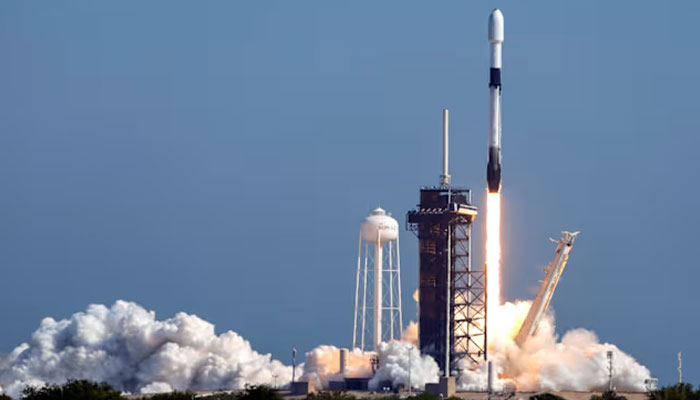
From Hijacked Satellites to Lunar Mines: How Space Became the New War Zone.
When Russia staged its Victory Day parade this year, Kremlin-backed hackers hijacked a Ukrainian satellite broadcast. Instead of regular programming, Ukrainians watched Moscow’s tanks, soldiers, and missiles rolling across Red Square. The incident was both intimidation and demonstration: modern warfare now extends beyond land, sea, and air into cyberspace—and the vacuum of outer space.
The Vulnerability of Satellites
With more than 12,000 active satellites orbiting Earth, space infrastructure has become critical for communications, navigation, intelligence, military operations, and even economic supply chains. Disrupting them could inflict massive damage without a single bullet fired.
“Think about GPS,” said Tom Pace, CEO of cybersecurity firm NetRise and a former U.S. Marine. “Imagine if a population lost that, and the confusion it would cause.”
Russia’s 2022 cyberattack on U.S.-based satellite company Viasat, which knocked out Ukrainian networks and disrupted internet service across Europe, illustrated just how exposed satellite systems are. Often, the weakest link is outdated software or poorly secured ground infrastructure.
Russia’s Space Weapons Ambitions
U.S. officials recently declassified intelligence suggesting Russia is developing a nuclear space weapon capable of disabling nearly all satellites in low-Earth orbit. If detonated, such a device could render orbit unusable for a year, crippling global communications, navigation, and missile-warning systems.
Representative Mike Turner likened the threat to a “Sputnik moment,” warning:
“If this anti-satellite nuclear weapon were put in space, it would be the end of the space age. This is the Cuban Missile Crisis in space.” The weapon is not yet operational, but its potential has alarmed national security officials.
Mining the Moon: The Next Frontier
Competition in space isn’t limited to weapons. Nations are eyeing the moon and asteroids for resources, particularly helium-3, a rare isotope believed to be key for future nuclear fusion energy.
NASA recently announced plans to deploy a small nuclear reactor on the moon. “We’re in a race with China,” said acting NASA Administrator Sean Duffy. “To have a base on the moon, we need energy and control of key locations.”
China and Russia, meanwhile, have unveiled their own lunar nuclear plant plans. Analysts warn that whoever dominates extraterrestrial energy sources could gain decisive geopolitical leverage.
“This isn’t sci-fi. It’s quickly becoming reality,” said cybersecurity expert Joseph Rooke. “If you dominate Earth’s energy needs, that’s game over.”
China’s Counter-Argument
Beijing insists it opposes militarizing space. “The U.S. is attempting to turn space into a war zone,” said Liu Pengyu, spokesperson for China’s embassy in Washington, accusing Washington of building alliances and expanding its space military presence.
The U.S. Response
Created in 2019, the U.S. Space Force is tasked with protecting America’s satellites and ensuring dominance in space. Its unmanned shuttle, the X-37B, conducts classified missions and long-duration tests, while the Pentagon works on bolstering satellite resilience.
“Space is a warfighting domain, and it is the Space Force’s job to contest and control its environment,” the service said in a statement.
For decades after the Cold War, U.S. supremacy in space went largely unchallenged. Now, with Russia and China pressing forward, officials say the U.S. must act decisively to prevent space from becoming the next battlefield.
“You have to pay attention to these things so they don’t happen,” Turner warned.
Comments are closed.