
CBI Opposed, Victim Threatened, Yet Kuldeep Sengar Secures Interim Bail Four Times

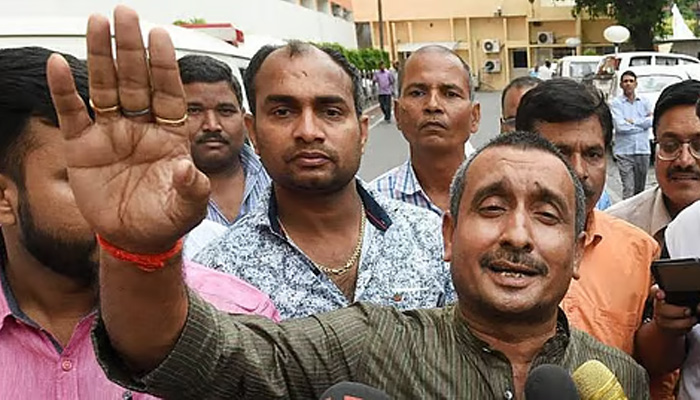
CBI Objected, Victim Warned, Yet Kuldeep Sengar Got Interim Bail Four Times.
Kuldeep Singh Sengar, the convicted former MLA, stepped out of jail four times in the last three years on interim bail — for his daughter’s wedding, his cataract surgery, and to address medical issues including anxiety and diabetes. Sengar cited these prior bails before the Delhi High Court, arguing that he posed no threat to the rape victim’s family.
The court orders and found that Sengar secured bail despite strong objections from both the CBI and the victim. The total duration of these interim bails amounted to 23 days:
27 Jan – 1 Feb 2023
6 – 10 Feb 2023
11 – 20 Dec 2024
23 – 24 Dec 2024
Permanent Bail and Court’s Reasoning
On 23 December 2025, the Delhi High Court permanently suspended Sengar’s sentence, ruling that mere apprehensions about victim safety were insufficient to keep him in custody. The court described the argument of threat perception as “not tenable.”
Sengar emphasized his four previous interim bails to strengthen his case.
Background on Previous Bails
First Bail (Jan–Feb 2023): Granted for his daughter’s wedding in Gorakhpur and Lucknow. Despite objections from the victim and the CBI, Sengar was released for short intervals, attending the wedding on 8 February.
Second Bail (Dec 2024): Requested for five months citing multiple health issues — diabetes, hypertension, asthma, spine problems, cataract, hemorrhoids, hydrocele, and anxiety. The court limited this to 11–20 December 2024. Sengar underwent treatment at AIIMS, New Delhi, where a medical board of 11 doctors examined him. They concluded he was stable and fit for outpatient care, though concerns were raised about excessive visitors affecting hospital operations.
Third Bail (23–24 Dec 2024): Granted for cataract surgery at AIIMS.
Despite medical justifications, both the CBI and the victim repeatedly raised objections, citing security risks and potential misuse of bail, yet the court allowed Sengar temporary release each time.
This pattern of interim bail approvals played a key role in Sengar’s final argument for permanent suspension, raising questions about the judicial process and victim protection mechanisms.
Comments are closed.