

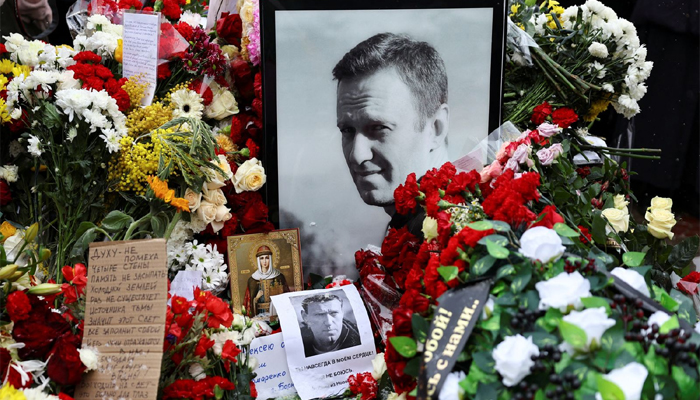
UK and Four Allies Accuse Russia of Navalny Murder, Cite Rare Dart Frog Toxin
The United Kingdom and four other countries have formally accused Russia of being responsible for the death of opposition leader Alexei Navalny, asserting he was killed using a rare poison derived from dart frog toxin.
The foreign ministries confirmed the presence of epibatidine, a toxin naturally found in South American poison dart frogs but not in Russia. “We know the Russian state used this lethal toxin to target Navalny because of his opposition,” the UK Foreign Office said.
In a joint statement, the nations said Russia had the means, motive, and opportunity to carry out the killing. They also confirmed they had reported Moscow to the Organisation for the Prohibition of Chemical Weapons (OPCW) for violating the Chemical Weapons Convention.
Navalny’s widow, Yulia Navalnaya, described her husband’s death in a Russian Arctic prison in 2024 as “murder” and said the cause is now a “scientifically proven fact.” Speaking at the Munich Security Conference, she said, “Two years ago I said it was Vladimir Putin who killed my husband. Back then, it was just words. Today, it is science-proven.”
UK Foreign Secretary Yvette Cooper, who met Navalnaya at the conference, condemned the Kremlin’s actions as a “barbaric plot to silence his voice.”
Navalny had previously survived a 2020 poisoning with the Soviet-era nerve agent Novichok while campaigning in Siberia and was treated in Germany. He was a prominent anti-corruption campaigner who mobilized hundreds of thousands in protests against the Kremlin and exposed alleged illicit wealth within President Vladimir Putin’s inner circle.
The countries emphasized that Russia’s failure to destroy all chemical weapons constitutes a breach of international obligations. “There is no innocent explanation for epibatidine being found on Navalny’s body,” the UK Foreign Office said.
Russian authorities have repeatedly denied involvement in Navalny’s death.
Comments are closed.