
Sam Altman Hints at Stronger India Partnership Before Global AI Impact Summit 2026

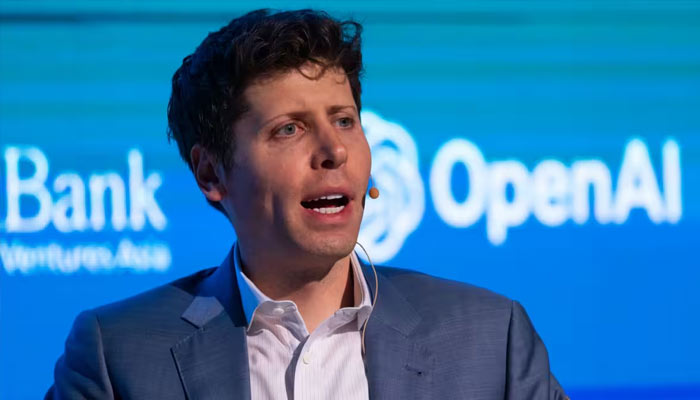
Sam Altman Calls India a ‘Full-Stack AI Leader’, Signals Deeper Engagement Ahead of 2026 Summit
In a significant endorsement of India’s fast-expanding artificial intelligence ecosystem, Sam Altman has described the country as a potential “full-stack AI leader” and signalled plans to deepen OpenAI’s engagement with policymakers and institutions ahead of the Global AI Impact Summit 2026.
Writing in The Times of India on Sunday, the OpenAI chief said India has emerged as the company’s second-largest user base globally, behind only the United States. According to Altman, India now accounts for 100 million weekly active users on ChatGPT, with the country hosting the largest student user base worldwide.
India also ranks fourth globally in adoption of Prism, OpenAI’s free scientific research and LaTeX-based collaboration platform.
India to Host Global AI Impact Summit 2026
New Delhi will host the AI Impact Summit 2026 at Bharat Mandapam, bringing together leading global technology executives, researchers and policymakers.
The five-day event, scheduled from February 16 to 20, will mark the fourth edition in an ongoing international AI summit series. Registrations for the event have already opened through official channels.
Altman is expected to attend the summit, underscoring India’s growing importance in the global AI landscape.
OpenAI’s Expanding India Footprint
Altman revealed that OpenAI opened its first office in Delhi in August last year and plans to scale up operations further in 2026. The company has also stepped up ecosystem engagement, recently convening more than 200 nonprofit leaders across four Indian cities to train them in using ChatGPT to strengthen organisational capabilities.
“OpenAI is committed to doing its part to help build AI in India, with India, and for India,” Altman wrote, adding that new partnerships with the Indian government will be announced soon to broaden public access to AI tools.
Access, Adoption and Agency
In his column, Altman outlined a three-pillar framework for maximising AI’s benefits:
Access: Ensuring AI tools are available regardless of income or education level
Adoption: Integrating AI into schools, clinics and small businesses
Agency: Building large-scale AI literacy so users can meaningfully deploy the technology
He warned against what he termed a “capability overhang” — a scenario where access to powerful AI tools outpaces users’ skills — and emphasised the importance of practical fluency in coding and knowledge work.
Altman also referenced the government’s India AI Mission, approved in March 2024 with an allocation of ₹10,371.92 crore over five years. The mission aims to expand compute infrastructure, support AI startups and accelerate multilingual applications in key sectors such as healthcare and agriculture.
“AI will help define India’s future, and India will help define AI’s future,” Altman wrote, highlighting infrastructure investment and democratic participation as India’s key strengths in shaping the next phase of global AI development.
Comments are closed.