

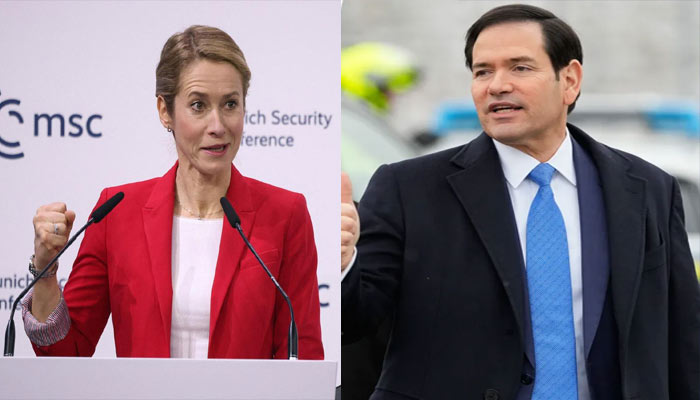
A senior European Union official has firmly rejected claims that Europe is facing “civilizational erasure,” pushing back against criticism from the US administration and signaling growing friction across the Atlantic.
Speaking at the Munich Security Conference, EU foreign policy chief Kaja Kallas dismissed assertions made in a recent US national security strategy that portrayed Europe as weakened by immigration, low birth rates and what it described as constraints on free speech.
“Contrary to what some may say, woke, decadent Europe is not facing civilizational erasure,” Kallas said. She argued that the European Union continues to attract interest globally, noting that even citizens outside the continent have expressed interest in joining the bloc.
Her remarks came a day after US Secretary of State Marco Rubio addressed the same conference, attempting to reassure European allies about the future of trans-Atlantic ties. While Rubio struck a more measured tone than Vice President JD Vance did at last year’s gathering, he made clear that Washington intends to reshape aspects of the alliance, particularly on migration, trade and climate policy.
The December US national security strategy had warned that Europe risks “civilizational erasure,” citing economic stagnation and policies it claimed undermine national identity and political pluralism. Kallas rejected what she described as “European-bashing,” defending the EU’s commitment to human rights, democratic values and open societies.
“We are pushing humanity forward, trying to defend human rights and prosperity,” she said. “It’s hard for me to believe these accusations.”
Rubio emphasized that ending the trans-Atlantic partnership is “neither our goal nor our wish,” describing the United States as historically and culturally intertwined with Europe. However, he reiterated that the administration would maintain its positions on key policy disagreements.
European leaders, for their part, signaled they would not retreat from their core values. British Prime Minister Keir Starmer said Europe must continue to defend its “vibrant, free and diverse societies,” arguing that diversity and openness strengthen rather than weaken the continent.
Despite clear policy differences, Kallas suggested the relationship remains fundamentally intact. “We don’t see eye to eye on all issues, and that will remain the case,” she said. “But we can work from there.”
Comments are closed.