

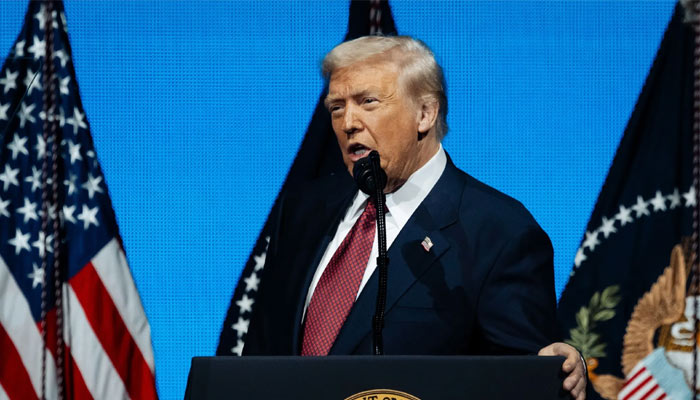
In a landmark ruling, the Supreme Court of the United States on Friday held that President Donald Trump acted beyond his legal authority by imposing sweeping tariffs without clear approval from Congress, delivering a major blow to his trade policy framework.
In a 6–3 decision, the court ruled that the emergency powers cited by the Trump administration did not authorise tariffs of such scale and scope. Chief Justice John Roberts, writing for the majority, said the president had asserted “extraordinary power” to impose tariffs of “unlimited amount, duration, and scope” and stressed that such authority must rest on explicit congressional authorisation.
The court concluded that the statute relied upon by the administration — the International Emergency Economic Powers Act (IEEPA) — did not provide a sufficient legal basis for the broad tariff regime.
The Legal Battle
The ruling stems from consolidated cases — Learning Resources v. Trump and Trump v. V.O.S. Selections, Inc. — filed in 2025, challenging whether IEEPA permitted the executive branch to impose tariffs by declaring national emergencies.
Enacted in 1977, IEEPA grants the president authority to regulate certain economic transactions in response to extraordinary foreign threats. It has historically been used to freeze assets, block transactions, or impose targeted sanctions — but not to implement sweeping global tariffs.
After returning to office in January 2025, Trump invoked IEEPA to declare national emergencies tied to trade deficits, illegal immigration and drug trafficking. On April 2, 2025 — dubbed “Liberation Day” by the administration — he signed Executive Order 14257, imposing tariffs on nearly all US trading partners, including India. The move triggered volatility in global markets and drew criticism from lawmakers who argued that tariff powers rest primarily with Congress under the Constitution.
Several lower courts had earlier ruled that the measures exceeded presidential authority, setting the stage for Supreme Court review.
Fiscal and Political Fallout
The decision could carry major financial implications. Economists at the Penn-Wharton Budget Model had estimated that more than $175 billion in tariff collections could be subject to refunds if the court invalidated the levies.
The Congressional Budget Office had previously projected that Trump’s tariff programme would generate roughly $300 billion annually over the next decade. If large-scale refunds are required, the fiscal impact could rival or exceed annual spending by major federal departments.
The ruling also comes shortly after a political setback for the administration in the House of Representatives, where a small group of Republicans joined Democrats in efforts to challenge protections for the tariffs.
What Comes Next?
Administration officials have indicated they are exploring alternative statutory authorities that could allow the reimposition of certain tariffs under different trade laws. US Treasury Secretary Scott Bessent previously said the Treasury Department would be able to manage potential refund obligations, while expressing confidence in the administration’s legal position before the verdict.
The Supreme Court’s decision reinforces congressional primacy over trade policy and sets a precedent limiting the scope of emergency economic powers in reshaping global commerce.
Comments are closed.