
DRDO to Build Mega Jet Engine Test Facility, Boosting India’s Defence Aviation

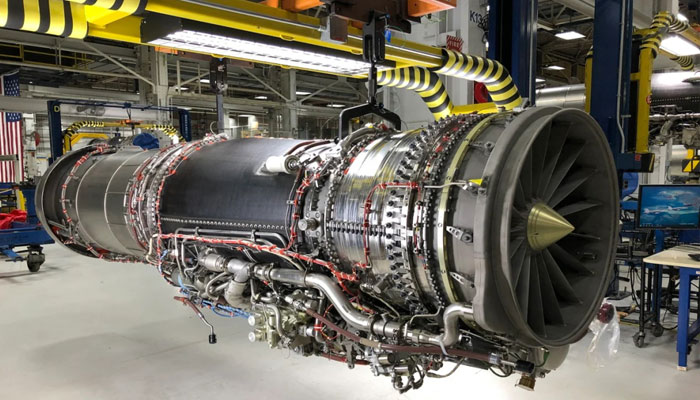
India is quietly pushing forward in one of the most complex frontiers of defence technology — developing its own jet engines — with a fresh move aimed at fixing a long-standing capability gap.
The Defence Research and Development Organisation (DRDO), through its Bengaluru-based lab Gas Turbine Research Establishment (GTRE), has issued a Request for Information (RFI) to global and domestic firms to help set up a National Aero Engine Test Complex in the country.
Plugging a Critical Gap
The proposed facility is designed to support the testing of India’s Indigenous Advanced High Thrust Class Aero Engine, currently under development. More broadly, it aims to address a major bottleneck that has hindered India’s jet engine ambitions for decades — the lack of advanced, integrated testing infrastructure.
The complex will allow full engine testing as well as evaluation of key components such as fans, compressors, combustors, turbines and afterburners. Crucially, it will simulate real-world operating conditions, including high-altitude environments, extreme temperatures, and pressure variations — essentially enabling engineers to test engines on the ground as if they were operating at 40,000 feet.
Lessons from the Kaveri Programme
India’s struggle to build a fully indigenous jet engine is best illustrated by the Kaveri engine programme. Despite early promise, the project faced multiple setbacks, including insufficient thrust output and reliability concerns.
A key but often overlooked factor behind these challenges has been the absence of world-class testing facilities within the country. Without the ability to rigorously test engines under extreme conditions, even well-designed systems cannot be fully validated or refined.
A Technology Few Nations Master
Jet engine development remains one of the most demanding engineering challenges globally, mastered by only a handful of countries such as the United States, United Kingdom, France, Russia and China. Building such capability requires not just design expertise but also extensive testing, iteration and validation infrastructure.
The proposed test complex is a critical step toward bridging that gap and moving India closer to that elite group.
Reducing Strategic Dependence
Currently, many of India’s frontline platforms, including the HAL Tejas, rely on engines supplied by foreign manufacturers such as General Electric.
While these partnerships have enabled progress, they also create strategic dependencies — from limited access to core technologies to vulnerabilities during geopolitical tensions or supply disruptions.
Building Long-Term Capability
The new initiative signals a shift from dependence to self-reliance. A dedicated aero engine test complex would significantly shorten development cycles, improve reliability, and accelerate indigenous engine programmes.
More importantly, it lays the groundwork for powering future combat aircraft — including next-generation fighter platforms — with engines developed and tested entirely within India.
In essence, this is not just about building a facility. It is about building the ecosystem needed for India to finally crack one of the toughest challenges in aerospace engineering.
Comments are closed.