
Who Will Pay for Iran’s $300 Billion Rebuild? Gulf States, Washington or Private Capital

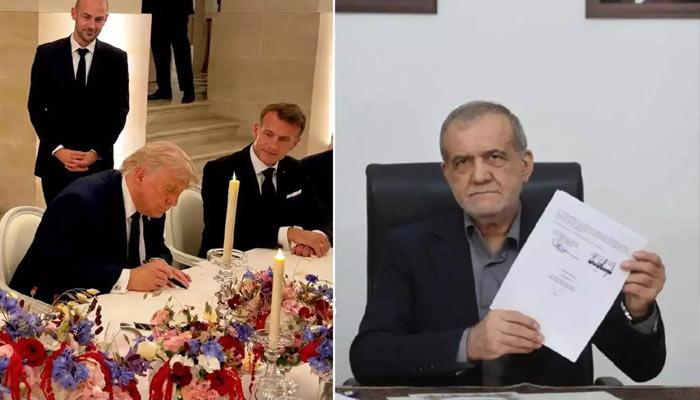
Iran’s $300 Billion Reconstruction Fund: Who Will Pay for Tehran’s Post-War Recovery?
A proposed $300 billion reconstruction and economic development package for Iran has emerged as one of the most significant provisions of the preliminary agreement between Tehran and Washington. But while the figure has grabbed global attention, one critical question remains unanswered: where will the money come from?
The agreement makes clear that the United States will not directly finance Iran’s recovery. Instead, Washington has committed to working with regional partners and private investors to develop a funding mechanism over the next 60 days.
What Does the Agreement Say?
Under the memorandum of understanding (MoU), the US and its regional partners will work towards creating a plan worth at least $300 billion for Iran’s reconstruction and economic development.
The framework states that the exact mechanism for raising and deploying the funds will be finalised during negotiations on a comprehensive agreement. It also commits the US to providing the licences, waivers and regulatory approvals needed to facilitate financial transactions linked to the plan.
However, access to these economic benefits will depend on Iran demonstrating compliance with the terms of the agreement.
Will American Taxpayers Fund Iran?
US officials have firmly rejected suggestions that Washington will bankroll the package.
President Donald Trump dismissed reports claiming the US would hand Iran $300 billion, while Vice President JD Vance said “not a cent” of taxpayer money would be sent to Tehran.
Instead, Washington’s role is expected to focus on facilitating investment, easing financial restrictions and helping assemble a consortium of investors willing to participate in Iran’s recovery.
Former US National Security Adviser Jake Sullivan described the proposal as a major departure from previous agreements, noting that the US is actively committing to help attract investment into Iran rather than simply lifting sanctions.
How Could the Fund Be Structured?
According to reports, negotiators are considering a privately financed investment vehicle rather than a traditional aid package.
The proposed structure would pool capital from private investors, sovereign wealth funds and financial institutions interested in participating in Iran’s reconstruction and long-term economic development.
Reports suggest more than half of the proposed funding has already attracted preliminary commitments from private-sector participants, although the identities of investors have not been disclosed publicly.
Importantly, the fund is expected to operate separately from sanctions relief measures and Iran’s frozen overseas assets.
Gulf States Seen as Key Players
While the agreement refers only to “regional partners,” attention has largely focused on wealthy Gulf nations as potential contributors.
Countries such as Saudi Arabia, the United Arab Emirates and Qatar possess both the financial resources and investment capacity needed for projects of this scale.
Yet their participation is far from guaranteed.
Several Gulf countries were directly affected by Iranian military actions during the conflict, making political trust a major obstacle. Saudi Foreign Minister Prince Faisal bin Farhan recently indicated that rebuilding confidence would be necessary before meaningful economic cooperation could be considered.
The UAE faces a similar dilemma. Although it has historically been one of Iran’s most important trading partners, it was also among the countries most affected by the conflict and has previously demanded accountability for damages.
Why Might Gulf Countries Invest?
Despite the tensions, there are strategic reasons why Gulf states could consider supporting Iran’s reconstruction.
A more stable and economically integrated Iran could reduce regional tensions, lower security risks and create new commercial opportunities across the Middle East.
Analysts also view the reconstruction fund as an incentive designed to encourage Iranian compliance with the agreement by offering a tangible pathway to economic recovery.
For Tehran, the prospect of large-scale foreign investment could be as important as sanctions relief itself.
- Political Resistance in Washington
- The proposal has already triggered debate in the United States.
Critics from both major parties have questioned the wisdom of facilitating such a large economic package for Iran.
Some Democrats argue that resources of this scale should be directed towards domestic priorities, while several Republicans have expressed concern that Iran could receive substantial economic benefits without sufficient political reform.
The criticism reflects broader concerns about whether reconstruction funds could ultimately strengthen the Iranian state without guaranteeing long-term behavioural changes.
Separate From Sanctions Relief and Frozen Assets
The reconstruction fund is distinct from other economic measures included in the agreement.
The MoU separately provides for sanctions relief, expanded oil exports and the release of Iran’s frozen overseas assets once a final deal is reached.
US officials have indicated that any released assets would be subject to oversight and restrictions designed to prevent their use for military or militant activities.
A New Economic Approach
The proposed reconstruction initiative represents a significant shift from the 2015 nuclear agreement.
While the earlier deal primarily focused on sanctions relief and restoring Iran’s access to its own funds, the new framework seeks to actively channel investment into rebuilding the country’s economy.
Whether the ambitious $300 billion target becomes reality will depend on the willingness of Gulf governments, international investors and financial institutions to commit capital — and on whether enough trust can be rebuilt after a conflict that left much of the region deeply divided.
For now, the biggest question is not how much Iran could receive, but who will ultimately be willing to write the cheque.
Comments are closed.