

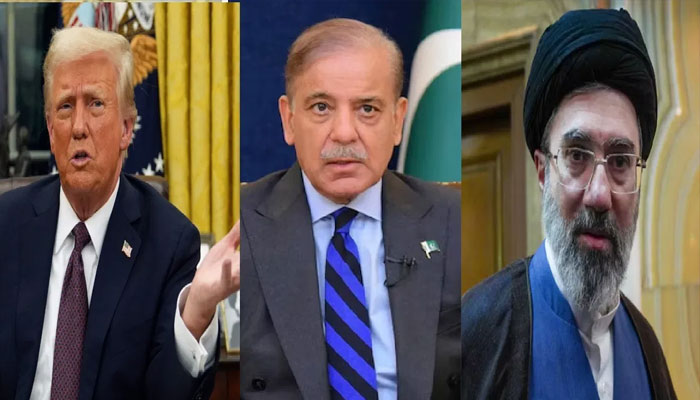
Pakistan Pushes for Mediator Role as US–Iran Talks May Be Hosted in Islamabad
Amid the ongoing conflict involving Iran, United States and Israel, Pakistan is positioning itself as a key mediator, leveraging its ties with all sides to help broker peace. According to a report by the Financial Times, Islamabad has offered to host talks between senior US officials and Iranian representatives, possibly as early as this week.
Diplomatic Balancing Act
Pakistan has so far walked a fine line—condemning strikes on Iran while simultaneously calling for restraint. Now, it appears to be stepping up efforts to play a more direct role in de-escalation.
The country’s military chief Asim Munir reportedly spoke with US President Donald Trump, while Prime Minister Shehbaz Sharif held discussions with Iranian President Masoud Pezeshkian.
These contacts coincided with Trump’s decision to delay a previously issued threat to target Iran’s power infrastructure, which he said followed “productive” exchanges with Tehran—though Iran has denied any direct talks.
Backchannel Messaging Underway
Tehran has acknowledged receiving messages via “friendly states.” Foreign ministry spokesperson Esmaeil Baqaei said responses had been conveyed in line with Iran’s official stance, adding that there was no shift in its position on key issues like the Strait of Hormuz.
The Financial Times report suggests Pakistani officials are facilitating backchannel communication between Tehran and Trump’s envoys, including Steve Witkoff and Jared Kushner.
Why Pakistan?
Pakistan’s strategic positioning strengthens its case as a mediator. It maintains working ties with both Washington and Tehran, has avoided direct military fallout in the conflict, and enjoys close relations with Gulf states.
It is also home to one of the largest Shia populations outside Iran and has a defence pact with Saudi Arabia, adding to its regional leverage.
Iran’s Supreme Leader Ayatollah Mojtaba Khamenei recently acknowledged Pakistan in a public message marking the Iranian New Year, signalling goodwill amid tensions.
Multiple Players, Limited Progress
Pakistan is not alone in attempting to mediate. Officials from Egypt, Gulf nations and Turkey are also involved in relaying messages between the two sides.
Pakistan’s Foreign Minister Ishaq Dar has discussed the issue with regional counterparts, including Turkey’s Hakan Fidan, while Egypt’s Badr Abdelatty has also been engaged in parallel outreach.
Despite these efforts, there have been no direct negotiations between Washington and Tehran so far, according to Reuters.
US Response and Uncertain Outlook
The White House has remained tight-lipped on the reported mediation. Press Secretary Karoline Leavitt said the US would not discuss “sensitive diplomatic discussions” publicly.
Analysts remain sceptical about the prospects of a breakthrough. Sanam Vakil of Chatham House noted that multiple countries are “scrambling” to de-escalate tensions but warned that the efforts remain at an early stage.
She suggested that neither side appears ready to compromise, with Iran believing it holds strategic leverage and the US facing pressure from regional allies.
Talks Still a Long Way Off
While countries like Oman and Qatar have traditionally mediated between the US and Iran, there has been little momentum in diplomatic efforts since the conflict escalated.
For now, Pakistan’s mediation push highlights the urgency of de-escalation—but with positions hardening on both sides, a breakthrough remains uncertain.
Comments are closed.