

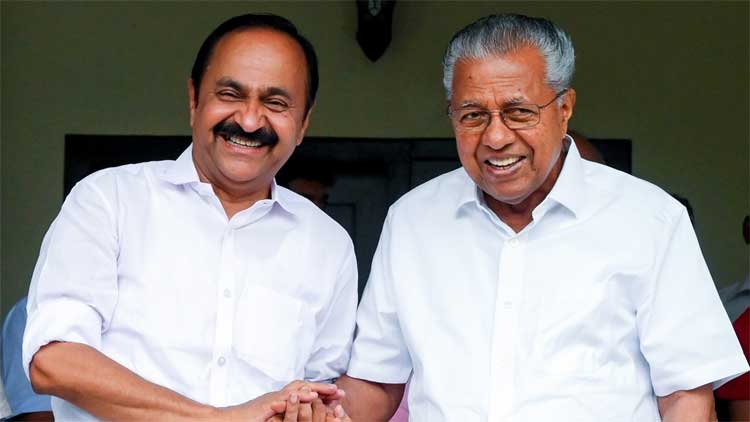
Kerala may have voted out the Left, but history suggests the CPI(M)-led alliance is far from finished. The defeat of the Communist Party of India (Marxist)-led Left Democratic Front in the 2026 Assembly election appears less like a collapse and more like another turn in the state’s long-standing cycle of alternating governments.
As VD Satheesan prepares to take office after the Congress-led United Democratic Front’s sweeping victory, the Left finds itself out of power after a decade in office — but not necessarily out of favour among voters.
The UDF won 102 of Kerala’s 140 Assembly seats, decisively defeating the LDF led by outgoing chief minister Pinarayi Vijayan, which was reduced to 35 seats. Yet analysts argue the verdict reflects anti-incumbency more than a rejection of Left politics itself.
Kerala’s political history has long been shaped by an electoral rhythm in which power alternates between the UDF and the LDF. Since coalition politics stabilised in the 1980s, the two alliances have dominated the state, with the LDF winning six Assembly elections and the UDF taking the rest, often by comparable margins.
The BJP, despite maintaining a vote share of around 11 per cent, has continued to struggle to convert support into seats, leaving Kerala effectively a two-front contest.
The Left’s resilience lies in its deep organisational network. The CPI(M), Kerala’s largest Left party, operates through thousands of branch and local committees across all 14 districts, supported by powerful trade unions, farmer groups, youth organisations and women’s fronts built over decades.
Its cadre-based structure, regular organisational conferences and emphasis on ideological training have helped preserve a grassroots connection that often survives electoral setbacks. Political observers note that Kerala voters frequently “bench” governments rather than permanently discard them.
The pattern has repeated before. After the UDF’s dominant 99-seat victory in 2001, the LDF stormed back in 2006 with 98 seats. The UDF returned in 2011, only to be displaced again by the Left in 2016. In 2021, Kerala broke its tradition of alternating governments by re-electing Vijayan’s LDF for a second consecutive term — an outcome seen at the time as historic.
Now, after 10 years in office, the Left has once again been pushed into opposition. But its ideological influence, organisational depth and enduring social coalitions suggest it remains firmly rooted in Kerala’s political landscape and capable of mounting another comeback.
Comments are closed.