

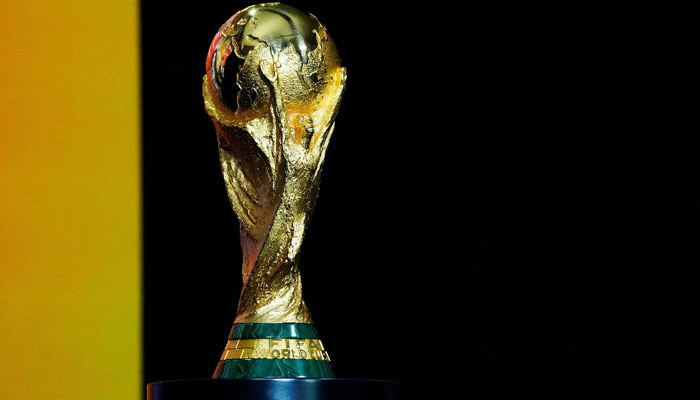
With the countdown to the 2026 FIFA World Cup now entering its final weeks, uncertainty continues to hang over Indian football fans.
Shockingly, there is still no confirmed broadcaster for the tournament in India, raising serious questions over how millions across the country will watch football’s biggest spectacle once the competition begins on June 12.
The issue recently reached the Delhi High Court, where public broadcaster Prasar Bharati clarified that it is not responsible for acquiring World Cup broadcasting rights for India.
The submissions came before Justice Purushaindra Kumar Kaurav during the hearing of a petition seeking directions to ensure the World Cup is televised in India through public platforms like Doordarshan and DD Sports. The plea had requested free-to-air telecast of major matches, including the opening game, quarter-finals, semi-finals and final.
However, the case took another turn after petitioner Advocate Avdhesh Bairwa sought permission to withdraw the plea with liberty to approach another court for appropriate relief.
The court had earlier issued notices to the Ministry of Information and Broadcasting and Prasar Bharati after concerns surfaced over the possibility that India — despite being one of the world’s fastest-growing football markets — could enter the World Cup without an official broadcaster.
And that possibility still feels extraordinary.
India may not regularly qualify for the World Cup, but its football audience has expanded dramatically over the last decade. During the 2022 FIFA World Cup, India reportedly emerged as one of FIFA’s largest engagement markets globally, generating nearly 745 million interactions during the tournament despite the national team not participating.
Yet, with just weeks left before kickoff, no broadcaster has officially secured the Indian media rights for the 2026 edition.
WHY THE BROADCAST DEAL HAS STALLED
At the centre of the uncertainty lies a major commercial disagreement between FIFA and Indian broadcasters.
According to details mentioned in the petition, FIFA initially valued the India rights package for the 2026 and 2030 World Cups at close to USD 100 million. After limited interest from broadcasters, that figure was reportedly lowered to around USD 35 million.
Even then, negotiations failed to progress. Reports cited in court claimed that a USD 20 million bid from JioStar was rejected.
Several factors have complicated discussions:
Most matches will be played in the USA, Canada and Mexico, meaning late-night or early-morning timings for Indian viewers
Broadcasters are already heavily committed financially to premium cricket properties and IPL rights
Sports networks have become increasingly cautious about investing huge sums in non-cricket events
FIFA’s valuation and broadcaster expectations still appear far apart
Technical preparation, scheduling and advertising timelines are rapidly shrinking as the tournament approaches
That combination has created a bizarre scenario where one of the biggest sporting events on the planet still does not have a confirmed Indian television or streaming partner.
WILL INDIA STILL GET TO WATCH THE WORLD CUP?
Despite the deadlock, there is still widespread belief within Indian football circles that an agreement will eventually be reached before the tournament begins.
The All India Football Federation has already acknowledged concerns surrounding the situation, though it clarified that it cannot directly interfere in commercial negotiations involving media rights.
AIFF Deputy General Secretary M Satyanarayan recently stressed that India’s football audience remains too significant for FIFA and broadcasters to completely ignore.
And that is perhaps the biggest reason optimism still survives.
Completely shutting out one of the world’s largest sports audiences from the FIFA World Cup would not only be commercially damaging, but would also raise serious questions about accessibility for a tournament already classified as a sporting event of national importance under Indian law.
For now, however, Indian fans remain in limbo, waiting for clarity while the clock ticks closer to June 12.
Comments are closed.