

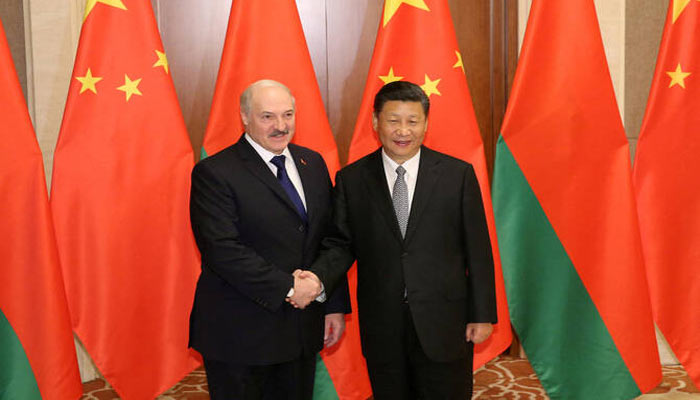
Xi Jinping Meets Belarus President Lukashenko in Beijing
Chinese President Xi Jinping held talks with Belarusian President Alexander Lukashenko in Beijing on Monday, as the two countries continued high-level engagements amid evolving geopolitical tensions.
According to Chinese state broadcaster CCTV, Xi welcomed Lukashenko at Beijing’s Diaoyutai State Guesthouse. State media did not immediately release details of the discussions or announce any agreements following the meeting.
Close Russia Ally Visits China
Lukashenko, who has led Belarus since 1994, remains one of Russian President Vladimir Putin’s closest allies.
Belarus played a key role in the early stages of Russia’s invasion of Ukraine by allowing Russian forces to launch military operations from its territory in 2022. However, Lukashenko has consistently denied that Belarus intends to directly participate in the conflict.
The country, which borders several NATO members, also hosts Russia’s Oreshnik nuclear-capable missile system, underscoring its strategic importance in the region.
China’s Balancing Act
China has maintained that it is a neutral party in the Russia-Ukraine conflict and has repeatedly called for dialogue and a negotiated settlement.
However, Kyiv and several Western governments have accused Beijing of providing indirect support to Moscow, allegations China has denied.
Beijing has continued to strengthen diplomatic and economic ties with both Russia and Belarus while presenting itself as a potential mediator in efforts to end the war.
Lukashenko’s Latest China Visit
Monday’s meeting follows Lukashenko’s visit to China in September 2025, when he attended a large military parade in Beijing commemorating the anniversary of the end of World War II and participated in the Shanghai Cooperation Organization summit held in Tianjin.
The latest meeting highlights the continued strategic engagement between Beijing and Minsk as both countries seek to deepen bilateral cooperation amid an increasingly complex global geopolitical landscape.
Comments are closed.