
ASEAN Foreign Ministers Express ‘Serious Concern’ Over Middle East Crisis

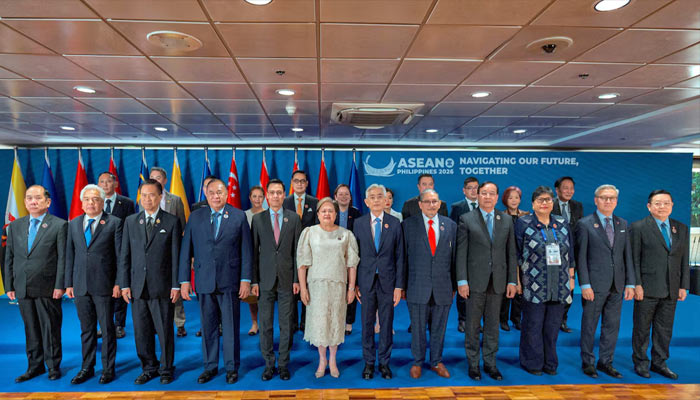
ASEAN Expresses ‘Serious Concern’ Over Middle East Crisis, Urges Restraint and Dialogue
ASEAN foreign ministers on Tuesday expressed “serious concern” over the rapidly evolving situation in the Middle East, calling on all parties to exercise restraint and avoid actions that could further escalate the conflict.
In a joint statement issued during the ASEAN Foreign Ministers’ Meeting in Manila, the ministers warned that the deteriorating situation was undermining ongoing diplomatic efforts and reducing the prospects for a peaceful resolution.
“The developments severely undermine ongoing efforts by key mediators and diminish prospects for a peaceful resolution through dialogue and diplomacy,” the statement said.
The Middle East crisis is one of several key issues on the agenda at the regional summit, alongside tensions in the South China Sea, energy security and Myanmar’s prolonged political crisis.
South China Sea Incident Overshadows Meeting
The gathering comes a day after a fresh confrontation between Chinese and Philippine personnel at the disputed Second Thomas Shoal.
The United States condemned what it described as China’s “dangerous” actions after the Philippines accused Chinese Coast Guard personnel of assaulting Filipino sailors and damaging a naval inflatable boat during Monday’s encounter. Beijing, however, blamed Manila for provoking the incident by approaching a Chinese vessel.
The latest clash has renewed concerns over stability in the South China Sea, where China claims sovereignty over nearly the entire waterway despite a 2016 international arbitral ruling rejecting its expansive territorial claims.
The incident is also expected to complicate negotiations between ASEAN and China on a long-awaited Code of Conduct aimed at managing disputes in the strategic maritime region.
Rubio in Manila for ASEAN Talks
The regional meeting coincides with US Secretary of State Marco Rubio’s visit to the Philippines.
Before leaving Washington, Rubio said he was open to holding a bilateral meeting with Chinese Foreign Minister Wang Yi, who is also attending the ASEAN meetings.
In an opinion article published in the Philippines ahead of his visit, Rubio reaffirmed Washington’s commitment to preserving freedom of navigation in Southeast Asia, warning that control of critical maritime routes by any power willing to use trade as a geopolitical tool would threaten the sovereignty, security and economic future of countries across the region.
Energy Security in Focus
Escalating tensions in the Middle East, particularly around the Strait of Hormuz, have also heightened concerns over global energy supplies.
For energy-importing nations such as the Philippines, the conflict has added pressure to secure alternative fuel sources. Manila declared a national energy emergency earlier this year and has broadened its oil imports, including purchases from Russia.
ASEAN ministers are expected to discuss strengthening regional energy cooperation, including efforts to advance the bloc’s Framework Agreement on Petroleum Security to improve fuel-sharing arrangements during supply disruptions.
Myanmar Remains a Challenge
Myanmar’s political crisis continues to divide ASEAN members more than five years after the military takeover.
While Thailand has pushed for greater engagement with Myanmar’s military leadership, arguing that dialogue is necessary to move the peace process forward, several member states remain opposed to restoring high-level participation until meaningful progress is made on ASEAN’s five-point peace consensus.
The differing approaches underscore the challenges ASEAN faces in balancing regional unity with efforts to address one of Southeast Asia’s most persistent conflicts.
With geopolitical tensions rising across multiple fronts, ASEAN leaders are expected to use the Manila meetings to reinforce calls for diplomacy, regional stability and peaceful resolution of disputes.
Comments are closed.