
COP31 Must Deliver Action On Clean Energy, India Has Key Role: UN Climate Chief

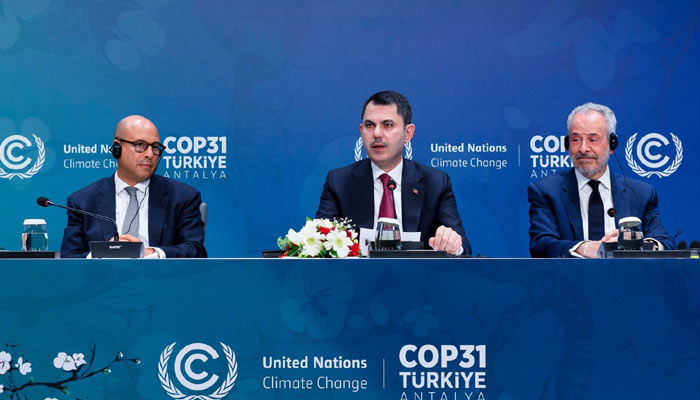
COP31 Must Turn Climate Commitments Into Action, India Has Key Role: UN Climate Chief
Calling India an “important voice” for the developing world, UN Climate Change Executive Secretary Simon Stiell on Tuesday said the upcoming COP31 summit must focus on delivering tangible climate action rather than making fresh promises, highlighting India’s clean energy transition as a model for other nations.
Stiell, who is on an official visit to New Delhi ahead of this year’s UN climate conference, met Union Environment Minister Bhupender Yadav, industry leaders and civil society representatives to discuss India’s preparations for the global summit.
Describing the discussions as “very productive”, Stiell said they covered India’s role in the negotiations, progress in renewable energy deployment and the country’s broader energy transition.
“Discussions ranged from preparations for COP31 and India’s role in the negotiations to understanding the progress on energy transition, electrification, renewable energy rollout and the challenges that remain,” he said.
India A ‘Solar Superpower’
Stiell praised India’s rapid expansion of renewable energy, describing the country as a “solar superpower.”
Referring to data from the International Renewable Energy Agency (IRENA), he said India currently has the world’s most cost-competitive solar power generation, producing electricity at lower costs than any other major economy.
He also said India’s continued engagement in international climate cooperation was particularly significant at a time when global multilateral institutions face growing geopolitical challenges.
COP31 To Focus On Delivering Existing Commitments
The 31st UN Climate Change Conference (COP31) is scheduled to be held in Antalya, Türkiye, from November 9 to 20.
While this year’s summit is not expected to feature major new negotiating mandates, Stiell said it should serve as the point where countries begin implementing commitments already made under the Paris Agreement.
“COP31 should be the defining moment for what implementation actually means and for delivering on existing commitments,” he said.
He acknowledged that the recent UN climate talks in Bonn produced mixed outcomes, with limited progress on several technical issues, leaving significant work ahead before the conference.
Climate Action Amid Global Uncertainty
This year’s negotiations come against the backdrop of heightened geopolitical tensions, including conflicts in West Asia and the United States’ withdrawal from the Paris Agreement, developments that have complicated discussions on climate finance and energy security.
Stiell said geopolitical crises should not distract governments from addressing climate change, warning that dependence on fossil fuels continues to expose economies to major financial shocks.
“Conflict has exacted a terrible human toll and sent fossil fuel cost chaos reverberating through the global economy,” he said, noting that India imports nearly 90 per cent of its crude oil.
‘Climate Crisis Has Not Paused’
Despite global conflicts and political uncertainty, Stiell said the climate emergency continues to intensify, with extreme weather affecting communities across every continent.
At the same time, he expressed confidence that international support for the Paris Agreement remains strong despite the US exit.
“Irrespective of the absence of one country, the rest all remain committed and expect that to continue,” Stiell said, noting that 194 countries have reaffirmed their commitment to the global climate pact.
He said COP31 offers an opportunity to shift the global conversation from ambitious targets to concrete implementation, with countries like India playing a central role in shaping the next phase of climate action.
Comments are closed.