
The Real Reason Thousands Are Gathering at Jantar Mantar Isn’t Wangchuk or Dipke

Why Jantar Mantar Is Suddenly Overflowing With Students — And It’s Not Sonam Wangchuk
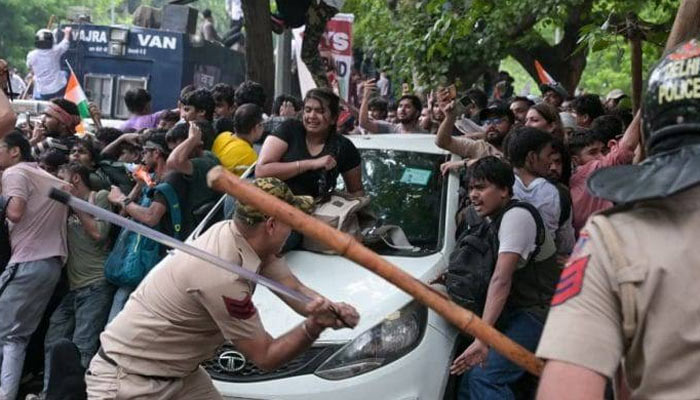
New Delhi’s Jantar Mantar has witnessed an unprecedented surge in crowds over the past two days, but the reason is no longer just the NEET-UG paper leak controversy or Ladakhi activist Sonam Wangchuk’s support for the agitation. Instead, protesters say it was the July 20 police crackdown that transformed the movement and drew thousands more to the national capital.
Among them is 26-year-old Aminul Hoque from Assam. Although he had been supporting the Cockroach Janta Party’s (CJP) campaign online since June, he decided to travel to Delhi only after watching videos of Delhi Police using lathi-charge and tear gas to disperse protesters during their Parliament march.
“I saw students being beaten while protesting peacefully. That’s when I decided I had to come,” Hoque told India Today Digital at Jantar Mantar.
Police Action Becomes Turning Point
For weeks, the protest over alleged irregularities in the NEET-UG examination remained relatively limited, attracting a few thousand students and activists demanding accountability and the resignation of Union Education Minister Dharmendra Pradhan.
However, protesters say Monday’s police action fundamentally changed the movement.
By Wednesday, roads leading to Jantar Mantar from Sansad Marg and Tolstoy Road were packed with students arriving from across the country. Many admitted they had not participated earlier but were motivated by videos circulating widely on social media showing clashes between protesters and police.
- One slogan echoed repeatedly across the gathering:
- “Baccho ko nahi maarna chahiye tha” (Students should not have been beaten).
- Frustration Turns Into Wider Mobilisation
Several protesters described the crackdown as the moment frustration turned into collective anger.
According to them, the movement has expanded beyond the NEET issue to include concerns over the right to peaceful protest and the state’s response to dissent.
Many first-time demonstrators said they felt compelled to join after witnessing the events of July 20 online, with fresh groups arriving from states including Bihar, Uttar Pradesh and Assam.
Delhi Police Defends Its Action
Delhi Police has maintained that force was used only after protesters allegedly became violent.
In its official statement, police said over 118 personnel, including senior officers, were injured, while around 70 protesters were detained. Authorities alleged demonstrators attempted to breach barricades, attacked police with stones and damaged public property despite repeated warnings.
The police said the use of lathi-charge and tear gas was necessary to restore law and order.
- Two Narratives, One Growing Protest
- The movement is now defined by two sharply different narratives.
- Police insist they responded to violence, while protesters argue the crackdown itself has become the biggest reason behind the swelling crowds.
At Jantar Mantar, several protesters displayed injuries they claimed were sustained during the police action. One student held a handwritten placard reading “Thank you for your love,” calling it a sarcastic reference to the force allegedly used against demonstrators.
As evening fell, fresh batches of students continued arriving with backpacks and overnight luggage, suggesting many planned to remain at the protest site.
The Protest’s New Focus
What began as a campaign over alleged examination irregularities has evolved into a broader movement centred on accountability, students’ rights and the freedom to protest.
Protesters say the July 20 crackdown has not weakened the agitation but instead strengthened it, bringing a new wave of participants from across the country who believe dialogue—not force—should be the response to student demonstrations.
Comments are closed.