
Petrol Would Have Hit ₹125 Per Litre Without Ethanol Blending, Says Government

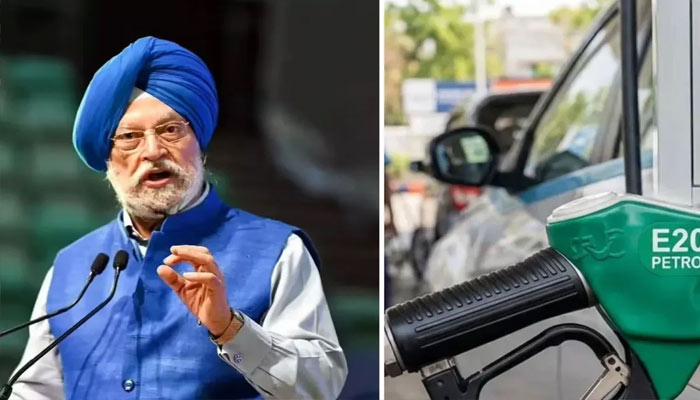
Without Ethanol Blend, Delhi Petrol Would Cost ₹125 Per Litre: Government
The Centre has defended its ethanol blending programme, claiming that petrol prices in Delhi could have climbed to ₹125 per litre when global crude oil prices peaked at $135 a barrel, had ethanol not been blended with petrol.
According to the Petroleum Ministry, the 20% ethanol blend (E20) helped cushion consumers from the sharp rise in international crude prices by reducing dependence on imported oil. While crude prices surged, Delhi consumers paid ₹94.77 per litre for petrol because ethanol—procured domestically at pre-determined prices—accounted for one-fifth of every litre sold, The Times of India reported.
The ministry said the ethanol programme effectively saved consumers nearly ₹30 per litre during the peak of the global oil price spike.
It also dismissed allegations that foodgrain meant for welfare schemes was being diverted for ethanol production or that subsidised rice from the Food Corporation of India (FCI) was being used to support the blending programme.
Retail fuel prices remained largely unchanged for around 75 days after the West Asia conflict escalated on February 28, despite volatility in international crude markets. Petrol and diesel prices were revised upward by ₹7.50 per litre in May.
Currently, E20 (91-octane) petrol is priced at ₹102.12 per litre in Delhi, while 100-octane petrol retails at ₹169 per litre.
E20 Fuel May Reduce Mileage, Says Gadkari
Meanwhile, Road Transport and Highways Minister Nitin Gadkari acknowledged in Parliament that E20 fuel may slightly reduce vehicle mileage, while reiterating that it does not damage engines.
In a written reply in the Lok Sabha, Gadkari cited a joint study conducted by the Automotive Research Association of India (ARAI), the Society of Indian Automobile Manufacturers (SIAM) and Indian Oil Corporation Ltd (IOCL), which found that vehicles running on E20 petrol may experience a 2% to 6% drop in fuel efficiency, depending on the vehicle’s type and age.
The study, however, also noted that ethanol-blended petrol improves acceleration and ride quality while reducing carbon emissions by around 30%.
Gadkari added that owners of older BS-III vehicles, particularly those manufactured before 2016, may need to replace certain rubber components and gaskets because of ethanol compatibility. He maintained that E20 fuel does not significantly affect engine performance and does not require major engine modifications.
Debate Over E20 Rollout Continues
The nationwide rollout of E20 petrol—comprising 80% petrol and 20% ethanol—has sparked debate over its impact on older vehicles. Critics have raised concerns about lower fuel efficiency, higher maintenance costs and possible damage to fuel system components.
The Centre has defended the programme, saying it has been introduced in phases, is backed by scientific studies and helps reduce India’s dependence on imported crude oil. The government has also stated that automobile manufacturers continue to honour warranty claims for vehicles certified to run on E20 fuel.
Comments are closed.