
Ebola Spreads To 6th Province In Congo: Why The Outbreak Is Hard To Contain

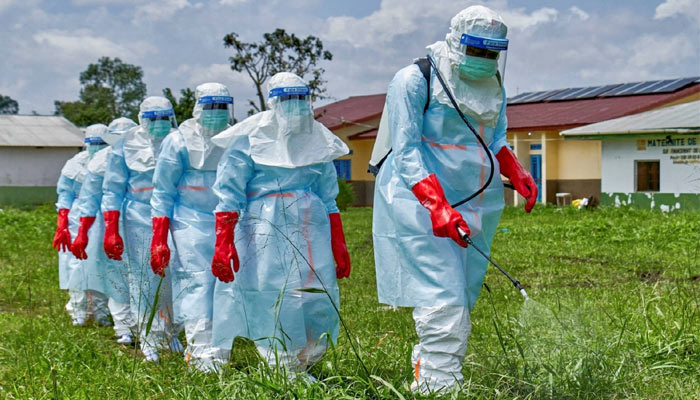
Ebola Outbreak Reaches 6th Province In Congo: Why Containment Is Becoming More Difficult
The latest Ebola outbreak in the Democratic Republic of the Congo (DRC) has spread to a sixth province after a person died in Bas-Uele, a region that had not previously reported cases, according to Jean Kaseya, Director-General of the Africa Centres for Disease Control and Prevention (Africa CDC).
Kaseya said Thursday that the man died in Buta, the capital of Bas-Uele, after travelling from neighbouring Haut-Uele, where Ebola infections have already been detected.
The development has raised fresh concerns about the speed at which the outbreak is expanding. Kaseya warned that if transmission is not brought under control, the outbreak could continue for more than a year and potentially become the largest Ebola outbreak ever recorded. Prolonged transmission, he said, could also increase the possibility of the virus reaching other countries.
Government figures reported this week put the outbreak at 4,566 cases and 2,128 deaths. It began in northeastern Ituri province before spreading to North Kivu, South Kivu, Haut-Uele, Tshopo and now Bas-Uele.
The World Health Organization (WHO) has described the spread as exceptionally rapid. WHO Director-General Tedros Adhanom Ghebreyesus has also warned that, if the current pace continues, the outbreak could surpass the 2014-2016 Ebola epidemic in West Africa, which claimed more than 11,000 lives.
But what is making the current outbreak so difficult to contain?
How Does Ebola Spread?
Ebola is not an airborne disease like measles. It primarily spreads through direct contact with the blood or other bodily fluids of an infected person, contaminated objects or the remains of someone who has died from the disease.
That means controlling an outbreak depends heavily on detecting cases early, isolating patients, tracing their contacts, maintaining strict infection-control practices in healthcare facilities and ensuring safe burials.
The movement of even one infected person before detection can create a new chain of transmission in another community.
The case reported in Bas-Uele highlights this challenge. A patient travelled from Haut-Uele to Buta, demonstrating how movement between provinces can carry the virus into areas that had previously been unaffected.
This Outbreak Involves A Different Ebola Virus
The outbreak is being caused by Bundibugyo virus, a distinct species of Ebola virus.
This is important because vaccines and specific treatments developed and licensed for Zaire ebolavirus—the virus responsible for several major Ebola outbreaks—are not currently approved for Bundibugyo virus disease.
According to WHO, there is currently no licensed vaccine or specific therapeutic treatment for Bundibugyo virus. Researchers are evaluating vaccine and treatment candidates, while patients are treated with supportive care aimed at managing dehydration and other potentially fatal complications.
The lack of an approved vaccine removes one of the major tools that has helped health authorities control some previous Ebola outbreaks, particularly through vaccination of contacts and people considered at high risk.
Transmission Had Already Begun Before The Outbreak Was Declared
The DRC officially declared the outbreak on May 15 after laboratory tests confirmed Bundibugyo virus. However, investigations suggest that transmission was already taking place before the formal declaration.
That delay can make Ebola significantly harder to control.
Health teams must identify infected people, isolate them, determine who they have been in contact with and monitor those contacts for symptoms. When infections go undetected for an extended period, tracing the resulting chains of transmission becomes increasingly difficult.
WHO has also identified gaps in contact follow-up in some areas, with insecurity and movement restrictions limiting the ability of response teams to reach potentially exposed people.
Conflict Is Complicating The Response
Eastern DRC has faced years of armed conflict, violence and population displacement. These conditions have created major obstacles for Ebola response teams.
Insecurity can prevent healthcare workers from reaching communities safely, disrupt disease surveillance and make it difficult to move suspected or confirmed patients to treatment facilities.
Displaced populations can also move between communities before health workers are able to identify and monitor people who may have been exposed.
The result is a response that must operate across areas where access can change rapidly because of security conditions.
Population Movement Is Expanding The Risk
The spread to Bas-Uele illustrates the role human movement can play in the outbreak.
The original outbreak epicentre in Ituri also presents particular challenges because of substantial population and commercial movement. Parts of the province are important trade and mining areas, while its borders with Uganda and South Sudan create additional concerns about potential cross-border transmission.
The regional risk became evident when Uganda reported imported Bundibugyo virus cases from the DRC soon after the outbreak was identified. The development prompted WHO to declare the situation a Public Health Emergency of International Concern in May.
Poor Infrastructure Makes A Fast Response Harder
Ebola response operations depend on speed. Suspected cases need to be identified and tested quickly, infected patients must be isolated, contacts have to be traced and communities need reliable information about how to protect themselves.
In remote parts of the DRC, however, poor roads, limited communication networks and gaps in healthcare infrastructure can slow every stage of that process.
The broader humanitarian crisis and insecurity add further pressure. As the outbreak expands into more provinces, health authorities must also deploy laboratories, protective equipment, medical teams and treatment capacity over increasingly large distances.
Community Trust Could Determine The Outcome
Medical resources alone cannot stop an Ebola outbreak. Community cooperation is equally important.
People need to report symptoms promptly, allow health workers to trace contacts, follow infection-prevention measures and seek medical care rather than conceal suspected infections.
WHO has repeatedly stressed the importance of community engagement in controlling Ebola. Misinformation and mistrust can make response efforts considerably more difficult, particularly in communities already affected by conflict, displacement and other humanitarian emergencies.
With the virus now detected in six provinces, health authorities face a race against time: identify hidden chains of transmission, prevent further movement of the virus and strengthen community cooperation before the outbreak spreads even further.
Comments are closed.