
Simple Urine Test Could Offer a Painless Way to Detect Bladder Cancer

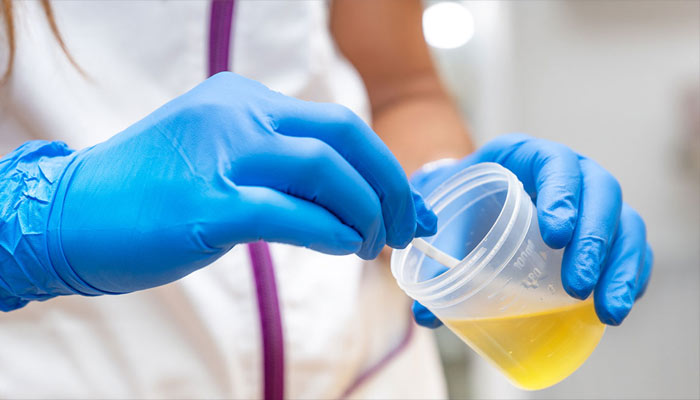
A simple urine test that can potentially be collected at home could make it easier to identify bladder cancer and help doctors determine which patients need further investigation.
Early results from an NHS trial suggest the test detected more than nine in 10 bladder cancer cases. The study, published in European Urology Oncology, was led by the University of Birmingham in collaboration with diagnostics company Nonacus. Nearly 1,000 patients from seven hospitals across England and Scotland took part in the research.
HOW DOES THE URINE TEST WORK?
Known as the Galeas test, the new approach analyses urine for genetic material shed by bladder cancer cells. It looks for more than 450 DNA mutations associated with the disease across 23 genes.
The test was initially developed at the University of Birmingham with funding from Cancer Research UK before being commercialised by Nonacus.
In the NHS trial, Galeas detected 92% of bladder cancer cases. More importantly, a negative result was associated with a greater than 99% probability that the patient did not have bladder cancer.
Researchers believe this high negative predictive value could make the test particularly useful for identifying people who are unlikely to have the disease and may not immediately require an invasive examination.
WHO IS AT GREATER RISK OF BLADDER CANCER?
Bladder cancer is more common in older adults, particularly men over 60. One of its most common warning signs is blood in the urine, which can make the urine appear pink, red or brown.
The severity of bladder cancer varies depending on factors including the size and characteristics of the tumour and whether the disease has spread beyond the bladder.
As with many cancers, detecting bladder cancer at an earlier stage can make treatment more effective and improve the chances of better outcomes.
COULD IT REDUCE THE NEED FOR CYSTOSCOPY?
The Galeas test is not currently a replacement for cystoscopy, which remains an important diagnostic procedure for suspected bladder cancer.
During a cystoscopy, a thin camera-equipped tube is inserted through the urethra into the bladder so doctors can directly examine its lining. While the procedure is valuable for diagnosis, it can be uncomfortable and invasive.
A urine-based test could potentially help doctors assess risk before deciding how urgently a patient needs a cystoscopy. People with concerning results could be prioritised for further examination, while those with negative results could potentially avoid or delay an invasive procedure where clinically appropriate.
If larger studies confirm the test’s accuracy, researchers say it could eventually help reduce the number of unnecessary cystoscopies performed each year, potentially sparing tens of thousands of patients from the procedure.
MORE RESEARCH IS NEEDED
Despite the encouraging findings, the test is still being evaluated and is not yet a routine replacement for existing diagnostic methods.
Researchers will need to conduct larger studies involving broader patient populations to determine how consistently the test performs and whether it can be safely incorporated into standard cancer-care pathways.
For now, anyone experiencing symptoms such as blood in the urine should seek medical advice. A urine test should not be used on its own to rule out bladder cancer or replace recommended medical investigations.
Comments are closed.