
Myanmar’s Min Aung Hlaing Visits Malaysia Amid Row Over Repatriation of Nationals

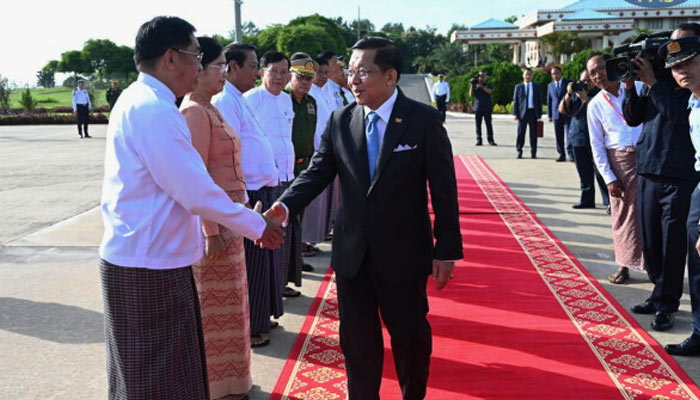
Myanmar President Min Aung Hlaing arrived in Malaysia on Wednesday for a two-day visit.
With talks on the repatriation of Myanmar nationals expected to feature prominently in discussions with Malaysian Prime Minister Anwar Ibrahim.
The visit comes just days after nearly 1,500 Myanmar nationals were returned from Malaysia to Myanmar, despite warnings from the United Nations refugee agency and rights groups over the safety of those being sent back. Malaysia has said the repatriations are voluntary, safe and dignified.
Repatriation at the Centre of Talks
Min Aung Hlaing is expected to meet Anwar and participate in a business dialogue during his two-day stay. Malaysia’s Foreign Ministry said the leaders would discuss the voluntary, dignified and safe repatriation of Myanmar nationals from Malaysia, including people from different ethnic communities. They are also expected to review efforts under ASEAN mechanisms.
The latest return of nearly 1,500 people is part of a broader arrangement under which Malaysia says around 5,000 Myanmar nationals have agreed to return in stages. Anwar told Parliament that more than 10,000 Myanmar nationals had been repatriated from Malaysia since January.
However, the programme has faced criticism over whether the returns can genuinely be considered voluntary and whether returnees could be exposed to danger after reaching Myanmar. The UN refugee agency said its staff had not been given access to the detainees to independently establish whether their decisions to return were free and informed.
Concerns Over Rohingya
The fate of the Rohingya has emerged as one of the most sensitive issues surrounding the repatriation programme. It remains unclear whether any Rohingya were included among the recent returnees, although Anwar said on Tuesday that none of the more than 10,000 people repatriated so far were Rohingya.
Malaysia hosts more than 215,000 refugees and asylum seekers registered with the UNHCR, including roughly 126,000 Rohingya. The country is not a signatory to the UN Refugee Convention and generally treats refugees as undocumented migrants.
Human Rights Watch has urged Malaysia to halt plans to return Rohingya and others to Myanmar, arguing that they could face persecution and other rights violations there.
Myanmar’s Push for Regional Engagement
Min Aung Hlaing’s Malaysia trip also reflects his efforts to rebuild Myanmar’s ties with ASEAN countries following the military takeover of February 2021.
Although Myanmar’s military-backed leadership has continued to be excluded from top-level ASEAN meetings, individual member states have maintained varying degrees of engagement with Naypyitaw. The Malaysia visit is Min Aung Hlaing’s fifth trip to an ASEAN member state since becoming president, following visits to Laos, Thailand, Vietnam and Cambodia.
Malaysia has defended direct engagement with Myanmar, saying dialogue is necessary to address issues involving migration, repatriation and the wider crisis in the country. Its Foreign Ministry has also said the engagement remains consistent with ASEAN’s Five-Point Consensus and efforts to promote peace, reconciliation and humanitarian access.
Criticism Over Diplomatic Engagement
Rights groups have nevertheless questioned whether closer engagement risks giving greater international legitimacy to Myanmar’s military-backed government without addressing the country’s continuing conflict.
Human Rights Watch has called on Anwar to press Min Aung Hlaing over alleged human rights abuses and the planned returns of Myanmar nationals. Other monitoring groups have warned that repatriation to a country still experiencing armed conflict could expose vulnerable people to persecution, violence or forced military recruitment.
The Malaysia visit therefore puts two issues side by side: Kuala Lumpur’s efforts to manage the growing number of Myanmar nationals in the country and its broader diplomatic engagement with Naypyitaw, even as concerns persist over conditions awaiting those who are sent back.
Comments are closed.