
Rete Ovarii: The Little-Known Female Organ Sparking Debate Over Sexism in Medical Research

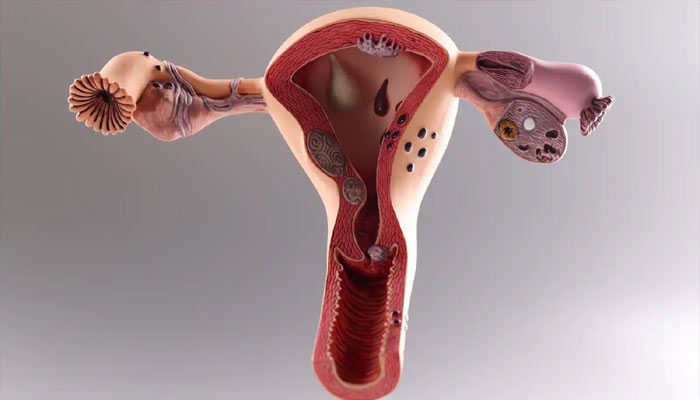
Rete Ovarii: The Overlooked Female Structure Sparking Debate Over Medical Misogyny
For many women, discovering that a small structure connected to the ovary was known to scientists for more than a century, yet remains poorly understood, has raised uncomfortable questions about how female anatomy has been studied. The structure, known as the rete ovarii, has become the focus of an online debate about medical research, gender bias and the gaps in scientific knowledge about women’s health.
The discussion gained momentum after comedian Michelle Wolf shared a viral TikTok video reacting to research on the rete ovarii. What was once a little-known anatomical term has since become part of a wider conversation about whether aspects of female reproductive biology have received less scientific attention than their male counterparts.
The rete ovarii was historically regarded as a vestigial, or functionless, structure. However, research published in 2024 suggests that it may be biologically active, prompting scientists to reconsider assumptions about its role in the ovary.
For many women online, the central question is simple: why was a structure associated with the female reproductive system dismissed for so long, and what does that say about the history of medical research?
What Is the Rete Ovarii?
The rete ovarii, whose name comes from the Latin word for “network”, is a small system of interconnected tubes and channels located near the ovary. It is part of the female reproductive anatomy, although its precise function remains uncertain.
The structure was illustrated in early editions of Gray’s Anatomy, the influential medical reference book first published in 1858. Over time, however, it received less attention in medical textbooks and was commonly described as a vestigial structure with no established function in the adult ovary.
A comparable structure exists in the male reproductive system. Known as the rete testis, it plays a recognised role in transporting sperm within the testis. The differences in how the two structures have been studied have become a key point in the online debate.
However, the fact that the rete ovarii was overlooked or poorly understood does not, by itself, establish that researchers deliberately ignored it because it is part of the female body.
What Did the 2024 Study Discover?
A study published in eLife in 2024, titled Rediscovering the rete ovarii, a secreting auxiliary structure to the ovary, investigated the structure in mice using advanced microscopy and other laboratory techniques.
Researchers identified three regions of the rete ovarii: the intraovarian rete, the extraovarian rete and the connecting rete.
The study also found evidence of cellular activity, including the transport of material and the release of proteins. The structure was closely associated with blood vessels, immune cells and nerve projections. Some of the proteins identified could be relevant to ovarian development and maintenance.
These observations suggest that the rete ovarii may be more biologically active than the traditional description of a functionless remnant implied.
Rather than serving no purpose, it may help support the environment surrounding ovarian tissue or participate in biological processes that scientists have yet to fully understand.
However, the research was conducted in mice. Further studies are needed to establish whether the same functions operate in humans and to determine the structure’s precise biological significance.
Why Has the Rete Ovarii Sparked a Debate About Medical Misogyny?
The scientific findings have fuelled a wider discussion about historical gaps in research into female anatomy and reproductive health.
In her widely shared video, Michelle Wolf questioned why the male equivalent remained a recognised part of reproductive anatomy while the female structure had received comparatively little attention.
“We research women’s health just about as thoroughly as a man looks for ketchup in the fridge,” she said.
The remark resonated with women who believe that medical research has historically placed insufficient emphasis on understanding the female body. Critics argue that structures whose functions were not immediately apparent may have been too readily dismissed, particularly when research into female reproductive biology was already limited in some areas.
At the same time, scientific understanding evolves as new technologies and methods become available. A structure can remain poorly understood because its function is difficult to identify, rather than because researchers have deliberately neglected it.
The rete ovarii debate therefore raises a broader question: how much of the existing knowledge about female reproductive health reflects the limitations of earlier research methods, historical assumptions or gaps in scientific priorities?
From the Clitoris to the Appendix: Other Examples of Changing Medical Knowledge
The rete ovarii discussion has also revived comparisons with other anatomical structures whose functions or complexity became clearer over time.
The detailed anatomy of the clitoris, for example, received greater scientific attention in the late 20th and early 21st centuries. Earlier descriptions often failed to capture the full extent of its internal structure.
The appendix, meanwhile, was once widely regarded as having little or no purpose. Research subsequently established that it has functions associated with the immune system and the gut microbiome.
These examples illustrate how scientific understanding can change as researchers investigate structures using better methods and more comprehensive approaches.
However, they do not establish that every historical gap in anatomical knowledge resulted from gender bias. The reasons behind individual research gaps can differ, and each case requires evidence of its own.
Could the Rete Ovarii Affect Fertility or Reproductive Health?
One of the biggest questions surrounding the rete ovarii is whether it has a meaningful role in ovarian function and reproductive health.
The 2024 mouse study identified cellular activity and proteins that could be relevant to the local ovarian environment. Researchers have suggested that the structure may contribute to ovarian development, tissue maintenance or communication with surrounding structures.
These possibilities remain subjects for further investigation.
There is currently no established evidence that the rete ovarii directly causes or explains conditions such as polycystic ovary syndrome (PCOS), unexplained infertility, premature ovarian insufficiency or menopause. Nor has research demonstrated that targeting the structure could lead to new treatments for these conditions.
Its rediscovery should therefore not be interpreted as proof that an essential component of human fertility has been overlooked in clinical care. Instead, the findings provide new questions for researchers to investigate.
Further work will be needed to determine whether the structure performs similar functions in humans, how it interacts with ovarian tissue and whether its activity has any clinical significance.
Why Does This Discovery Matter for Women?
Beyond the laboratory findings, the debate has drawn attention to the importance of sustained research into female reproductive biology.
Conditions such as endometriosis, PCOS and disorders associated with ovarian function continue to raise questions about disease mechanisms, diagnosis and treatment. Researchers have made progress in these areas, but significant scientific challenges remain.
For women discussing the rete ovarii online, the concern is not simply whether one small anatomical structure has a function. It is whether historical assumptions and research priorities have sometimes left important questions about the female body unanswered.
The discussion also highlights the distinction between a lack of scientific knowledge and deliberate neglect. Not every poorly understood structure has been dismissed because it belongs to women. Nevertheless, examining how research priorities are established, funded and pursued can help identify areas that need greater attention.
The rete ovarii has not disappeared from the human body. What has changed is the scientific interest in understanding it.
The 2024 study does not settle the debate over medical misogyny, nor does it establish a direct connection between the structure and reproductive disorders. But it demonstrates how renewed investigation can challenge long-standing assumptions—and why continued research into female anatomy remains important.
Comments are closed.