
US Lawmaker Alleges H-1B Workers Are Replacing American Computer Science Graduates With Lower-Cost Labour

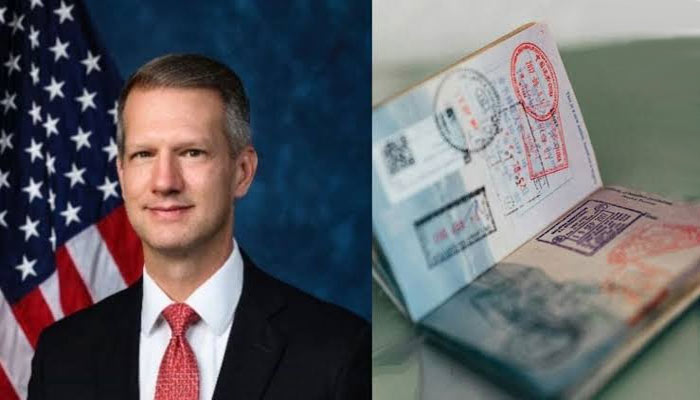
US Congressman Riley Moore Targets H-1B Visa System, Claims Foreign Workers Are Undercutting American Graduates
US Congressman Riley Moore has criticised the H-1B visa programme, alleging that American computer science graduates are losing employment opportunities to foreign workers willing to accept lower wages.
In a post on X, Moore labelled the H-1B visa and Optional Practical Training (OPT) programmes “SCAMS”, claiming they enable employers to hire lower-cost foreign workers instead of American employees.
“H-1B and OPT programs are SCAMS that undercut and replace American workers with cheap foreign labor,” Moore wrote.
To support his argument, Moore compared the number of US computer science graduates with the number of H-1B visas issued. He claimed that approximately 650,000 Americans graduated with computer science-related degrees last year, while more than 500,000 H-1B visas were issued.
However, the two figures may cover different populations and measures, and the number of visas issued does not by itself establish how many American graduates have been displaced from jobs.
Moore Questions the Purpose of the H-1B Programme
Speaking to Scott Jennings on The Scott Jennings Show, broadcast by the Salem News Channel, Moore argued that the H-1B programme was being used for purposes beyond its original objective.
The programme is designed to allow US employers to hire foreign professionals in specialised occupations. Moore alleged that some companies were exploiting the system to recruit workers at lower wages rather than filling positions that could not be staffed by Americans.
“What it is, is importing cheap labour that is undercutting a lot of our young college graduates,” he said, referring to fields such as computer science and accounting.
Moore further argued that foreign workers accepting lower salaries could increase competition for recent American graduates entering the job market. He also linked the H-1B programme to what he described as “chain migration”, citing the arrival of visa holders’ family members in the United States.
His remarks reflect his criticism of the programme; they do not independently establish the extent to which H-1B employment displaces US workers.
Proposed DHS Rule Could Increase Scrutiny of Visa Extensions
The debate comes amid a proposal by the US Department of Homeland Security (DHS) that could change how applications to extend temporary work visas, including H-1B and L-1 visas, are evaluated.
The proposed rule seeks to eliminate a provision under 8 CFR 214.1(c)(5) that generally directs US Citizenship and Immigration Services (USCIS) to defer to an earlier approval when an extension application involves the same parties and underlying facts.
If adopted, the change could give immigration officers greater discretion to reassess an applicant’s eligibility, even when a previous application was approved under substantially similar circumstances.
The proposal has not yet taken effect. DHS is seeking public feedback before deciding on the next steps.
Indian Professionals in Focus
The controversy has particular significance for Indian professionals, who account for a substantial proportion of H-1B beneficiaries.
According to USCIS data cited in the report, Indian nationals accounted for approximately 70% of H-1B beneficiaries in fiscal year 2025.
Any changes to the visa programme or the rules governing extensions could therefore have implications for Indian technology professionals working in the United States, as well as those hoping to pursue employment opportunities there.
While Moore maintains that the H-1B and OPT programmes disadvantage American graduates, the scale of any displacement would require separate evidence on hiring practices, wages, occupations and employment outcomes.
Comments are closed.