
India Calls on COP31 to Focus on Climate Finance, Technology Sharing and Climate Justice

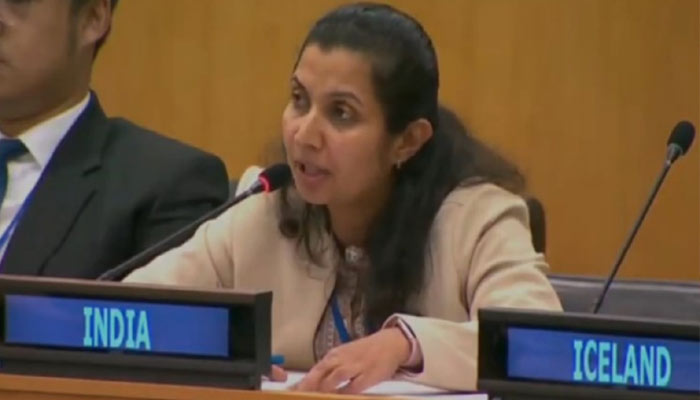
India Urges COP31 to Prioritise Climate Funding, Technology Access and Equitable Action
India has called for stronger climate finance commitments, technology transfer and capacity-building assistance for developing nations ahead of COP31, saying the upcoming climate summit must restore confidence in global climate cooperation through the fair implementation of existing commitments.
Speaking at a special event organised by the President of the United Nations General Assembly in New York, Soumya Nair, Counsellor at India’s Permanent Mission to the UN, stressed that international climate policies must recognise the different national circumstances, development goals and capabilities of countries.
“As India emphasised at Pre-COP in Fiji, our shared ground exceeds our differences. COP31 must restore trust through balanced implementation,” Nair said.
She underlined that developing countries require practical international support to implement their climate plans while continuing to address their economic and development needs.
Climate Finance and Technology Transfer Top India’s Agenda
India has placed the financial commitments of developed countries at the centre of its priorities for COP31, alongside improved access to climate technologies and capacity-building support.
Nair said discussions under Article 9.1 of the Paris Agreement should focus on advancing developed countries’ climate finance obligations, including clarifying the scope and mechanisms for fulfilling those commitments. She also pointed to cooperation under Article 6 as a potential avenue for mobilising additional climate resources.
New Delhi called for the faster deployment of climate-friendly technologies and efforts to remove barriers that limit developing countries’ access to them.
On adaptation, India emphasised the need for financial assistance that is predictable and accessible, particularly for vulnerable communities. It also cautioned against overly complicated procedures and reporting requirements that could place additional burdens on developing nations.
Nair said India was finalising its first National Adaptation Plan. She highlighted climate-resilient agricultural technology initiatives being demonstrated in 448 villages across 151 vulnerable districts, along with water conservation and rainwater harvesting efforts under the Jal Shakti Abhiyan.
India Stresses Equity in the Transition to a Green Economy
India has also called for COP31 to make progress on a just transition mechanism rooted in equity and the principle of common but differentiated responsibilities and respective capabilities, known as CBDR-RC.
The principle recognises that countries differ in their historical contributions to climate change and their ability to respond to it.
Nair said the transition to a low-carbon economy must protect livelihoods and respect countries’ development priorities rather than impose a uniform approach on all nations.
India also expressed concern over unilateral trade measures, including carbon border adjustment mechanisms, warning that such policies could place disproportionate pressure on developing economies.
New Delhi maintains that climate action should not restrict development opportunities or create unfair costs for countries still working to reduce poverty, expand infrastructure and improve access to energy.
Renewable Energy Progress Highlights India’s Climate Efforts
Highlighting India’s domestic initiatives, Nair said the country had achieved 50 per cent of its installed electricity capacity from non-fossil fuel sources five years ahead of its 2030 target.
She also cited the PM Surya Ghar rooftop solar programme and the National Green Hydrogen Mission as important initiatives supporting the expansion of clean energy.
India is promoting international collaboration through platforms such as the International Solar Alliance and the Global Biofuels Alliance, which aim to strengthen cooperation on renewable energy and cleaner fuels.
India’s position is that domestic climate efforts must be accompanied by adequate international finance, technology access and cooperation, particularly for developing countries facing resource and infrastructure constraints.
Global Stocktake Should Focus on Existing Commitments
India has called for climate negotiations to remain inclusive and consensus-driven, arguing that the global stocktake should help accelerate the implementation of existing commitments, particularly those concerning finance and other forms of support.
Nair cautioned against using the process to impose new mitigation obligations or sector-specific requirements outside the framework of the United Nations Framework Convention on Climate Change (UNFCCC).
“It should not become a vehicle for new mitigation obligations or sector-specific prescriptions which are outside the UNFCCC process,” she said.
The global stocktake is a central feature of the Paris Agreement. It assesses collective progress towards the agreement’s climate objectives and helps inform countries’ future actions.
India Signals Willingness to Cooperate Ahead of COP31
Concluding her remarks, Nair expressed support for the COP31 presidencies and reaffirmed India’s readiness to participate in dialogue, technical cooperation and targeted capacity-building initiatives aimed at securing a balanced outcome.
She stressed that the concerns of vulnerable countries and communities should remain central to international climate discussions.
India’s message ahead of COP31 is that climate ambition must be backed by effective implementation. The country is seeking stronger delivery of climate finance commitments by developed nations, wider access to clean technologies and international policies that account for equity and development needs.
The summit is expected to provide an important forum for countries to address differences over climate finance, adaptation, technology transfer and the distribution of responsibilities as they work towards implementing the Paris Agreement.
Comments are closed.