
Gold Falls to ₹1.43 Lakh, Silver Slips Below ₹2 Lakh: Key Reasons Behind the Bullion Price Crash

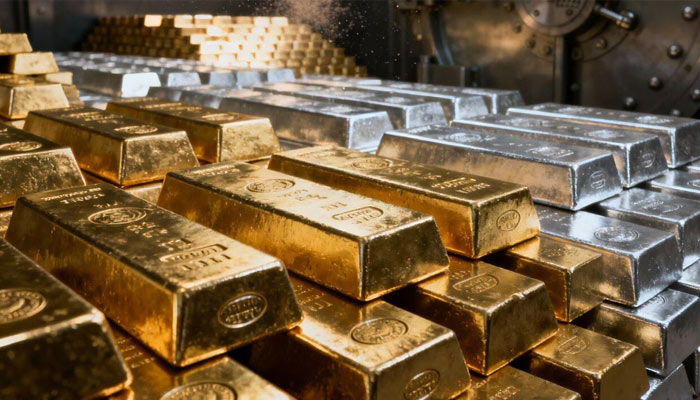
MCX Gold, Silver Prices Today, October 23: Why Bullion Rates Are Falling Sharply
Gold and silver prices continued their downward trend on Friday, October 23, as rising crude oil prices, persistent inflation concerns and expectations of higher US interest rates put pressure on precious metals. Silver futures on the Multi Commodity Exchange (MCX) dropped below ₹2 lakh per kilogram, touching an 11-month low, while gold prices moved closer to ₹1.42 lakh per 10 grams.
During the morning trading session, MCX silver futures expiring on December 4, 2026, were quoted at ₹1,96,122 per kg, registering a decline of 1.74%. Gold futures for the same expiry were trading at ₹1,42,450 per 10 grams.
Commodity market expert Anuj Gupta said silver had breached key support levels and fallen to its lowest level in around 11 months. According to him, prices have retreated to levels seen before the US-Iran war and are continuing to face downward pressure.
The sell-off reflects growing investor concerns about the outlook for US monetary policy amid higher energy costs and renewed geopolitical tensions in West Asia. Although gold is traditionally viewed as a safe-haven investment, expectations that interest rates could remain elevated for longer are reducing the appeal of gold and silver, which do not generate interest income.
WHY ARE GOLD AND SILVER PRICES FALLING TODAY?
1. Crude Oil Prices Above $113 Raise Inflation Fears
The sharp rise in crude oil prices is one of the major factors weighing on bullion. Oil prices have climbed above $113 per barrel amid fresh Houthi attacks in Saudi Arabia, raising concerns about possible disruptions to energy supplies.
Higher crude oil prices can increase transportation, manufacturing and other operating costs, potentially pushing inflation higher. This could complicate the US Federal Reserve’s efforts to bring inflation down to its 2% target.
If inflation remains elevated, the Federal Reserve may have less scope to cut interest rates and could maintain higher borrowing costs for longer. Such a scenario generally puts pressure on gold and silver because investors may find interest-bearing assets more attractive.
2. US Federal Reserve’s Interest Rate Outlook Pressures Bullion
Investors are closely monitoring the Federal Reserve’s October 27-28 policy meeting for indications of its next move on interest rates.
Expectations of tighter monetary policy or fewer rate cuts can support the US dollar and bond yields, making precious metals relatively less attractive. Gold and silver typically face headwinds when the returns available from interest-bearing investments rise.
Renisha Chainani, chief research officer at Augmont, attributed the weakness in gold and silver to rising oil prices, renewed inflation concerns and expectations that US interest rates could remain higher for an extended period.
Markets are also watching the upcoming US Personal Consumption Expenditures (PCE) inflation report, which the Federal Reserve uses as a key indicator when assessing price pressures.
Chainani cited figures from the CME FedWatch Tool suggesting that traders had priced in a 16% probability of a rate hike at the October 27-28 meeting and a 90% probability of an increase in December. These figures represent market expectations rather than confirmed policy decisions and can change as fresh economic data emerges.
3. West Asia Tensions Create Uncertainty in Global Markets
Renewed geopolitical tensions in West Asia have added to volatility across global financial markets and pushed energy prices higher.
Geopolitical uncertainty can generally increase demand for gold as a safe-haven asset. However, the impact of such tensions on bullion is not always positive. When conflict pushes oil prices higher, inflation fears may intensify, potentially strengthening expectations of elevated interest rates.
At present, concerns over energy costs, inflation and the US interest rate outlook appear to be outweighing the support gold might otherwise receive from geopolitical uncertainty.
WHAT MARKET EXPERTS SAY ABOUT GOLD PRICES
Jateen Trivedi, vice-president and research analyst for commodities and currencies at LKP Securities, said gold remained under pressure, falling by another ₹1,200 to ₹1,44,850 as international COMEX gold prices moved towards $4,088.
Trivedi attributed the weakness to uncertainty surrounding the West Asia conflict and expectations of higher US interest rates, which have reduced the attractiveness of non-yielding investments.
He added that investors would closely follow the Federal Reserve’s upcoming policy announcement, particularly its assessment of inflation and guidance on the future direction of interest rates. The central bank’s comments could influence the US dollar and determine the near-term direction of bullion prices.
The gold prices cited by Trivedi differ from the MCX December futures quotation in the morning market snapshot. These figures relate to different reported market observations and should not be treated as directly interchangeable.
GOLD AND SILVER PRICE OUTLOOK: WHAT SHOULD INVESTORS WATCH?
Anuj Gupta told CNBC Awaaz that precious metals could remain under pressure in the short term, with the possibility of further declines.
For silver, Gupta suggested that traders could consider a selling strategy if prices rebound towards ₹2,01,000 per kg. His suggested stop-loss was ₹2,03,500 per kg, with a target of ₹1,97,000 per kg.
This is a short-term trading view attributed to the expert, not a guaranteed outcome or a recommendation suitable for every investor. Precious metals can experience sharp price swings, and leveraged commodity futures carry substantial risks.
Going forward, traders and investors will be watching crude oil prices, US inflation data, movements in the dollar, Treasury yields and the Federal Reserve’s policy signals. These factors, alongside developments in West Asia, could determine whether gold and silver stabilise or face further selling pressure.
Investors should assess their risk tolerance and investment horizon before making decisions, particularly during periods of heightened volatility in commodity markets.
Comments are closed.