
Gajab Raat Review: Manoj Bajpayee Shines in a Dark Thriller Exploring Delhi’s Bureaucratic Maze

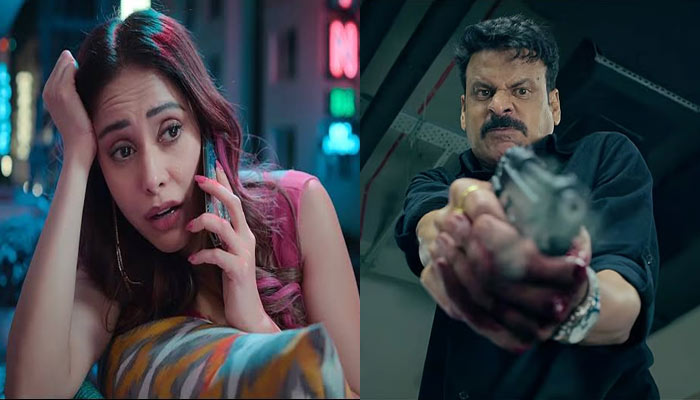
Gajab Raat Movie Review: Manoj Bajpayee Anchors a Twisty Thriller Set in Delhi’s Corrupt Corridors
Ritesh Shah’s Gajab Raat, produced by Neeraj Pandey, delivers the kind of tightly woven thriller that keeps viewers guessing as the night unfolds. Formerly titled Ghooskhor Pandat, the film combines mystery, dark humour and bureaucratic intrigue, following a corrupt police officer whose routine night takes an unexpected turn after an unidentified, severely injured woman is found on the streets of Delhi. Led by Manoj Bajpayee, alongside Nushrratt Bharuccha, Divya Dutta, Akshay Oberoi and an ensemble cast, the film offers a brisk and engaging cinematic ride.
The story unfolds largely over a single night, beginning with a hotel raid in Connaught Place led by Ajay Nirvit, played by Bajpayee. Known within the Delhi Police as “Chameleon,” Nirvit has a troubled professional history marked by suspensions, demotions and questionable conduct. His reputation as a corrupt officer makes him an unlikely candidate to deliver justice, but the events that follow place him at the centre of a complicated mystery.
The situation takes a disturbing turn when a sedated woman, travelling in a car with several people, briefly regains consciousness and falls out of the moving vehicle onto an almost deserted Delhi road. Before her companions can retrieve her, a crowd emerges from a nearby movie screening and gathers around the badly injured woman. People begin recording videos and taking photographs, and the incident quickly spreads across social media, putting the police under immediate pressure to respond.
Fresh from the hotel raid, Nirvit receives instructions from his equally compromised superior to investigate the incident. The assignment comes with an ulterior motive: it could provide the money Nirvit needs to purchase a house in Surajkund. At the scene, he rushes the woman to a hospital and attempts to establish her identity. Social worker Neha Prabhu, played by Shraddha Das, also arrives and insists on participating in the investigation.
The mystery becomes more complicated with the arrival of Naveen Madhok, portrayed by Akshay Oberoi, who claims to be a CBI officer. Madhok is the same man who was sitting beside the woman in the car before she fell out. He identifies her as Natalia Wadogova, a Russian national allegedly connected to a drug lord, and demands that Nirvit hand over the case. However, the stubborn police officer refuses to relinquish control.
From this point, Gajab Raat develops into a story of competing interests, concealed information and institutional corruption. As Nirvit attempts to understand what happened to the woman, the investigation exposes a web of motives in which personal gain, professional rivalry and the pursuit of truth collide. Whether the compromised officer ultimately chooses self-interest or conscience becomes one of the film’s central questions.
Ritesh Shah draws on several elements associated with Neeraj Pandey’s style of filmmaking, including bureaucratic manoeuvring, morally ambiguous characters, inter-agency rivalries and conversations filled with unspoken intentions. Yet the film does not feel like a simple imitation. Shah combines these familiar thriller ingredients with his own approach, creating a mystery that remains engaging even when some developments feel recognisable.
The cinematography is another notable strength. Despite taking place largely after dark, the film maintains clear, well-lit frames that allow the action to remain visible without sacrificing the atmosphere of a nocturnal thriller. The opening hotel raid is particularly effective, with the camera moving through the location in a manner that draws viewers into the unfolding commotion. Such visual choices lend energy to a story that relies heavily on dialogue and character interactions.
The screenplay is tightly structured, with information revealed gradually and conversations often carrying hidden meanings. Even when the narrative approaches familiar territory, the pace prevents the proceedings from becoming dull. Each new revelation shifts the viewer’s understanding of the characters and their relationships, keeping the mystery moving forward.
The dialogues add further appeal. Crisp exchanges, sharp observations and dry humour provide relief from the mounting tension without undermining the film’s serious themes. The comedy generally emerges from the characters and their circumstances, rather than feeling artificially inserted into the narrative.
At its core, Gajab Raat explores the uneasy relationship between corruption and conscience. Its characters are willing to manipulate procedures, trade influence and bend rules for personal benefit, yet the possibility of doing the right thing never entirely disappears. The film asks how far a person can compromise their principles before losing the ability to distinguish right from wrong.
Ajay Nirvit embodies this conflict. He is hardly an ideal symbol of law enforcement, but the circumstances surrounding the case force him to confront questions of responsibility and morality. His character becomes more interesting precisely because his motives are not always noble and his decisions cannot be easily classified as entirely good or bad.
The twists may not all surprise seasoned viewers of investigative thrillers, and some developments can be anticipated. Nevertheless, the film uses its revelations effectively, relying on narrative momentum and the interplay of competing interests rather than constantly attempting to shock the audience. Its larger point is that corruption often thrives not because of one villain, but because multiple people benefit from a compromised system.
The film’s portrayal of bureaucracy adds another layer to the story. Institutions appear more concerned with protecting their reputations and controlling information than uncovering the truth. Police officers and other officials guard their influence, agencies compete for authority, and the threat of scandal triggers efforts to contain the damage. This institutional dysfunction gives the mystery much of its cynical edge.
Manoj Bajpayee anchors the film with a nuanced performance as Nirvit. Although he has portrayed police officers on numerous occasions, he gives this character enough individuality to prevent it from feeling repetitive. He convincingly balances Nirvit’s manipulative and corrupt instincts with moments of vulnerability and compassion. Subtle changes in expression, pauses and shifts in tone reveal the different sides of a man who is rarely as straightforward as he appears.
Nushrratt Bharuccha also makes a strong impression as Rosie, an escort caught during the hotel raid. Nirvit lets her go on the condition that he can meet her later that night. Although Rosie has little direct involvement in the central mystery, her scenes with him provide some of the film’s most entertaining moments. Their lively banter brings a welcome dose of irreverence, while Bharuccha’s relaxed performance gives the character a distinct personality.
Divya Dutta stands out for making her character feel convincing and individual. Shraddha Das, Meghna Agarwal, Dhiru Bhojwani, Satyen Chaturvedi, Akshay Oberoi, Alok Pandey, Kiku Sharda, Leena Sharma and the rest of the supporting cast contribute to the film’s believable world of officers, fixers, bureaucrats and other players operating around the investigation.
Ultimately, Gajab Raat demonstrates that an effective thriller does not necessarily need an extraordinary conspiracy. A mysterious injured woman, a morally compromised cop and a collection of people with conflicting agendas are enough to create sustained intrigue. Ritesh Shah turns Delhi’s nighttime streets into a landscape of institutional rivalry and opportunistic choices, while Manoj Bajpayee provides the film with its compelling centre.
Not every twist is unexpected, and the story occasionally revisits familiar thriller territory. Yet the film’s pace, sharp dialogue, dark humour and strong central performance keep it entertaining. By the time the night draws to a close, Gajab Raat leaves viewers with a pointed question: in a system where almost everyone has a price, who still knows when to draw the line?
Comments are closed.