
Karnataka BJP’s Leadership Dilemma: An Opportunity Without a Clear Strategy

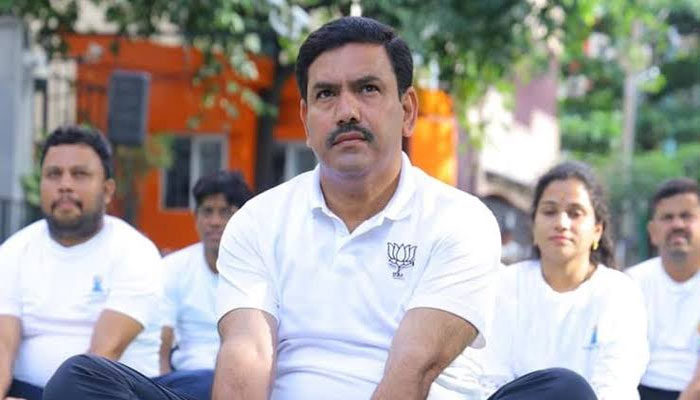
Karnataka BJP Faces Leadership Crisis Despite Electoral Gains, Struggles to Challenge Congress
The Bharatiya Janata Party (BJP) has registered a strong performance in the recent Karnataka Legislative Council elections for four seats, but the electoral gains have done little to resolve the party’s internal challenges in the state. Persistent leadership differences, factional rivalries and the absence of a coordinated strategy are raising questions about its preparedness for the 2028 Assembly elections.
Although political attention is gradually shifting towards upcoming electoral contests in Uttar Pradesh and Punjab, Karnataka remains strategically important for the BJP. It is the only southern state where the party has previously formed a government on its own and where it hopes to return to power in the next Assembly elections.
However, party insiders believe the state unit is struggling to capitalise on the difficulties facing the Congress government led by D K Shivakumar, with internal divisions weakening its position as the principal Opposition force.
“The departure of Siddaramaiah was a huge opportunity for the party but its political performance since then illustrates its predicament,” a BJP leader familiar with developments in the southern states said.
The leader identified three major challenges confronting the party: Shivakumar’s efforts to build relationships with Hindu religious institutions and their leaders, JD(S) leader H D Kumaraswamy’s growing prominence as an Opposition voice, and divisions within the BJP over state president B Y Vijayendra’s leadership.
Leadership Uncertainty Deepens Within Karnataka BJP
A senior BJP leader described the state unit as being without clear direction at a time when the Congress is facing controversies and internal disagreements following Siddaramaiah’s reported departure.
Karnataka remains a significant leadership challenge for the BJP’s central leadership, which has yet to settle the internal contest over the state’s top organisational position. With Vijayendra’s term as state president scheduled to end on November 10, competition for the post has intensified, according to party sources.
Vijayendra has attempted to strengthen the party’s campaign against the Congress government. His 10-day Ballari Chalo padyatra sought to focus public attention on allegations of corruption, unemployment and the government’s implementation of welfare schemes.
However, BJP insiders argue that the party has struggled to turn these campaign issues into a sustained political challenge because of its lack of unity.
The state’s drought situation presents another potential opportunity for the Opposition. Karnataka has declared 227 of its 240 talukas drought-affected for the kharif season, but party leaders believe the BJP has not mounted a sufficiently coordinated campaign around the issue.
Somanna’s Ambitions and Yatnal’s Possible Return Add to Intrigue
The leadership contest has also brought the ambitions of several senior BJP figures into focus.
Former Karnataka chief minister and Haveri Lok Sabha MP Basavaraj Bommai is reportedly keen to concentrate on national politics, while Union Minister V Somanna is believed to have broader ambitions within the state.
A meeting between Somanna and several Karnataka BJP leaders at his official residence in New Delhi has attracted attention within the party. His reported efforts to bring back senior MLA Basanagouda Patil Yatnal have also raised questions about the evolving internal equations.
Yatnal, a former state minister, was expelled from the BJP for six years in March 2025 after repeatedly criticising Vijayendra and his father, former chief minister B S Yediyurappa.
Any move towards his return could have implications for the existing balance of power within the state unit, particularly as leaders position themselves ahead of the organisational leadership decision.
Kumaraswamy Emerges as a Prominent Opposition Voice
While the BJP works to resolve its internal differences, its ally, the Janata Dal (Secular), has gained visibility through Kumaraswamy’s sustained criticism of the Congress government.
A BJP MP from Karnataka said Kumaraswamy enjoys considerable confidence among the party’s national leadership, potentially giving him greater influence than some BJP leaders at the state level.
Over the past two months, the JD(S) leader and Union Minister has publicly challenged the Congress on several issues, including a sting video controversy, alleged irregularities in Karnataka Public Service Commission recruitment, farmers’ concerns and the Bidadi land dispute.
The video controversy centres on an alleged sting operation targeting Siddaramaiah. An unverified video associated with a 2011 incident recently surfaced on social media and news channels, triggering political tensions within the Congress. Kumaraswamy accused Shivakumar of targeting members of his own party, while the chief minister dismissed the allegations.
The Bidadi controversy concerns the proposed Greater Bengaluru Integrated Township project, planned across approximately 7,500 acres of agricultural land. Kumaraswamy has accused Shivakumar and the Congress government of turning the project into an alleged land-grab scam affecting eight villages.
These issues have enabled Kumaraswamy to position himself prominently in the Opposition’s attack on the state government, while the BJP continues to grapple with its own organisational problems.
Karnataka Remains Crucial to BJP’s Southern Strategy
The BJP has steadily expanded its presence in Karnataka since the 1980s, even as it has faced difficulties establishing a comparable foothold across much of southern India. More recently, the party has also made gains in Telangana.
Both states are important to its wider political strategy ahead of the 2028 Assembly elections, which will take place months before the 2029 Lok Sabha polls. Together, Karnataka and Telangana account for 25 of the BJP’s 45 MPs from the two states, making them significant to the party’s parliamentary ambitions.
For the BJP, Karnataka presents both an opportunity and an organisational test. The Congress government’s controversies could provide the Opposition with issues to pursue, but exploiting them will require a united state leadership, a clear campaign strategy and effective coordination with the JD(S).
Until the party resolves its leadership uncertainty and addresses internal factionalism, its ability to convert political openings into electoral gains in 2028 will remain a key question.
Comments are closed.