
Netanyahu’s Bloc Leads Exit Polls but Falls Short of Majority in Israel Election

Israel Election: Netanyahu’s Bloc Leads but Falls Short of Majority as Exit Polls Signal Political Deadlock
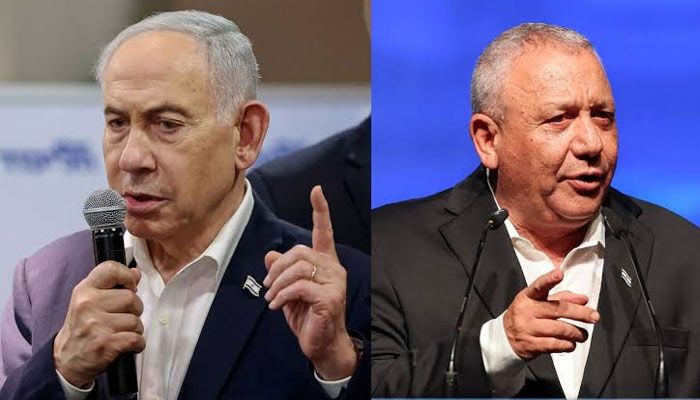
Israeli Prime Minister Benjamin Netanyahu’s Likud party emerged as the largest single party in the country’s election, but exit polls indicated that neither his bloc nor the opposition led by former military chief Gadi Eisenkot had secured the 61 seats required for a parliamentary majority.
According to data shared by Israel’s Central Election Committee after the first 100,000 ballots were counted, Netanyahu’s Likud secured approximately 27 per cent of the vote, while Eisenkot’s “change” bloc received around 17 per cent. Revised exit polls projected about 27 seats for Likud, with both the broader Netanyahu-led and Eisenkot-led blocs securing approximately 51 seats each. Arab-led parties were projected to win the remaining 18 seats.
The projections pointed to a fragmented political landscape, with voters expressing dissatisfaction over Netanyahu’s alliance with far-right parties and anger over exemptions from military service for ultra-Orthodox Jews. These issues appeared to have weakened his coalition’s prospects of returning to power. Initial exit polls had given Eisenkot’s bloc a slight advantage.
Final results are expected in the coming days, potentially setting the stage for weeks of coalition negotiations. If political leaders fail to assemble a governing majority, Israel could face another election. No single party has ever won an outright majority in the country’s 120-member Knesset, making coalition-building central to forming a government. A minority government is also possible if it can secure sufficient support from parties outside the coalition.
Netanyahu Calls for a Right-Wing Government
In his first address following the polling, Netanyahu vowed to establish a new government and called for unity among right-wing and Zionist parties. He stopped short of declaring victory, instead highlighting Likud’s projected position as the largest single party.
“We must put in place a strong government of the right,” Netanyahu told cheering supporters.
He also rejected the prospect of a government dependent on Arab-led parties, saying the Jewish and Zionist majority must unite.
However, gains by Israeli Arab parties could prove significant in determining which bloc is able to secure parliamentary support. Their backing could potentially help the opposition form a government, although Eisenkot has ruled out including Arab lawmakers in his governing coalition.
Eisenkot Says Voters Have Rejected Netanyahu
Addressing supporters at an arena in Tel Aviv, Eisenkot described the exit-poll projections as evidence of a “lack of confidence” in Netanyahu and pledged to work swiftly to form a government.
He also warned the prime minister against using national security concerns to advance his political interests, referring to Netanyahu’s threats of renewed military action against Iran.
“Netanyahu, don’t you dare use Israel’s security for your political needs,” Eisenkot said.
With voter turnout approaching 78 per cent, the highest since 1999, Eisenkot argued that the outcome reflected a public desire for political change. He also opposed holding another election, urging Netanyahu to accept the apparent rejection of his leadership.
Meanwhile, Arab voters welcomed the projections, while supporters of far-right parties aligned with Netanyahu expressed disappointment over their anticipated performance.
Coalition Negotiations Could Determine Israel’s Next Government
One possible route to power for Eisenkot would involve securing parliamentary support from Arab-led parties. However, such an arrangement could create difficulties with other opposition factions and complicate efforts to establish a stable government.
Far-right politician Itamar Ben Gvir, whose party performed below expectations in the exit polls, warned Netanyahu against forming a unity government with Eisenkot.
“It would be a terrible mistake,” Ben Gvir said.
Political scientist Gideon Rahat of the Hebrew University of Jerusalem noted that the election projections did not necessarily establish a clear winner. “Even if Netanyahu lost, that doesn’t mean Eisenkot won,” he said.
Mansour Abbas, a prominent Israeli Arab political leader, said he believed the right-wing camp had suffered a major setback and indicated that he was open to working with Eisenkot.
Nevertheless, Arab-led parties could support an opposition-led minority government in parliamentary votes without formally joining its coalition. Whether such an arrangement could secure sufficient backing remains uncertain.
If negotiations fail, Israel could be forced into another round of elections. In the meantime, Netanyahu would remain caretaker prime minister, retaining executive authority during the transition, including the power to make decisions on national security and military operations.
Final Results Awaited
The exit polls provide an early indication of the electoral outcome but are subject to sampling errors and may differ from the official results. Preliminary counts are expected to clarify the distribution of seats, while the final outcome will determine the balance of power and the direction of coalition negotiations.
With neither major bloc projected to reach the 61-seat threshold, the next phase of Israeli politics is likely to be shaped by negotiations among rival parties, potential minority-government arrangements and the possibility of another election.
Comments are closed.