

French Senate Debates Bill to Make Protesters Pay for Damage Amid Fears Over Right to Demonstrate
France’s Senate debated a controversial bill on Tuesday that would make protesters financially responsible for damage caused during street demonstrations, drawing criticism from opponents who warn that the proposed law could undermine the right to protest.
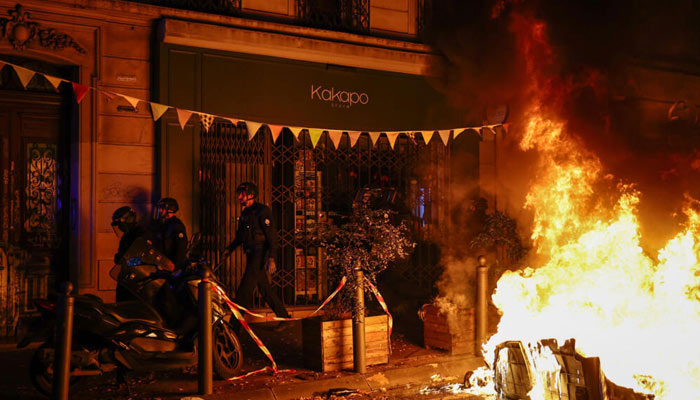
The legislation was initially drafted following riots that erupted after Paris Saint-Germain defeated Arsenal in the UEFA Champions League final in May. However, its significance has grown amid weeks of demonstrations over inequality and rising prices, which culminated in widespread violence on October 17. Thousands of businesses across France were reportedly damaged or looted during the unrest.
The bill was scheduled for a vote later on Tuesday and was expected to receive substantial support in the upper house, where an alliance of right-wing and centrist parties holds a majority.
Far-right leader Marine Le Pen, whom opinion polls have placed at the forefront of the race to succeed President Emmanuel Macron in next spring’s presidential election, has also backed the proposal.
Government Cites Urgency of Tackling Vandalism
Interior Minister Laurent Nunez told senators that urgent action was needed in response to the destruction and disorder witnessed on October 17.
“We can no longer allow the vast majority of our fellow citizens to pay for a minority of vandals,” he said.
Under the proposed legislation, individuals could be required to pay up to 10,000 euros in compensation for damage linked to street demonstrations.
The bill also introduces the principle of joint financial liability for people found to have “knowingly participated” in a group established with the intention of committing acts of vandalism. Critics fear this provision could expose individuals to financial penalties even if they did not personally damage property.
The proposed rules would also cover people who “voluntarily” remain at a gathering likely to disrupt public order after police have issued two warnings ordering the crowd to disperse.
In addition, authorities could seize welfare benefits and housing assistance to recover the costs of damage, a provision that has attracted strong opposition from left-wing parties and civil society organisations.
Opposition Warns of Restrictions on Protest Rights
Left-wing lawmakers have accused the government of pursuing an “authoritarian drift” that could come at the expense of the freedom to demonstrate.
Communist senator Fabien Gay criticised the proposal, describing it as a “legal travesty” that deliberately blurs the distinction between peaceful protesters and people involved in rioting.
Two motions introduced by left-wing lawmakers seeking to reject the bill outright were defeated in the Senate.
Opponents argue that the proposed system of shared liability could penalise people who did not directly participate in vandalism but were considered associated with those responsible. They also warn that the threat of substantial financial penalties could discourage people from attending demonstrations.
Unions and Rights Groups Raise Concerns
A coalition of trade unions and student organisations raised similar objections in a letter published last week in the French daily Le Monde. The groups warned that the proposed measures could represent a “serious infringement on the freedom to demonstrate.”
They also argued that the legislation could disproportionately affect poorer families and encourage arbitrary police action.
Amnesty International has called on the French government to abandon the proposal, adding to concerns over its potential implications for civil liberties.
The debate highlights the tension between the government’s efforts to hold people accountable for damage during public unrest and concerns that broader financial liability could affect the rights of people participating in demonstrations. The Senate’s vote on Tuesday was expected to mark a key step in determining the bill’s future.
Comments are closed.