
‘Pollution Is a Silent Killer, Air Purifiers May Not Be Enough’: Dr Randeep Guleria

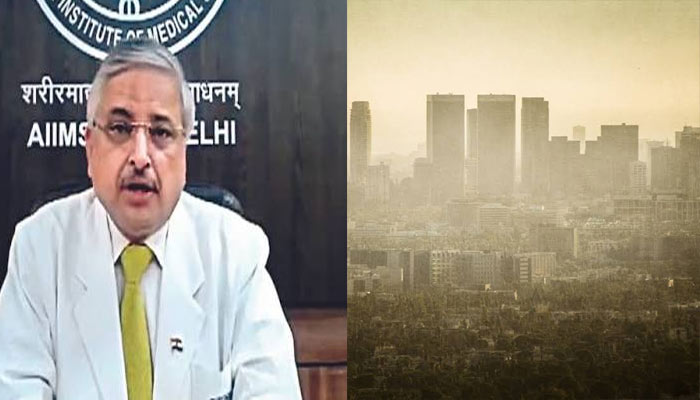
Pollution Is a ‘Silent Killer’: Dr Randeep Guleria Warns Air Purifiers May Not Offer Enough Protection
Air purifiers have not been conclusively proven to protect people from Delhi’s toxic air, while children growing up in highly polluted environments risk stunted lung development, former AIIMS director Dr Randeep Guleria has warned in an interview with CNN.
Guleria said a properly fitted mask that creates a tight seal around the nose and mouth can provide some protection on days when air quality is poor. However, he expressed caution about relying on air purifiers, noting that research has yet to establish conclusively how effective they are in protecting people from air pollution.
According to Guleria, the effectiveness of an air purifier depends on several factors, including the size of the room and whether doors and windows remain open. Polluted air can continue entering a room through open windows and doors, while a purifier placed at one end of a large room may not effectively clean the air throughout the space.
Describing air pollution as a “silent killer”, Guleria said its impact often goes unrecognised because pollution is rarely recorded as the direct cause of death.
“A person who dies of dengue or swine flu is recorded as such, but a death certificate does not say the person died of pollution,” he said.
Air pollution can aggravate existing medical conditions and contribute to premature deaths, he explained, stressing that policymakers must better understand the connection between exposure to polluted air and its consequences for public health.
Children’s Lung Development at Risk, but Recovery Is Possible
Guleria, who now chairs the Institute of Internal Medicine and Respiratory and Sleep Medicine at Medanta Hospital, highlighted the long-term consequences of air pollution for children and infants.
Lungs continue developing throughout childhood and into the teenage years, growing in size and developing additional alveoli, the tiny air sacs responsible for exchanging oxygen and carbon dioxide.
According to Guleria, research has found that children growing up in areas with high pollution levels can experience impaired lung development and lower lung function than children raised in areas with cleaner air.
He explained that prolonged exposure to polluted air during these crucial developmental years can prevent children from achieving their full lung-growth potential.
However, there is evidence that the damage may not be entirely irreversible. Guleria cited a follow-up study from the United States that found improvements in children’s lung function after air quality improved.
Because children’s lungs are still developing, reducing exposure to pollution can allow lung function to improve, he said.
Guleria stressed that urgent action is needed to protect children, particularly as the problem extends beyond the national capital. Large parts of northern and central India experience poor air quality for much of the year, while children continue to attend school and play outdoors.
Do Indians Really Have Black Lungs?
Addressing the widely discussed claim that Indians have black lungs because of pollution, Guleria explained that prolonged exposure to polluted air can lead to the accumulation of carbon particles and soot in lung tissue.
For people who live for years in heavily polluted areas, these particles can become deposited in the alveoli and other parts of the lungs, causing the tissue to darken.
He said the effects can also be observed inside the respiratory tract during a bronchoscopy, a procedure in which doctors examine the airways using a thin tube equipped with a camera.
During such examinations, doctors may identify anthracotic pigment, consisting of dark particles deposited in the airways. This indicates that pollution-related particles can accumulate not only in lung tissue but also along the air passages through which air travels.
The extent of such deposits varies with exposure and other factors, but the findings illustrate how prolonged inhalation of polluted air can affect the respiratory system.
Can India Improve Its Air Quality Within 5–10 Years?
Guleria called for practical, measurable policies to tackle air pollution, arguing that governments should establish clear annual targets for reducing pollution levels.
For example, authorities could set specific yearly goals to bring down the Air Quality Index (AQI) by a defined number of points and assess progress against those targets.
He suggested that sustained action could deliver meaningful improvements within five to 10 years.
Citing the experiences of London, Los Angeles and Beijing, Guleria said cities that previously struggled with severe air pollution have demonstrated that conditions can improve through sustained efforts and effective policies. London experienced deadly smog in the 1950s, while Los Angeles and Beijing have also faced serious pollution challenges.
Guleria said scientific evidence already establishes both the short-term and long-term health risks associated with air pollution. The primary challenge now is translating that evidence into effective action.
With children’s lung development, respiratory health and the wider population at risk, he emphasised that reducing pollution must become an immediate priority rather than a problem left for future generations.
Comments are closed.