
French Protest Violence Subsides as Sporadic Riots Erupt in Germany Ahead of Schools Reopening

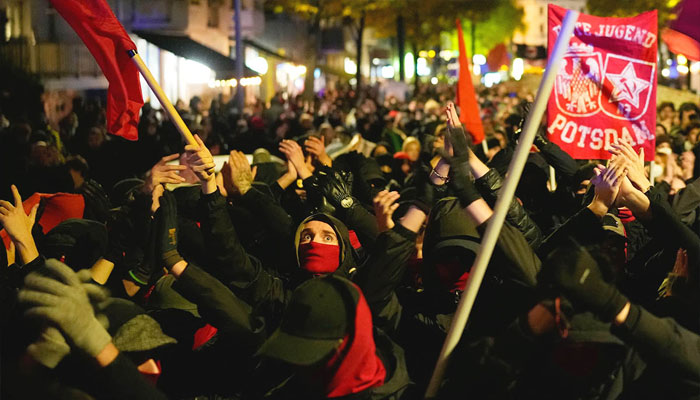
France Sees Decline in Protest Violence as Riots Erupt in Germany and Housing Demonstrations Continue in Portugal
French authorities breathed a sigh of relief on Sunday after protests over the rising cost of living witnessed less violence than in previous weeks. However, police are preparing for fresh demonstrations as high schools, which have been central to the movement, reopen on Monday following the autumn break.
Germany also faced unrest after nationwide demonstrations on Saturday, with rioters attacking police officers and looting shops in several cities. Across Europe, hundreds of thousands of people, largely inspired by young protesters, took part in marches that remained mostly peaceful despite isolated incidents of violence.
France Reports Fewer Arrests and Less Damage
Violence broke out in Paris towards the end of Saturday’s march on the eastern outskirts of the city. Police said protesters hurled Molotov cocktails at officers, injuring three and setting a car on fire.
Elsewhere in the capital, masked groups threw fireworks at police near a viewpoint overlooking the Eiffel Tower. Officers repeatedly charged at the crowds, prompting visitors to flee in panic.
Despite these incidents, the overall situation was calmer than on October 17, when a city hall was set on fire and more than 2,000 shops were looted within hours. Authorities had also faced unrest during follow-up demonstrations on October 24.
Police arrested 779 people on Saturday, significantly fewer than the 2,628 detained on October 17 and the 1,314 arrested the previous weekend. Police in Paris and Marseille reported attacks on a handful of shops but no major damage. Around 70,000 police personnel were deployed nationwide.
Demonstrators told The Associated Press about a range of everyday problems driving their anger, including rodent infestations in classrooms, low-paying jobs and the rising cost of fuel.
Authorities are concerned that tensions could rise again as schools reopen on Monday. Some groups have called for blockades, while a general strike scheduled for Thursday is expected to disrupt trains and public services. Students and trade unions are also planning demonstrations to demand higher wages and other measures.
President Emmanuel Macron’s government is concentrating on Thursday’s protests and holding negotiations with unions, while hoping that the violence becomes less frequent. An official close to the president described Saturday’s events as a return to republican order, although acknowledged that the situation remained imperfect.
Germany Faces Violence After Nationwide Youth Protests
More than 100,000 people, mostly young demonstrators, took to the streets across Germany on Saturday. They demanded greater government investment in education, housing and climate protection, along with measures to make everyday life more affordable.
Although most demonstrations remained peaceful during the day, violence erupted in several cities at night.
In Frankfurt, rioters attacked police in the city centre and looted shops following a demonstration. More than 100 police officers were injured, while 54 people aged between 13 and 29 were detained. Police reported damage to 17 shops, five of which were looted. The situation returned to normal by early Sunday after officers sealed off parts of the city centre.
Hesse Governor Boris Rhein condemned the violence, saying those responsible would face consequences. He said people involved in attacks in downtown Frankfurt had placed themselves outside society.
Violent incidents were also reported in Cologne, where police deployed water cannons to disperse crowds. In Berlin, demonstrators attacked officers with bottles and pyrotechnics.
The youth initiative behind the protests, Gen Z regelt, meaning roughly “Gen Z’s got this”, distanced itself from the violence in a statement on Instagram. Organisers said they rejected all forms of violence and condemned actions by individuals or groups not associated with their demonstrations.
German Interior Minister Alexander Dobrindt alleged that violent left-wing groups and troublemakers from immigrant communities had hijacked the peaceful protests. Speaking to the newspaper Bild, he said those involved in rioting and looting would be identified and held accountable.
Housing Costs Trigger Protests in Portugal
In Portugal, demonstrations over rising living costs, particularly housing expenses, continued in the capital Lisbon.
Thousands of people marched through the city during the day on Saturday. Later, several hundred protesters gathered overnight in Rossio, an iconic square in the city centre, demanding more affordable housing.
Riot police intervened early Sunday, forcibly removing protesters, dismantling tents and clearing the square. A few demonstrators were detained.
The protests have continued for weeks, drawing inspiration from a similar movement in Spain that has highlighted the growing burden of living costs and housing affordability.
Comments are closed.