
Delhi Sees Third-Worst Diwali Air Quality Since 2021, Data Gaps Raise Concerns Over Pollution Assessment

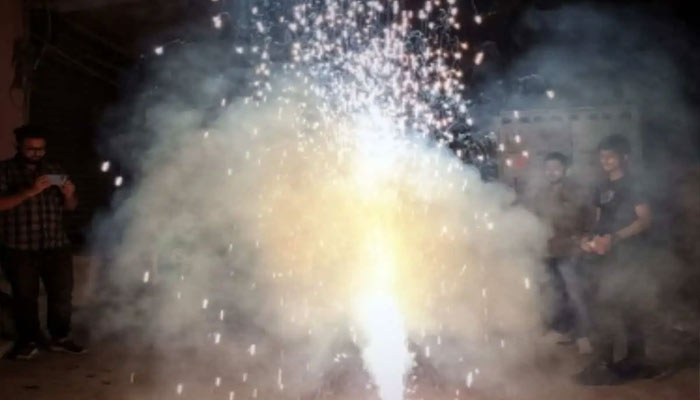
Delhi witnessed one of its most polluted Diwali celebrations in recent years, with the capital recording its third-highest pollution levels since 2021.
However, gaps in air quality monitoring data have made it difficult to establish a complete picture of the pollution surge. Despite relatively favourable weather conditions, air quality remained dangerously close to the severe category, raising concerns over the impact of widespread firecracker use.
More Than Half Of Monitoring Stations Stop Reporting Data
Several air quality monitoring stations across Delhi stopped transmitting readings around midnight on Diwali night, creating significant gaps in the available data. Meanwhile, stations that continued functioning reported alarmingly high pollution levels, with AQI readings crossing the 400 mark.
According to an analysis by Hindustan Times, nearly 80% of the operational monitoring stations recorded air quality in the severe category during most hours between 10 pm on Diwali night and 6 am the following morning.
At 9 pm, before the number of reporting stations dropped sharply, 61% of the 57 operational stations had recorded AQI levels of 400 or above.
For a more consistent comparison across different years, the analysis focused on the PM2.5 sub-index rather than the overall AQI. The overall AQI is calculated using sub-indices for multiple pollutants, with the highest value determining the final reading.
Diwali 2026 Records Third-Highest Pollution Peak Since 2021
The absence of consistent readings across monitoring stations has complicated year-on-year comparisons. To address this, the analysis examined six locations that provided data for most peak pollution hours during Diwali in every year since 2021. These were Alipur, Aya Nagar, Bawana, IHBAS-Dilshad Garden, Narela and Punjabi Bagh.
The average peak PM2.5 sub-index across these locations reached 655 during the hour ending at 1 am after Diwali. This was the third-highest hourly peak recorded since 2021.
The corresponding figures were higher in 2021 and 2025, when the average peak stood at 812 and 752, respectively. In comparison, the readings for 2022, 2023 and 2024 were 483, 583 and 489.
Pollution levels during the hours ending at 4 am and 5 am were also the second-highest since 2021, behind only 2021. However, missing readings from several monitoring stations could have influenced these comparisons.
The six stations were selected because each had reported data for at least nine hours during the period from 6 pm on Diwali evening to 6 am the following morning.
Favourable Weather Conditions Helped Limit Pollution Levels
The pollution trend throughout Diwali suggests that Delhi’s air quality was considerably worse during the initial hours of the celebrations. Until 7 am on November 8, pollution levels were the highest recorded for the corresponding period since 2021. They remained the second-highest until 7 pm.
The ranking improved to third place only after 7 pm, suggesting that weather conditions may have played an important role in reducing the pollution peak.
Meteorological data indicates that November 8 was among the warmer Diwali days since 2021. Reports based on Meteorological Aerodrome Report (METAR) readings from Palam, compiled by Iowa State University, show that temperatures during different hours ranked as the third or fourth highest over the period.
Wind conditions during some hours were also comparable to those recorded between 2022 and 2024, when Delhi experienced relatively lower Diwali pollution levels.
Warmer temperatures and stronger winds may have helped disperse some of the pollutants, preventing an even sharper rise in pollution concentrations.
The analysis suggests that favourable meteorological conditions, rather than a significant reduction in firecracker use, may have contributed to the comparatively lower peak this year. Without this weather-related advantage, pollution levels on the morning after Diwali could potentially have been even higher.
Comments are closed.