

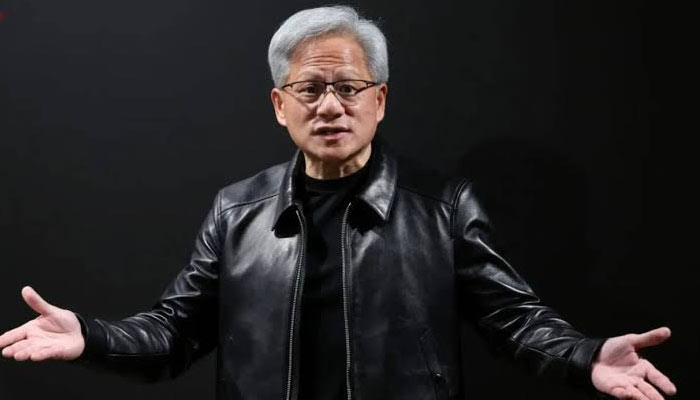
The controversy surrounding Nvidia CEO Jensen Huang and his alleged links to a woman suspected of working for Chinese intelligence has reignited demands in Washington for tighter restrictions on technology exports to China.
The issue is drawing renewed attention from US lawmakers who have long advocated stricter controls on Beijing’s access to advanced artificial intelligence technology. Huang, co-founder of Nvidia, the world’s leading supplier of AI processors, reportedly acknowledged having an affair with Alice Huang, a former senior executive at Singapore-based company Megaspeed. US intelligence officials suspect that she was associated with Chinese intelligence, although the allegations have been denied by Beijing.
US President Donald Trump, who has frequently consulted Huang on artificial intelligence matters, defended the Nvidia chief, describing him as an “honorable guy”. Trump also said Huang had told him that he was unaware of the woman’s alleged intelligence connections.
Nvidia’s China Policy Under Fresh Scrutiny
Huang has repeatedly opposed restrictions on the export of advanced AI chips to China, arguing against measures that could limit Nvidia’s access to the Chinese market. Last year, Trump approved the export of Nvidia’s H200 processors to China despite objections from lawmakers concerned about the potential national security implications.
The latest controversy has provided fresh momentum to those seeking a tougher approach towards Beijing.
Aalok Mehta of the Center for Strategic and International Studies said China hawks in Washington had been frustrated by the administration’s earlier decisions on technology exports and were now seeing an opportunity to advance their position.
Kurt Campbell, a former US deputy secretary of state and co-founder of consultancy The Asia Group, described the emerging situation as one of the most significant investigative efforts in recent times.
He said lawmakers would seek answers about when US authorities first learned of the alleged intelligence links, whether Trump was informed and whether the developments influenced the administration’s China policy.
The New York Times reported that Secretary of State Marco Rubio had informed Trump about the allegations in May, but the president decided against taking action.
Nvidia’s Political Connections Also Face Questions
The controversy has also brought attention to Nvidia’s political engagement with the Trump administration. According to The Washington Post, the company contributed $25 million towards the construction of Trump’s White House ballroom, making it one of the largest donors to the project.
Nvidia has maintained that the contribution was independent of its commercial interests.
Meanwhile, three Republican chairs of House committees have asked Huang to attend a closed-door briefing on November 18. The proposed meeting is expected to focus on his interactions with Alice Huang and the safeguards Nvidia has in place to prevent industrial espionage.
Lawmakers May Revive Tougher AI Chip Export Restrictions
The political fallout could also revive legislative efforts to tighten controls on advanced semiconductor exports.
Kyle Chan of the Brookings Institution’s John L. Thornton China Center said some Republicans who had previously hesitated to challenge Trump might now feel more comfortable taking independent positions following the party’s loss of congressional control.
One proposal under discussion is the bipartisan AI Overwatch Act, which would give Congress the authority to review and block licences allowing advanced AI chips to be exported to China and other countries considered US adversaries.
Emily Benson, head of strategy at Minerva Technology Futures, said the revelations had generated fresh interest in attaching export-control provisions to the annual defence authorisation legislation.
However, the final decision will largely depend on Trump, who retains the power to veto legislation. Overriding such a veto would require a two-thirds majority in both chambers of Congress.
The Commerce Department has also reportedly considered additional restrictions, including limits on China’s ability to remotely access advanced AI processors. However, Commerce Secretary Howard Lutnick is said to be waiting for presidential approval before taking further steps, according to The Information.
The department has also faced questions over reports that it halted an investigation into Megaspeed’s dealings with Nvidia.
China Could Retaliate Against Tougher US Restrictions
Any fresh restrictions could complicate the trade understanding reached between Trump and Chinese President Xi Jinping last year.
Benson warned that Beijing could respond to export-control measures targeting China with retaliatory steps that could disrupt American supply chains.
The allegations have also triggered investigations in the US. Trump said the FBI was examining the suspected intelligence links, while NBC News reported that the Justice Department was investigating whether Megaspeed had smuggled Nvidia chips into China.
Megaspeed has denied allegations of chip smuggling, while Beijing has dismissed the espionage claims as attempts to discredit China.
Nvidia’s Future Influence In Washington At Stake
The controversy could have consequences beyond the ongoing debate over semiconductor exports. Chan said any findings of wrongdoing that resulted in Huang leaving Nvidia would have significant implications for the American AI industry, given his role in building the company and advancing the sector.
Mehta, meanwhile, suggested that Nvidia’s influence among lawmakers and officials in the Trump administration could decline considerably, even if Huang remains at the helm.
The developments have placed Nvidia’s business interests, Washington’s technology policy and US-China relations under renewed scrutiny, with lawmakers seeking greater clarity on the alleged intelligence connections and the administration’s approach to semiconductor exports.
Comments are closed.