
Bengal SIR case hearing in Supreme Court today; Mamata Banerjee seeks to argue in person

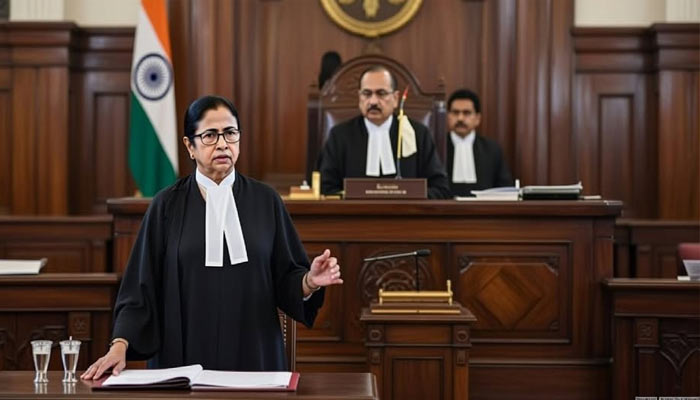
West Bengal Chief Minister Mamata Banerjee is set to appear before the Supreme Court on Wednesday in connection with the ongoing case related to the Special Intensive Revision (SIR) of electoral rolls in the state.
Sources said Banerjee, who holds a law degree, is likely to seek the court’s permission to argue the matter in person. Through her legal team, she has filed an interim application requesting approval from the Chief Justice of India to make submissions directly before the bench.
Later in the day, a bench comprising Chief Justice of India Surya Kant and Justices Joymalya Bagchi and Vipul Pancholi is scheduled to hear a batch of petitions filed by Banerjee, Trinamool Congress MPs Derek O’Brien and Dola Sen, and petitioner Mostari Banu.
A Supreme Court entry pass has been issued in Banerjee’s name, indicating her expected presence during the hearing.
In her interim application, the Chief Minister stated that she is a petitioner in the case and is well acquainted with its facts and circumstances. She affirmed her familiarity with Supreme Court procedures and decorum, undertaking to conduct herself in accordance with established rules and practices.
The application also highlighted Banerjee’s understanding of the ground-level impact of the SIR exercise on residents of West Bengal.
On Tuesday, Banerjee intensified her confrontation with the Election Commission over the revision process, saying she was “knocking on every door” to safeguard democracy. Invoking the judiciary as a pillar of the Constitution, she said she had also approached the media to highlight what she described as serious discrepancies in the SIR process ahead of the elections.
Bengal SIR case
During a hearing on January 19, the Supreme Court issued several directions regarding the SIR exercise, stressing that the process must remain transparent and should not inconvenience voters.
The court directed the Election Commission to publicly display the names of voters flagged under the category of “logical discrepancies” at gram panchayat offices and block-level offices. These locations were also designated for the submission of documents and filing of objections.
The Election Commission has defined “logical discrepancies” as inconsistencies in linking voters to the 2002 electoral roll, including mismatches in parental names or age differences between voters and their parents that fall outside prescribed limits.
Taking note of the scale of the exercise, the bench observed that around 1.25 crore voters in West Bengal had been placed in the “logical discrepancies” category.
Banerjee moved the Supreme Court on January 28, naming the Election Commission and the West Bengal Chief Electoral Officer as respondents. She had earlier written to Chief Election Commissioner Gyanesh Kumar, urging the poll body to halt what she termed an “arbitrary and flawed” SIR exercise in the poll-bound state.
Comments are closed.