
CENTCOM Shares Footage of US Strikes on Iran, Says 10 Military Targets Hit

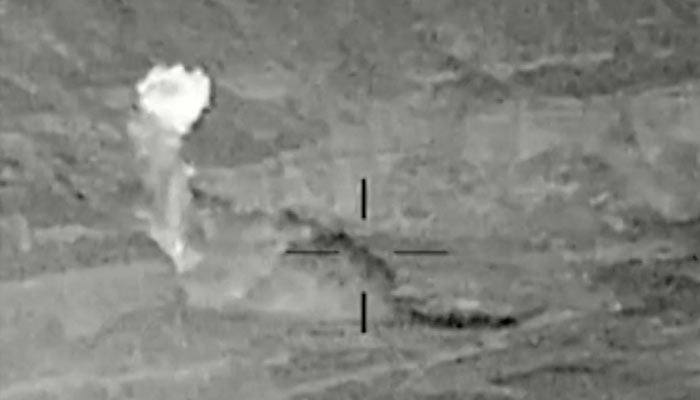
The United States carried out a fresh round of military strikes against Iran on Saturday, targeting 10 Iranian military sites in and around the Strait of Hormuz, in what Washington said was a response to Tehran’s drone attack on the oil tanker M/T Kiku.
According to the US Central Command (CENTCOM), the operation involved fighter aircraft from the US Navy and Air Force, which struck Iranian military infrastructure across multiple locations near the strategic waterway.
Sharing footage of the operation on X, CENTCOM said the strikes targeted Iran’s surveillance infrastructure, communication systems, air defence sites, drone storage facilities and minelayer capabilities following what it described as an Iranian attack on a merchant vessel earlier on Saturday.
The command later confirmed that a total of 10 military targets were hit during the operation.
The latest military action marks another sharp escalation in tensions in the Persian Gulf, raising fresh concerns about the stability of the region despite an interim ceasefire agreement between Washington and Tehran intended to pave the way for a broader peace deal.
US President Donald Trump also confirmed the strikes in a post on Truth Social, accusing Iran of repeatedly violating the ceasefire agreement. “We struck Iranian missile and drone storage locations, and coastal radar sites, for violating the Cease Fire Agreement, AGAIN!” Trump wrote.
He warned that continued violations could prompt a far stronger American response.
“There will come a point where we can no longer be reasonable and will be forced to militarily complete the job. If that happens, the Islamic Republic of Iran will no longer exist!” the US President said.
Attack on Oil Tanker Triggered Retaliation
CENTCOM said the military operation was launched after Iranian forces allegedly carried out a one-way drone attack on the oil tanker M/T Kiku, which was carrying more than two million barrels of crude oil through the Strait of Hormuz.
According to ship-tracking data, the tanker had departed a Qatari oil field earlier in the week and was headed for a port in the United Arab Emirates via the Gulf of Oman.
The vessel was reportedly sailing along a route close to Oman’s coastline, an alternative shipping corridor used by commercial vessels instead of transiting through Iran’s territorial waters.
The exchange marks the second major military confrontation between the two countries in recent days, underscoring the fragile security situation around the Strait of Hormuz, one of the world’s most critical oil transit chokepoints.
Comments are closed.