
Climate Change Is Now an Economic Constraint for India as 2026 Begins

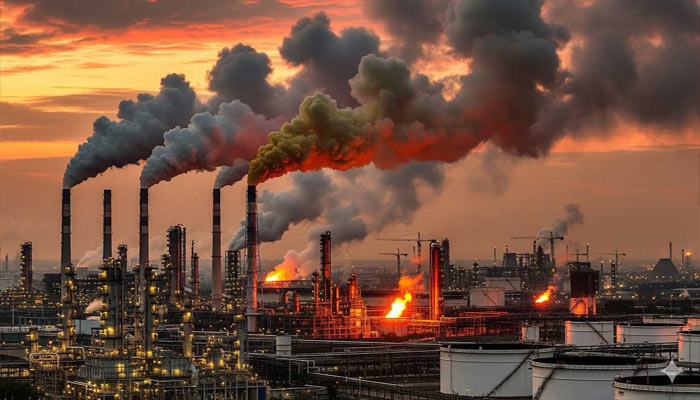
India Enters 2026: Climate Change Is Now an Economic Reality, and Execution Will Define Growth.
As India steps into 2026, climate change has crossed a critical threshold. It is no longer a distant environmental concern—it is a measurable economic variable, shaping productivity, inflation, infrastructure resilience, financial stability, and national competitiveness.
The past year offered a stark warning. Record-breaking heatwaves disrupted construction, factory output, logistics, and agriculture. Estimates suggest heat stress alone is already eroding 4–6% of GDP annually through lost work hours, rising healthcare costs, and volatile crop yields. Climate impacts are structural, recurring, and embedded in India’s growth model.
From Awareness to Accountability
In 2025, climate risk began influencing real economic decisions. Urban flooding disrupted transport and municipal services, infrastructure projects slipped, insurance premiums rose, and food price volatility complicated inflation management. Credit assessments, asset valuations, project timelines, and public spending are now increasingly shaped by climate considerations.
At the same time, India strengthened its climate solutions capabilities. By mid-2025, renewable energy capacity surpassed 190 GW, domestic manufacturing of solar modules, batteries, and electrolyzers scaled rapidly, and green hydrogen moved from announcements to pilot deployment. Yet, execution remains the bottleneck. India requires roughly USD 300 billion annually in climate-related investment to stay on track—actual flows fall well short, particularly for adaptation.
Adaptation and Urban Resilience
Cities highlight the gap between ambition and delivery. Heat stress, flooding, and water scarcity threaten urban life, yet investments in district cooling, climate-resilient housing, drainage systems, and wastewater recycling remain under-deployed. Public budgets are stretched, private capital cautious, and scalable project frameworks limited. Without coordinated execution, cities remain fiscally and climatically exposed.
From Policy to Industrial Impact
Globally, the climate agenda has shifted decisively toward delivery. COP30 emphasized that ambition without implementation is insufficient. For India, international credibility will hinge on measurable outcomes—industrial transformation, financial deployment, and climate risk management.
Several developments signal a shift from intent to action. India’s draft green taxonomy clarifies sustainable economic activity, the RBI’s Regulatory Climate Oversight framework embeds climate risk in financial governance, and national roadmaps for carbon capture, utilization, and storage (CCUS) provide pathways for hard-to-abate sectors such as steel, cement, and chemicals. Execution here will protect export competitiveness, create new industrial value chains, and position India as a solutions provider.
Carbon markets will also move from theory to consequence in 2026. The EU’s Carbon Border Adjustment Mechanism will directly expose Indian exporters to carbon costs. Early movers in green steel and clean industrial processes can safeguard margins, while delays risk competitiveness losses.
Energy, Efficiency, and Finance
Deep decarbonization will also require renewed focus on nuclear energy as a scalable, baseload solution, alongside aggressive energy efficiency measures. Efficiency across industry, buildings, appliances, and transport delivers immediate returns, lowers costs, and boosts productivity—making it a core competitiveness strategy, not a compliance exercise.
Adaptation must move to the center of strategy. Heat-resilient building codes, reflective roofing, advanced forecasting, climate-resilient seeds, water-efficient industrial processes, and decentralized energy systems exist but require coordinated, large-scale deployment supported by regulatory clarity and blended finance.
Financial institutions and corporates are equally central. Embedding climate risk into lending, underwriting, and board-level strategy protects asset quality, margins, and market access. Early investors in clean power, electrification, and efficiency will gain advantage; those who delay face rising costs and strategic disadvantage.
2026: From Intent to Implementation
For policymakers, 2026 must focus on enabling execution at scale: standardizing climate data frameworks, reforming municipal finance, unlocking blended finance platforms, accelerating nuclear policy, and aligning industrial policy with decarbonization pathways. Public capital should crowd in private investment, not replace it.
India enters 2026 with structural advantages—scale, technical capability, entrepreneurial depth, and a still-evolving development trajectory. Climate change can either slow that trajectory or strengthen it. The outcome will depend on how decisively ambition is converted into execution.
Comments are closed.