

CJP demands CEC Gyanesh Kumar’s resignation, threatens nationwide protest
The Cockroach Janta Party (CJP) has demanded the resignation of Chief Election Commissioner Gyanesh Kumar, accusing the Election Commission of undermining voters’ rights and warning of a nationwide protest if he does not step down within 48 hours.
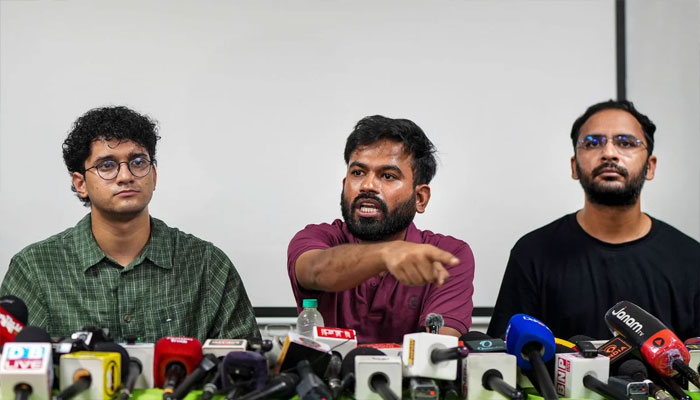
At a press conference on Thursday, CJP national convener Abhijeet Dipke said the group would begin protests across the country before moving to Delhi. He also threatened a repeat of its earlier Jantar Mantar demonstration, which he termed “Jantar Mantar 2.0”.
“If Gyanesh Kumar does not resign within 48 hours, we will start a nationwide protest before coming for a protest in Delhi,” Dipke said. The CJP had earlier held protests in Delhi over alleged irregularities in the NEET examination, following which then Education Minister Dharmendra Pradhan resigned on July 25.
Why is CJP targeting the Election Commission?
The campaign comes after an Indian Express investigation reported that Election Commissioners Sukhbir Singh Sandhu and Vivek Joshi had recorded objections at least 14 times over 10 months to decisions they said were taken without their knowledge or approval.
The objections reportedly involved several aspects of electoral-roll management, including changes to Form 6 for new voters, deletion and restoration of names during the Special Intensive Revision (SIR), appeals against roll decisions and control of the electoral-roll database.
The Election Commission acknowledged that such notes and observations existed but described them as part of its normal decision-making process. It said differing views, technical suggestions and internal checks were standard institutional practices and that the suggestions were intended to improve electoral processes.
CJP launches ‘Fix the Election Commission’ campaign
The CJP has launched an “Election Commission Thik Karo” or “Fix the Election Commission” campaign, focusing on the deletion or exclusion of voter names during the SIR exercise.
Dipke alleged that more than 13 crore names had been excluded from draft electoral rolls across 30 states and Union Territories. He argued that the Commission should explain how every exclusion was made and provide a transparent mechanism for review.
“Two of the three Election Commissioners formally objected to decisions being taken without their knowledge or approval,” Dipke said, demanding that the Commission explain how those objections were dealt with and who authorised the decisions.
Three areas under scrutiny
CJP co-convener Saurav Das identified three areas that the organisation wants examined.
The first concerns changes to the online Form 6 process for first-time voters. The revised process requires new applicants to provide information about their own or their parents’ presence in earlier SIR electoral rolls. The reported internal objections at the Election Commission included concerns over changes to Form 6.
The second issue concerns appeals by voters excluded during the SIR process in West Bengal. CJP has demanded greater transparency over how such appeals are being handled and what legal steps the Commission has taken.
The third relates to the centralisation of electoral-roll data. Das said citizens should be able to identify the legal basis, decision-maker and records behind major changes involving voter registration, deletion and access to electoral databases.
The issue has also featured in the reported objections by Sandhu and Joshi, who raised concerns about the increasing centralisation of electoral-roll database controls.
CJP seeks independent probe
CJP co-convener Ashutosh Ranka said the exclusion of genuine voters could have consequences beyond elections if voter records are also used for administrative verification.
The organisation has called for an independent investigation into decisions taken during the SIR exercise, including identifying officials who authorised disputed changes or directives.
It has also demanded that SIR-related exclusions be halted and that the January 2025 electoral rolls, along with relevant SIR records and files, be secured and transferred to the Supreme Court or placed before an independently supervised inquiry.
Demand to change appointment law
The CJP has also called for changes to the legal framework governing the appointment of the Chief Election Commissioner and other Election Commissioners.
It wants the 2023 law governing their appointments repealed and replaced with a system involving wider institutional and civil-society participation.
The organisation has further asked Election Commissioners Sukhbir Singh Sandhu and Vivek Joshi to publicly explain their recorded objections and urged the Election Commission to release the relevant notes, responses and underlying records.
The demand comes as the reported differences within the three-member poll panel have drawn wider attention, with the Indian Express investigation describing objections over voter registration, deletions and electoral database controls.
Comments are closed.