
Conman Sukesh Chandrasekhar Convicted for Impersonating Supreme Court Judge to Secure Bail

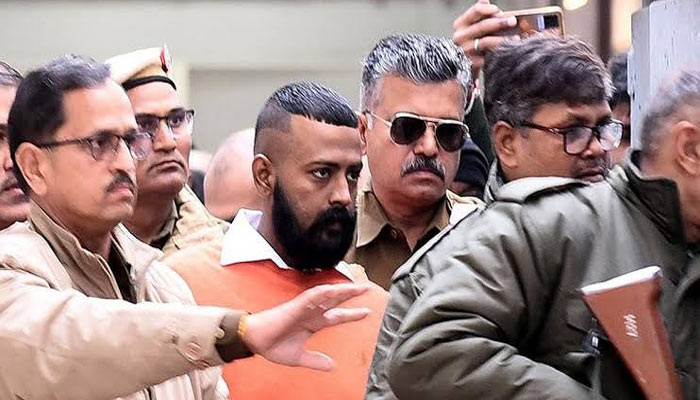
A Delhi court has convicted conman Sukesh Chandrasekhar for impersonating a sitting Supreme Court judge and allegedly attempting to influence a judicial officer to secure his release on bail.
Chief Judicial Magistrate Harshita Mishra of Tis Hazari Courts found Chandrasekhar guilty under Sections 170, 189 and 507 of the Indian Penal Code, which deal with impersonating a public servant, threatening a public servant and criminal intimidation through anonymous communication.
The case dates back to April 2017, when Chandrasekhar was in police custody in connection with a corruption case being heard by Special Judge Poonam Chaudhary.
Chandrasekhar Allegedly Used Constable’s Phone
According to the prosecution, Chandrasekhar obtained access to the mobile phone of Constable Manjeet and used it to contact the judicial officer on both her official landline and personal mobile number.
The caller initially claimed to be the personal secretary of a Supreme Court judge, identified in the judgment by the initials “KJ”. A second person later joined the conversation and allegedly claimed to be the judge himself.
The caller reportedly said he was acting on behalf of the Union Home Ministry and the Supreme Court Collegium and instructed the judicial officer to grant Chandrasekhar bail or interim bail. She was allegedly warned of serious professional consequences if she refused.
The judicial officer subsequently contacted the Supreme Court and spoke to the actual private secretary of the judge. She was told that the judge had not made the call and that the purported secretary was not employed in his office.
The trial court found the judicial officer’s testimony credible and said it was supported by call detail records and evidence establishing Chandrasekhar’s access to the constable’s phone.
The court stressed that judicial decisions must be made through established legal procedures rather than through secret telephone calls.
Court Calls Impersonation an Attack on Judicial Authority
The court described the episode as an “absurd theatrical production”, holding that Chandrasekhar had attempted to interfere with an ongoing judicial proceeding by assuming the identity of a sitting Supreme Court judge.
The court observed that Chandrasekhar’s alleged impersonation went beyond ordinary deception because it sought to manipulate the judicial process by invoking the authority of the country’s highest court.
It also noted his history of allegedly spoofing caller IDs and impersonating individuals in positions of authority, saying he appeared to believe that an elaborate enough deception could force institutions to comply.
The court distinguished such conduct from impersonating bureaucrats or political intermediaries, describing the alleged impersonation of a Supreme Court judge and the judge’s secretary as an “act of institutional defiance”.
It further rejected the notion that the authority of the Supreme Court could be exercised through an unauthorised phone call, stressing that judicial authority cannot be negotiated with anonymous callers.
Court Criticises Delhi Police Investigation
While convicting Chandrasekhar, the court sharply criticised the Delhi Police investigation, describing it as superficial and marred by serious lapses.
Investigators were faulted for failing to recover the mobile phone, preserve CCTV footage from the Crime Branch premises, collect crucial call records and promptly examine important witnesses.
The court also questioned how Chandrasekhar, who was in police custody, managed to access a supposedly secured mobile phone.
It further raised questions about Constable Manjeet’s role, noting that the evidence left open the possibility that he may have facilitated Chandrasekhar’s access to the device rather than simply having his phone misused.
The court clarified that it was not finding the constable guilty but directed the Commissioner of Police or the relevant Deputy Commissioner of Police to re-examine his role and consider whether departmental or criminal proceedings were warranted.
The court stressed that investigators must follow evidence wherever it leads, including when it points towards a member of the police force.
Evidence Sufficient to Establish Guilt
Despite the shortcomings in the investigation, the court held that the evidence presented was sufficient to establish Chandrasekhar’s guilt beyond reasonable doubt.
The judicial officer’s testimony, supported by call records and other surrounding evidence, was considered adequate. The court also rejected the argument that the absence of a voice recording weakened the prosecution case.
It held that the incident could not be dismissed as a prank or random hoax because the alleged impersonation was used to seek a specific judicial outcome — Chandrasekhar’s release on bail.
The court concluded that the attempt represented an effort to interfere with judicial decision-making by falsely invoking the authority of the Supreme Court.
Additional Public Prosecutor Amit Yadav represented the State, while advocate Praveen Dabas appeared for Chandrasekhar.
The conviction concerns the 2017 telephone impersonation case and the IPC offences for which Chandrasekhar was tried.
Comments are closed.