
COP31 President Signals Breakthrough as Climate Negotiations Near Final Agreement

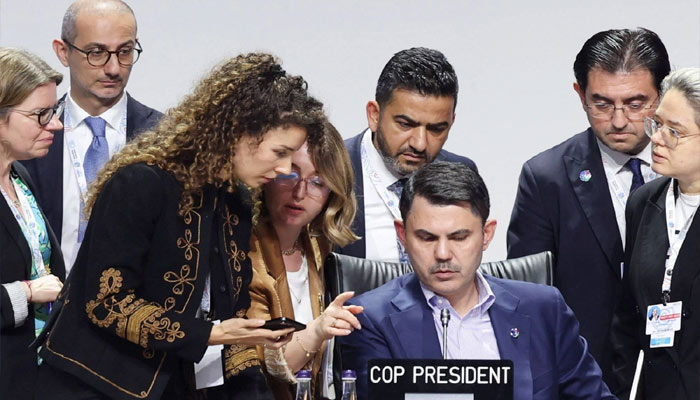
COP31 Negotiators Near Consensus on Climate Deal After Overnight Talks
Climate negotiations in Antalya, Turkiye, moved closer to a breakthrough on Sunday after the release of a fresh agreement package aimed at securing consensus on measures to tackle global warming. COP31 presidents Australia and Turkiye expressed hope that the revised proposal would win the backing of participating nations.
“We believe that we have put forward a text which all the parties can agree upon,” COP31 President Murat Kurum said during a late-night plenary session. He announced that delegates would meet again on Sunday morning to consider and approve the agreement.
Negotiations continued beyond the scheduled Friday deadline, extending through Saturday and into the early hours of Sunday. The latest draft makes changes to an earlier proposal that had drawn criticism from several countries for lacking ambition, particularly because it did not mention ending the use of fossil fuels.
Kurum said the revised text had addressed concerns related to fossil fuels as well as the financial assistance developing nations need to adapt to the effects of climate change.
The package was prepared following intensive discussions involving Australia, which is leading the negotiations, host country Turkiye, and nearly 200 delegations representing countries of different sizes and economic circumstances.
Countries were given until 0300 GMT to raise objections, while a session scheduled for 0600 GMT was expected to begin the process of formally approving the agreement.
Australia, with Turkiye’s support, has been working to bridge differences between nations highly exposed to climate impacts and countries whose economies rely heavily on producing or consuming fossil fuels.
The latest COP meeting comes amid growing concerns over the global temperature rise. It is the first conference since the UN’s environmental body confirmed that the world is on course to exceed the 1.5-degree Celsius (2.7-degree Fahrenheit) warming threshold. Countries had committed more than a decade ago to keeping global warming below this level, beyond which the risks of extreme weather events are expected to become more severe.
Comments are closed.