
Delhi air quality improves slightly but remains in ‘poor’ category amid lingering haze

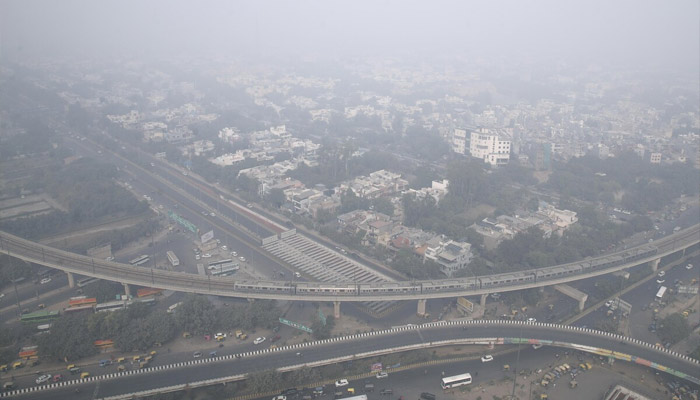
Delhi’s air quality showed marginal improvement on Wednesday, moving from the “very poor” to “poor” category, even as a thin layer of haze continued to blanket the city.
According to the Central Pollution Control Board (CPCB), the overall Air Quality Index (AQI) stood at 230, indicating that pollution levels remain concerning despite a minor respite.
Neighbourhoods such as ITO and Akshardham recorded higher pollution levels, with AQI readings touching 281 in the morning—an improvement from Tuesday evening’s 291 but still unhealthy. Earlier in the week, Delhi battled three consecutive days of “very poor” air quality, peaking at 366 on Sunday and 309 on Monday.
Several localities, including Alipur, Wazirpur, Bawana, and Anand Vihar, saw “severe” conditions on Tuesday, with AQI readings ranging from 402 to 421. Officials attributed the persistent pollution to stagnant winds and a drop in temperature, which prevent pollutants from dispersing. Since Diwali on October 20, the capital’s air has hovered between “poor” and “very poor,” with smog visibly lingering across the skyline.
The Commission for Air Quality Management (CAQM) reported a decline in stubble-burning incidents—one of the region’s major pollution sources. From September 15 to November 3, Punjab recorded 2,518 farm fires compared to 4,132 last year, while Haryana saw a sharp drop from 857 to 145. Authorities have carried out over 2,200 field inspections and levied environmental fines amounting to ₹55.75 lakh against violators.
However, a new study by the Centre for Research on Energy and Clean Air (CREA) painted a sobering national picture. October 2025 witnessed a sharp fall in air quality across India, particularly in the National Capital Region. Haryana’s Dharuhera emerged as the most polluted city last month, registering two “severe” and nine “very poor” air days, followed by Rohtak, Ghaziabad, Noida, Ballabgarh, and Delhi.
The report noted that Delhi ranked sixth among India’s most polluted cities in October, with PM2.5 levels nearly three times higher than in September—signalling that while the capital’s air may have slightly improved this week, the broader challenge of cleaner air remains far from over.
Comments are closed.