
Indian Navy to Induct ‘Abhimanyu’ Drone by 2026 Featuring AI, Stealth, and Strike Capability

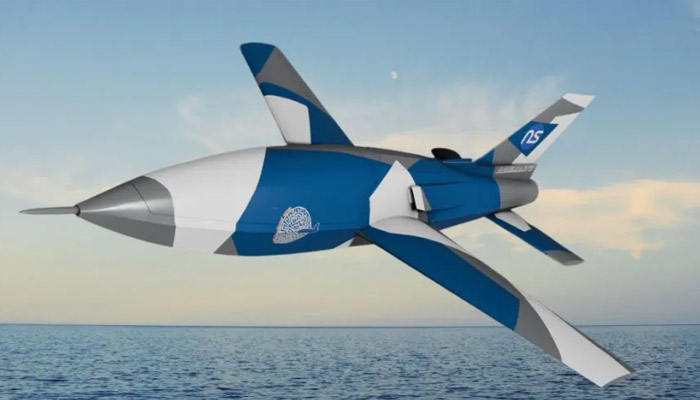
The Indian Navy is moving swiftly to integrate advanced unmanned aerial systems into its carrier air wings, led by the indigenous ‘Abhimanyu’ drone developed by Bengaluru-based NewSpace Research and Technologies (NRT).
A central component of the Naval Collaborative Combat Air Vehicle (N-CCAV) programme, Abhimanyu positions India among a select group of nations deploying loyal wingman drones alongside manned fighter jets. Expected to take its first flight by 2026, the jet-powered drone will feature AI-enabled operations, manned-unmanned teaming (MUM-T), and air-to-air strike capability, providing carrier strike groups with enhanced offensive and defensive options. Its stealth-inspired design reduces radar detection, increasing survivability in contested airspace.
Design and Features
Abhimanyu is conceived as a loyal wingman for the Indian Navy’s MiG-29K and future Rafale-M carrier-based fighters. Its low radar cross-section (RCS) profile incorporates swept wings, horizontal stabilisers, a single vertical tail, and twin narrow air intakes. A continuous chine-line around the fuselage helps minimize radar reflections.
While incorporating stealth features, the drone balances reduced radar signature with affordability and rapid production, making it a more expendable platform compared to expensive international counterparts. AI-driven systems enable autonomous flight, while air-to-air capabilities allow it to engage enemy aircraft. In MUM-T mode, Abhimanyu extends sensor reach and situational awareness for manned pilots.
Operational Role
Under N-CCAV, Abhimanyu drones will undertake high-risk or complex missions, reducing exposure for human pilots while bolstering carrier strike group capabilities. Iterative development will produce variants for strike, surveillance, electronic warfare, and potential swarm operations, enhancing India’s operational flexibility, particularly in the Indo-Pacific theatre.
Development and Funding
The project is partially funded under the Ministry of Defence’s Innovations for Defence Excellence (iDEX) programme, with NRT contributing internal resources. While iDEX funding currently stands at around $2.85 million, additional investment will be required for operational readiness and future variants. The Navy has committed to minimum procurement quantities once the system becomes operational.
Compared to the HAL Warrior of the Air Force’s CATS programme, Abhimanyu is smaller, lighter, and designed for cost-effective, large-scale deployment. Internationally, it offers a practical, lower-cost alternative to platforms like China’s GJ-11 Sharp Sword and the US Navy’s Collaborative Combat Aircraft (CCA).
Challenges Ahead
Key challenges include ensuring reliable autonomous operations in carrier conditions, matching the speed and altitude of manned fighters, and maintaining consistent funding amid India’s historically slow defence procurement cycles.
Despite these hurdles, Abhimanyu represents a significant milestone for Indian naval aviation. Once operational, it will strengthen the Navy’s strike capability, operational survivability, and lay a foundation for future indigenous drone technologies.
Comments are closed.