
From Imax to Ithaca: How ‘The Odyssey’ Is Driving a Tourism Boom in Greece

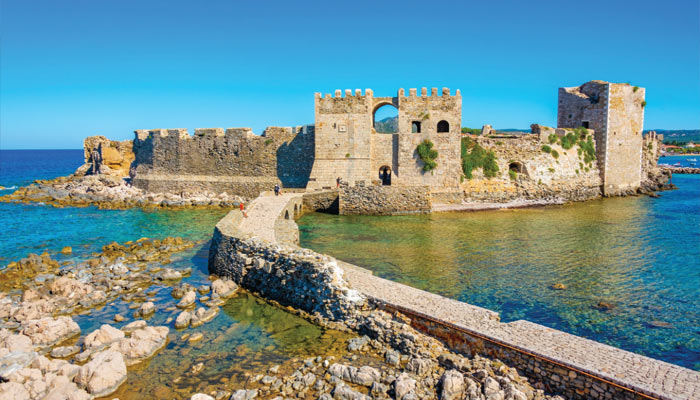
Christopher Nolan’s The Odyssey is doing more than drawing audiences to cinemas. The film is also sparking fresh interest in Greece, with travelers increasingly seeking out the landscapes and locations associated with Homer’s epic.
The phenomenon has been dubbed the “Odyssey effect”, as growing interest in the film appears to be influencing travel plans and encouraging visitors to explore parts of Greece that have traditionally attracted fewer tourists.
Reports have pointed to a sharp rise in online searches linked to Greece and the locations featured in the story. Page Six, for instance, reported a 3,421% increase in Google searches for Troy and a 966% jump in searches for flights to Greece.
Travelers are also adjusting their itineraries to include locations connected with the film, such as Nestor’s Cave in the Peloponnese and Voidokilia Beach.
Film Fans Turn Into Travelers
The trend is familiar in the tourism industry. Popular films and television series have repeatedly transformed fictional settings and filming locations into major tourist attractions.
Dubrovnik in Croatia is one of the best-known examples. The city experienced a tourism boom after appearing as King’s Landing in Game of Thrones, attracting fans keen to explore its historic streets and locations featured in the series.
The Odyssey could have a similar impact on parts of Greece, particularly the Peloponnese and the island of Ithaca.
The film stars Matt Damon as Odysseus and follows the Greek king’s perilous 10-year journey home after the Trojan War. Anne Hathaway plays his wife Penelope, while Tom Holland portrays their son Telemachus.
Based on Homer’s ancient epic and using Emily Wilson’s translation as a reference, Nolan’s adaptation brings familiar characters and mythical locations to a modern global audience.
Ithaca Gets New Attention
Ithaca, traditionally less prominent on Greece’s tourism circuit, is among the destinations benefiting from the renewed interest.
The island is closely associated with Odysseus, who returns there after years of war and wandering. For some visitors, that connection is proving as compelling as Greece’s beaches and scenery.
Stefan Antoine, a Riyadh resident preparing to visit Greece, said the film prompted him to change his plans.
He had already planned a trip to Lefkada but decided to add Ithaca to the itinerary after becoming more interested in the history surrounding Odysseus.
Antoine said his interest in Greek mythology had already grown after reading Madeline Miller’s Circe, a 2018 novel that retells the story of The Odyssey from the perspective of the mythical sorceress.
He said the book deepened his interest in Greek mythology and made the connection between the film and Greece’s ancient history even more appealing.
Tourism Boom Brings Concerns
The growing fascination with The Odyssey is not without its challenges.
Tourism experts and local observers have warned that a sudden influx of visitors could put additional pressure on environmentally sensitive areas of the Peloponnese and Ithaca.
Similar concerns have emerged in other destinations that experienced rapid growth after becoming associated with popular films and television shows.
For Greece, the challenge will be to turn the “Odyssey effect” into a sustainable tourism opportunity without allowing the surge in visitors to damage the landscapes and heritage that attracted them in the first place.
The film’s influence is also extending beyond tourism, as its renewed focus on Homer, Greek mythology and ancient culture introduces a new generation of global audiences to stories that have shaped Western literature for centuries.
Comments are closed.