
From Seat Freeze to Women’s Reservation: How India’s Delimitation Debate Has Evolved

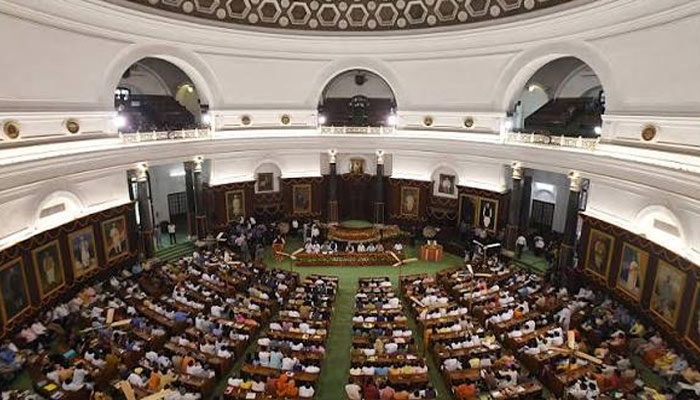
India’s Delimitation Debate: Seat Allocation, Federal Balance and Women’s Reservation at the Centre
The Union Cabinet has approved a fresh Constitution Amendment Bill aimed at accelerating women’s reservation in Parliament and state legislatures through a nationwide delimitation exercise. Under the proposed framework, the strength of the Lok Sabha could increase by 50 per cent to a maximum of 850 seats, while the existing proportion of seats allocated to individual states would remain unchanged until 2051.
The government is expected to introduce the legislative package during a special parliamentary session beginning November 30. The Lok Sabha is scheduled to meet for four days, while the Rajya Sabha will convene on December 2.
The latest move comes after a similar package introduced in April failed to secure the mandatory two-thirds majority in the Lok Sabha. The Centre is now seeking fresh political support to advance the implementation of women’s reservation ahead of the 2029 general elections.
Understanding the Constitutional framework
Delimitation refers to the process of redrawing electoral constituency boundaries and determining the distribution of parliamentary seats among states according to population.
Article 81 of the Constitution establishes the principle of ‘one person, one vote, one value’, seeking to ensure that parliamentary representation broadly reflects population differences across states. Article 81(2)(a) provides that the ratio between a state’s population and its Lok Sabha seats should, as far as practicable, remain uniform across the country.
The Constitution also links the delimitation process to Census figures, with Article 81(3) specifying that the latest published Census data should form the basis for determining population.
Why was the delimitation exercise frozen?
The first major interruption came in 1976, when the government amended the Constitution to freeze the allocation of Lok Sabha seats among states for 25 years. The decision was intended to ensure that states which had successfully controlled population growth would not lose their parliamentary representation.
The same approach was continued in 2001 through another constitutional amendment, extending the freeze until the publication of figures from the first Census conducted after 2026.
Although the distribution of seats between states remained unchanged, constituency boundaries within individual states were subsequently revised using the 2001 Census. This exercise was completed by the Delimitation Commission in 2008.
North-South divide over parliamentary representation
The prospect of fresh delimitation has raised concerns among southern states, which fear that their relative representation in the Lok Sabha could decline because of slower population growth.
States such as Tamil Nadu, Kerala, Karnataka and Andhra Pradesh argue that their success in implementing family planning programmes should not result in reduced political influence.
By contrast, states including Uttar Pradesh and Bihar have experienced comparatively higher population growth. A population-based redistribution could therefore increase their share of parliamentary representation.
The debate also involves India’s demographic transition. Historian Ravi K Mishra’s 2025 book, Demography, Representation, Delimitation: The North-South Divide in India, examines how southern states experienced population stabilisation earlier, while population growth in several northern states accelerated later.
How women’s reservation became linked to delimitation
On September 21, 2023, Parliament passed the 106th Constitutional Amendment, popularly known as the Nari Shakti Vandan Adhiniyam, providing 33 per cent reservation for women in the Lok Sabha and state legislative assemblies.
However, the legislation linked its implementation to a fresh Census followed by delimitation. Consequently, the reservation could not automatically become effective immediately after the law was passed.
During the parliamentary debate, Union Home Minister Amit Shah indicated that the Census and subsequent delimitation would be undertaken after the 2029 Lok Sabha elections.
Why did the earlier legislative package fail?
In April 2026, the Centre introduced three Bills during a special parliamentary session to accelerate women’s reservation.
These included the Constitution (131st Amendment) Bill, a separate Delimitation Bill to establish a Delimitation Commission, and legislation extending women’s reservation to Union Territories with legislative assemblies.
The constitutional proposal sought to increase the maximum strength of the Lok Sabha to 815 elected members from states and 35 from Union Territories. It also aimed to facilitate delimitation using the latest available published Census figures, which meant the 2011 Census.
However, Opposition parties questioned the absence of a clear provision guaranteeing that the existing proportion of seats allocated to each state would remain unchanged.
They argued that a uniform 50 per cent increase in seats could widen the numerical gap between states with different population growth rates. Opposition leaders also demanded an all-party consultation before proceeding with the exercise.
The package ultimately failed to obtain the required two-thirds majority in the Lok Sabha.
What has changed in the latest proposal?
The latest Cabinet approval explicitly provides for a 50 per cent increase in parliamentary seats across states while maintaining their existing relative shares of representation until 2051.
The proposal has also triggered fresh political negotiations. The DMK has indicated that it could consider supporting the amendment if Tamil Nadu’s existing share of approximately 7.2 per cent of Lok Sabha seats is protected.
The ruling alliance is also seeking support from the NCP (Sharadchandra Pawar). A constitutional amendment requires a two-thirds majority of members present and voting in each House, along with the support of a majority of the total membership.
The DMK has reiterated its demand that the existing ratio of seat allocation should remain protected for the next 25 years, referring to a Tamil Nadu Assembly resolution passed in February 2024.
Constitutional questions remain
Despite the government’s latest announcement, questions remain about the compatibility of the proposed arrangement with Article 81.
Former Lok Sabha Secretary General PDT Achary has argued that the existing constitutional formula requires seat distribution to follow the population-based principle. According to him, a uniform 50 per cent increase across states would require changes to the constitutional framework itself if it is to depart from the existing formula.
He has also stressed the need for wider political consultation and an appropriate constitutional amendment before a future Delimitation Commission can operate under a revised formula.
Women’s reservation: Where does the law stand?
The Nari Shakti Vandan Adhiniyam, passed in 2023, remains the operative law. Under its existing provisions, women’s reservation will take effect after the Census and the subsequent delimitation exercise.
Congress leader P Chidambaram has argued that removing Article 334A could allow women’s reservation to be implemented without waiting for the Census and delimitation process.
Congress general secretary Jairam Ramesh has separately accused the government of using women’s reservation as a justification for advancing delimitation in a manner that could influence constituency boundaries. These allegations have been rejected as part of the broader political debate surrounding the proposal.
With the proposed expansion of the Lok Sabha, the future distribution of parliamentary seats and the implementation of the women’s quota all connected, the latest constitutional initiative has reopened a longstanding debate over representation, population control and the federal balance in India.
What new seat composition could look like
States that have controlled population growth, especially those in the south, say delimitation will reduce their Lok Sabha representation. To allay this, the government is looking at an across-the-board 50% increase that will maintain existing seat proportions. But this will not address the existing disparities in representation among states.
| State/UT | Seats in Lok Sabha | Population per seat | After 50% increase |
|---|---|---|---|
| Chandigarh | 1 | 10,55,450 | 2 |
| Mizoram | 1 | 10,97,206 | 2 |
| Puducherry | 1 | 12,47,953 | 2 |
| Manipur | 2 | 14,27,897 | 3 |
| Meghalaya | 2 | 14,83,445 | 3 |
| Kerala | 20 | 16,70,303 | 30 |
| Himachal Pradesh | 4 | 17,16,151 | 6 |
| Tripura | 2 | 18,36,959 | 3 |
| Tamil Nadu | 39 | 18,49,924 | 59 |
| Nagaland | 1 | 19,78,502 | 2 |
| Odisha | 21 | 19,98,772 | 32 |
| Daman & Diu | 1 | 2,43,247 | 2 |
| State/UT | Seats in Lok Sabha | Population per seat | After 50% increase |
|---|---|---|---|
| Mizoram | 1 | 10,97,206 | 2 |
| Meghalaya | 2 | 14,83,445 | 3 |
| Manipur | 2 | 14,27,897 | 3 |
| Maharashtra | 48 | 23,41,132 | 72 |
| Madhya Pradesh | 29 | 25,04,373 | 44 |
| Lakshadweep | 1 | 64,473 | 2 |
| Kerala | 20 | 16,70,303 | 30 |
| Karnataka | 28 | 21,81,975 | 42 |
| Jharkhand | 14 | 23,56,295 | 21 |
| Jammu & Kashmir | 5 | 25,08,260 | 8 |
| Himachal Pradesh | 4 | 17,16,151 | 6 |
| Haryana | 10 | 25,35,146 | 15 |
|
Seats in Lok Sabha | Population per seat | After 50% increase | |
|---|---|---|---|---|
| Gujarat | 26 | 23,24,604 | 39 | |
| Goa | 2 | 7,29,273 | 3 | |
| Daman & Diu | 1 | 2,43,247 | 2 | |
| Dadra & Nagar Haveli | 1 | 3,43,709 | 2 | |
| Chhattisgarh | 11 | 23,22,291 | 17 | |
| Chandigarh | 1 | 10,55,450 | 2 | |
| Bihar | 40 | 26,02,486 | 60 | |
| Assam | 14 | 22,28,970 | 21 | |
| Arunachal Pradesh | 2 | 6,91,864 | 3 | |
| Andhra + Telangana* | 42 | 20,13,828 | 63 | |
| Andaman & Nicobar Islands | 1 | 3,80,581 | 2 |
Comments are closed.