
Global sea levels likely underestimated because of flawed modelling, study finds

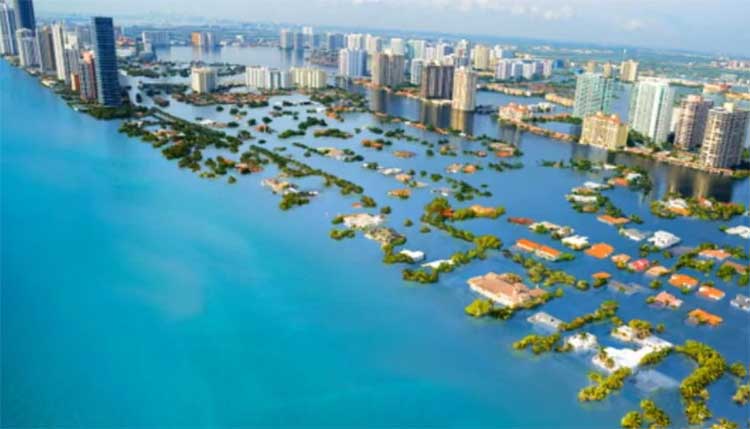
Global sea levels may have been significantly underestimated due to flawed modelling methods, with new research suggesting that ocean levels could be much higher than previously believed.
The finding could have major implications for projections about the impacts of global warming and the risks faced by coastal communities.
According to the study, global sea levels may be on average about 30 cm higher than earlier estimates. In some regions of the Global South — including parts of Southeast Asia and the Indo-Pacific — levels could be as much as 100–150 cm higher than previously thought.
Rising seas pose a major threat to coastal settlements worldwide. The Intergovernmental Panel on Climate Change has estimated that sea levels could rise by 28–100 cm by 2100 due to climate change.
The latest research, published in the journal Nature, analysed 385 peer-reviewed studies published between 2009 and 2025 and compared commonly assumed sea-level estimates with actual measured coastal levels.
The authors — Philip Minderhoud of Wageningen University and PhD researcher Katharina Seeger — found that more than 90% of the studies relied not on direct local sea-level measurements but on land-elevation data referenced to global geoid models.
Geoid models estimate global sea levels based on the Earth’s gravity and rotation. However, the researchers found that this approach often undervalued sea levels by about 24–27 cm on average, depending on the model used. In some cases, discrepancies ranged from as much as 550 to 760 cm.
“In reality, sea level is influenced by additional factors such as winds, ocean currents, seawater temperature and salinity,” Minderhoud said.
Comments are closed.